I am Part of Something Much Bigger Than Myself
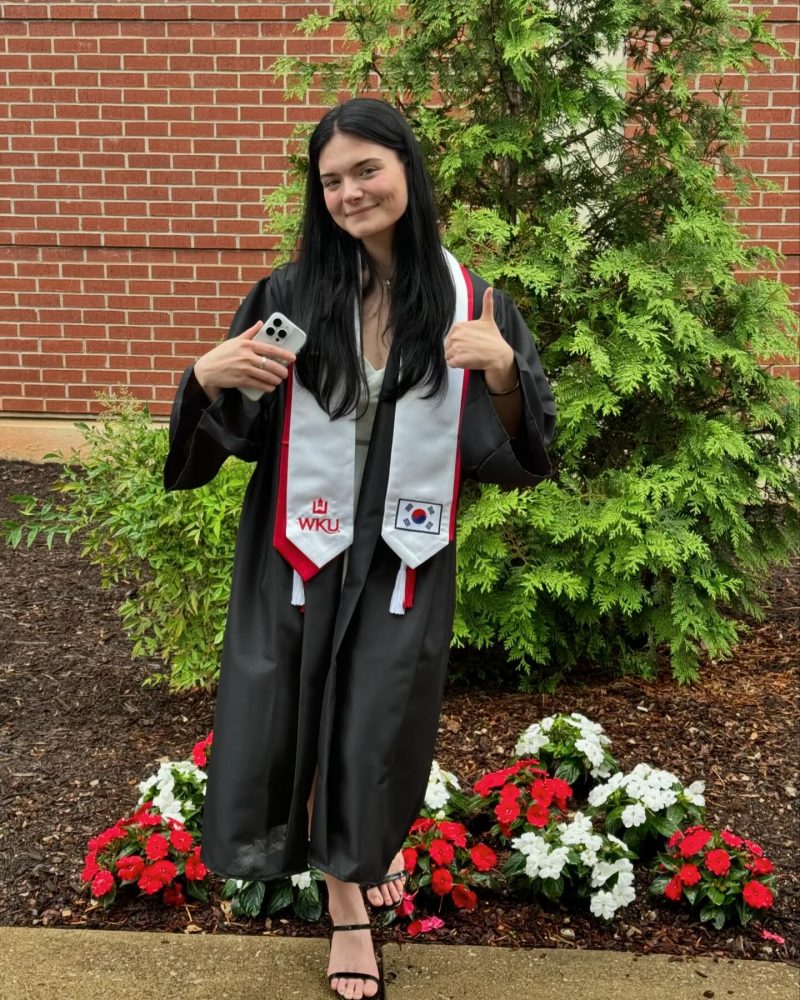
My name is Olivia Marshall, and I am one of Refuge Bowling Green’s (Refuge BG) longest standing volunteers. For the last three years I’ve been coming in about twice a week to help provide childcare for young refugee kids so their parents can receive education.
English is a subject I’ve always been good at, and with that, I’ve always had a passion for traveling and learning about different cultures. At the beginning of my sophomore year of college an advisor suggested I could teach English as a second language as a way to fulfill both passions. She led me to Western Kentucky’s TESOL (Teach English as a Second Language) minor, and I’ve been there ever since.
I learned about Refuge Bowling Green from my professor, and I started volunteering here so I could have the opportunity to practice teaching English. I didn’t expect to be providing child care but, I have come to really, really love the children and love the work here.
When I first started volunteering, one of the kids that I watch over was just a couple months old and couldn’t even walk yet. And now she’s walking, she has a personality, and she’s speaking small English sentences.
Watching these kids grow not only in who they are and in their own culture and in their own language, but also seeing them pick up the English language as well, even without being in school yet, has been incredible. Being able to witness how intelligent they are and how quickly they’re picking everything up is kind of crazy to see. I really do love the children here–I feel kind of like their older sister–and I have loved being a part of their growth.
One of the biggest ways I’ve seen the organization evolve over the years is in the amount of people who have learned about Refuge Bowling Green and fallen in love with the different refugee communities it serves. When I first started here, I was one of maybe three volunteers, and they were understaffed with not very many workers. But over time as more people have learned about the organization, more people have started devoting time here. And then they recently got a grant that has allowed them more funding for all the different programs.
Sometimes people ask how I find time to go and volunteer, especially when I’m not getting paid. I tell them I go because I want to be a part of something that’s a lot bigger than I am. I’m not here for myself.
When you’re in a community with people from all different walks of life, everybody just becomes a bit more open minded and softhearted.
I think being around people who have different experiences from yourself, you’re not so removed from issues and things that happen in our country and in our society. Like when you see things in the news, maybe issues that refugees are dealing with–if you don’t know anybody that’s directly affected by it, it’s easy to kind of just brush it off and think that’s not my problem. But when you’re more connected to it, you have more drive and more initiative to go and make change. Living in a city like Bowling Green makes people better because they’re more inclined to be part of the change and take action to help people.
I think the most important thing I’ve learned from volunteering is that,
At the end of the day, we're all people and we're all connected.
I think it’s really easy to get caught up in our political and social climate and prejudice and things like that. Coming to work here has really opened my eyes to the fact that we’re not all that different. It doesn’t matter if we’re from different countries or different cultures or if we don’t even speak the same language–we’re all people at the end of the day, our hearts all beat the same, we’re human. It’s given me a newfound appreciation and love for humanity.
Our team members obtain informed consent from each individual before an interview takes place. Individuals dictate where their stories may be shared and what personal information they wish to keep private. In situations where the individual is at risk and/or wishes to remain anonymous, alias names are used and other identifying information is removed from interviews immediately after they are received by TSOS. We have also committed not to use refugee images or stories for fundraising purposes without explicit permission. Our top priority is to protect and honor the wishes of our interview subjects.