I Want the World to Know Me as Someone Who is a Helper in the Community
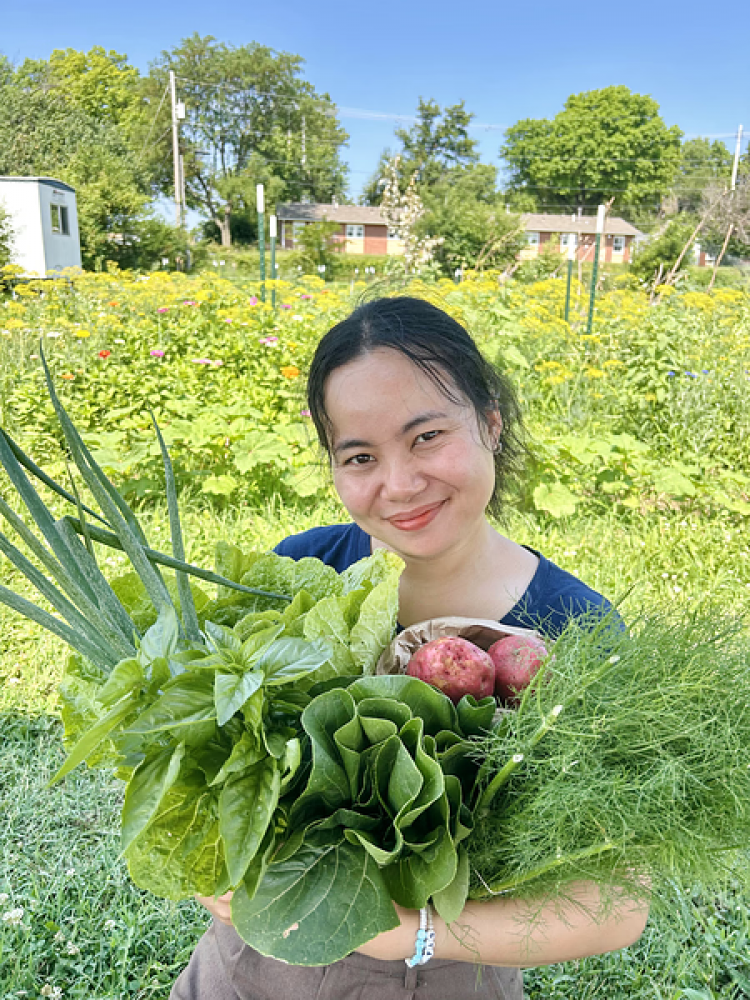
My name is Veronica Ma Kat. I was born in a refugee camp in Thailand, where I lived for 15 years before coming to the United States. My family fled to Thailand from Burma, Myanmar. Growing up, my family told me stories of how life in Burma was before my people, the Karen, were prosecuted. It was much different than it is now. Going to school was my favorite memory of life at the refugee camp. We had electricity at the school. We learned to cook, start a fire, how to take care of our families, and academics. When I came to the States, I immediately started high school in Kansas City at age 15. This was very difficult for me. Learning a new language in a new environment is a challenge, especially when you feel out of place. For example, in my culture, we wear flip-slops for everything. But I was the only kid in flip-flops while every other kid wore sneakers. There was a lot of diversity at the school, which was amazing but also overwhelming. I relied on my few friends who spoke my language a lot in the first few years since they knew more English than I did. I also helped my ESL teacher with the community garden at the school every Saturday during the summer. This really helped me adjust and the friends I made there helped me through my classes and they spoke my language. My computer class was my hardest class. I had never touched a computer before and now a teacher is telling me in English that I have to do Photoshop. I looked at him like I didn’t know anything, but I passed the class.
After my first year in the United States, my English got better. I joined a sports team and became more adapted to my new environment. I graduated high school and attended Donnelly College in Kansas City for two years. At college, I had access to more English as a Second Language classes and started a nursing program. I then decided to switch paths, so I changed my major to accounting at Kansas City Community College, where I got my associate’s degree. I recently got my bachelor’s degree in accounting from Park University. It took a long time, but I finished. I hope to go back to school in the future.
Coming to the United States from Thailand, adapting to the weather was really hard. It feels like a movie. I had never seen so much snow in my life, and I do not like the snow. The food is also very different. I am used to really spicy food, and Americans don’t like their stuff very spicy. I did not want to eat the provided school lunches when I first started school here.
I am most proud of the languages I can speak.
In Thailand, English is a common household language, but my family did not speak English much, and I learned many languages. I have raised my kids to learn many Asian languages as well as the culture.
A lot of the services my family received once we arrived in Kansas City were from Catholic Charities. So, when I was in high school, my parents asked me to help support them. I first helped as a translator for the people who spoke Karen, which is one of my native languages. Luckily, many different languages are spoken in my home country, so I can help many people from Asia. Then, the charity opened a new program called New Roots, which is a four-year training program that supports new Americans with agricultural experience to become independent farmers. They needed a part-time assistant, and I needed a job, so I decided this was the best fit for me to balance with school. Now, I am a sales associate with Catholic Charity and the New Roots program where I help interpret Karenic and Burmese languages, order wholesale products, handle customer service, and work with the farmers. It is a lot of responsibility. My favorite thing about the New Roots program is that I get to eat fresh vegetables, and since many of the farmers speak Burmese, I can easily ask them for things without waiting for an interpreter.
My mom is a farmer for the New Roots program. She loves the farming side of the job as it keeps her fit and seeing her plants grow makes her happy, but going to the farmers market and selling her produce is not something she enjoys. I take care of the sales side. This past year was her last year at the Juniper Gardens, the land that New Roots provided. We purchased a house with land. There is a lot of work to be done, but in a couple of years, she will be farming her own organic produce.
While I want to stay with New Roots for now, I dream of using my accounting degree in the future for a different job.
And while I don’t really like Kansas City, I have a strong community here. They support me and I support them.
If I could move anywhere in the United States, I would go out west.
If I could advise someone who wants to help refugees, I would tell them to try and find out what refugees need the most. For example, teenage refugees need a mentor. I needed someone who would help me through my education path. They often don’t know a lot of things, just as I didn’t before I had a mentor. Where do they find colleges, and how do they apply for them? How do they find and apply for scholarships?Teenagers need help from someone who knows these things.
It is very important to expose high school students to the opportunities available to them and how to navigate their options.
I want the world to know me as someone who is a helper in the community. Whenever they need help, they can reach out. When I help people, it makes me a lot happier. I want to be able to help someone do what they need to do, especially if it is difficult for them. It makes me more proud of it if I can help them accomplish what they need.
Our team members obtain informed consent from each individual before an interview takes place. Individuals dictate where their stories may be shared and what personal information they wish to keep private. In situations where the individual is at risk and/or wishes to remain anonymous, alias names are used and other identifying information is removed from interviews immediately after they are received by TSOS. We have also committed not to use refugee images or stories for fundraising purposes without explicit permission. Our top priority is to protect and honor the wishes of our interview subjects.