I Am a Civil Engineer; I Am Good at My Job
I hope I can find a good life and that I can continue in my profession.
Editing by Kathryn Cunningham
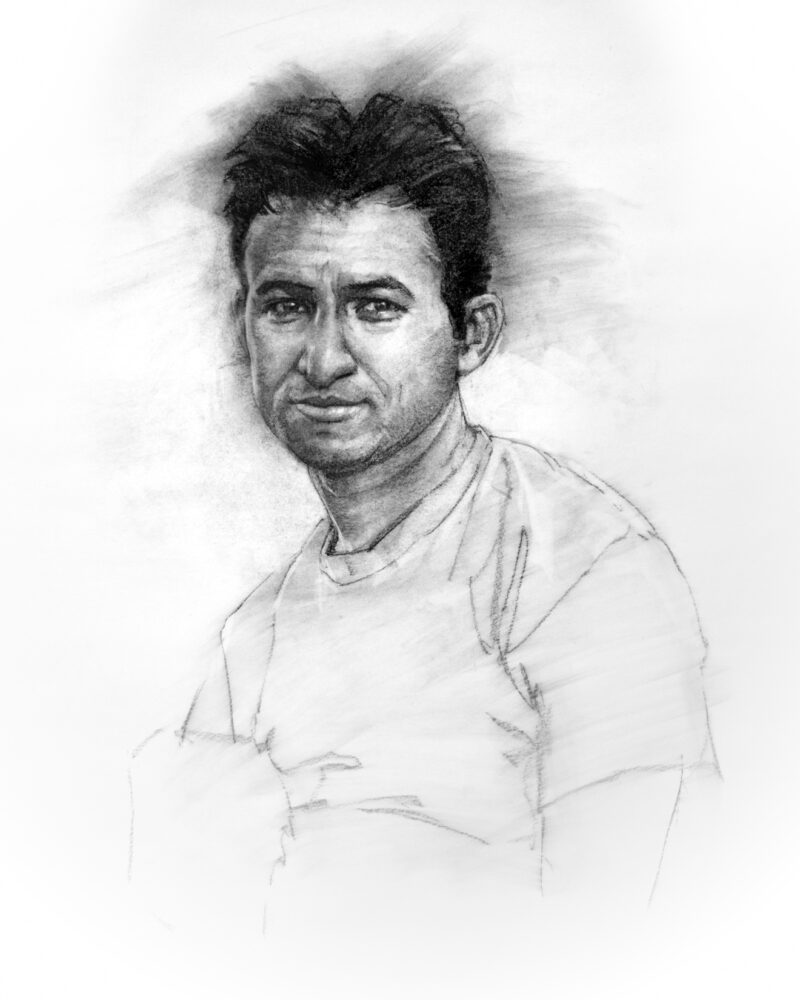
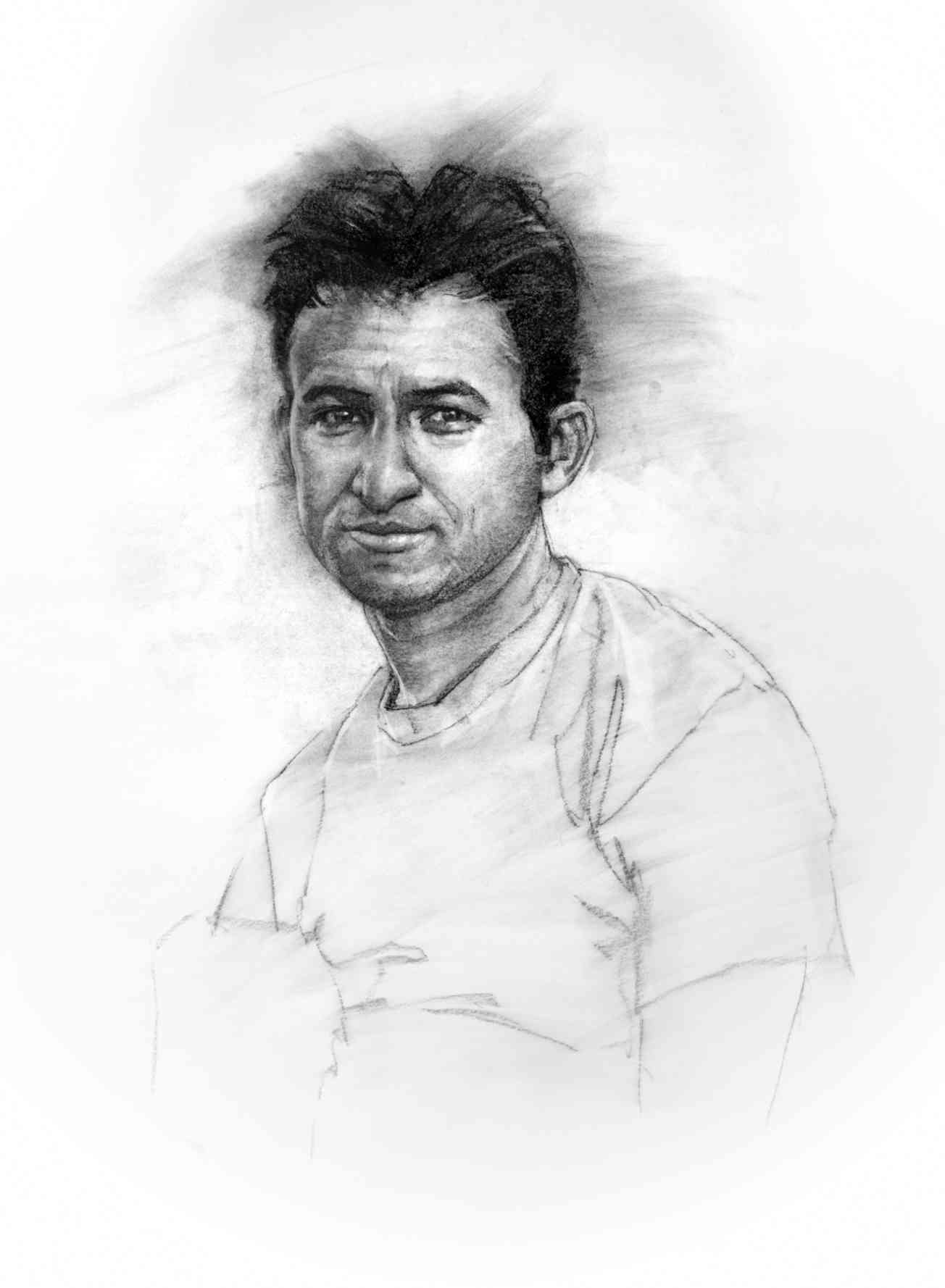
Charcoal Drawing by Elizabeth Thayer
“I am from Afghanistan, Kunar province. I am a civil engineer. I was good at my job and had a lot of experience. I worked for several years with an American company and also the Afghan government dealing with GPS and other software. The Taliban found out about me and said I must come and work with them. When I would go home to my village they would call me, or send people with warnings. One time, when I was driving back from my village to Kabul, they attacked me.
“I was attacked in the mountains between Kunar and Jalal Abad. They hid in the mountains and fired at my car. They hit the windows, tires and back side of the car. I jumped out and ran. I jumped down a steep ravine to the river bank where I was out of sight of the attackers and ran for a long time. A few months later, I left Afghanistan because I did not want to work for the Taliban.
“First we started our trip from Afghanistan to Tehran, Iran by plane. After two days we started our trip to Urmia [usually an 8 hour drive]. Urmia is one of the border cities in Iran. We started our trip between midnight and 2 am. We were six people: me and five Pakistanis. One person sat in the front seat and I was with the other five in back. It was so dangerous; everything was possible to happen. At three or four points we escaped from the police. After a long trip, we arrived at Urmia at midnight. The smugglers kept us in a house that was under construction. When we arrived, there were more than 30 people, including families, there, and we stayed for two days. In these two days we didn’t have enough food to eat, nor clean drinking water, as the smugglers had promised us. Neither did we have a place to sleep because the number of passengers was large and the place was small.
“After two days, we started back again on our trip to another city on the border with Turkey. At 2:00 in the morning we were woken up and started our trip at 3:00 am. The smugglers placed us in cars, more than six people per taxi. In the middle of the trip we changed cars. This time the smugglers made us get in the trunk. After a few hours we changed cars again. This time the smuggler had a truck. The truck was small and there were many passengers. It was a very hard trip. We sat with just two legs. Also, the weather was cold and snow covered all the earth and mountains. After a long trip we arrived in a place between the mountains. We stayed in a garage; it was very cold. We stayed there until the middle of the night.
“Again at midnight we started our trip. The truck came and we started our trip. After half an hour, we arrived at another stopping place. There was a big garage and more people. From there, we started our trip on foot through the mountains. It was a very dangerous trip across the border of Iran and Turkey. It was also very cold weather. The mountains were full of snow. Several places we hid because the army came. In the middle of the journey, the smuggler left us alone and said, ‘You must go this way.’ Nine hours later we arrived in Turkey. Another smuggler came and transferred us to a city called Van.
“We stayed in Van for five days, then the smugglers came and prepared a bus to Istanbul. After 20 hours we arrived in Istanbul. We stayed there for one week, then we went to Izmir and stayed in a hotel for four days, then at midnight again we started a trip to the beach site. In the middle of our trip to the beach, we ran into the Turkish police. We escaped and the smuggler hid us in a house. Oh God, it was so dangerous. We were more than 40 people in two rooms. Several times the police came and knocked on the door and tried to open, but we were silent. That night was full of fear and scares. There were many families, also children. In that night we didn’t sleep because we were afraid of the police and of thieves.
“The next night a smuggler came and again we started our trip to the beach. When we arrived, we were put more than 50 people in one boat, and so we started the trip to Lesbos Island. After 1.5 hours we arrived at Lesbos. When we arrived it was dark and nobody knew where we should go. We turned on a mobile GPS and started walking through the mountains. After three hours we ran into two people who were working with refugees. They call their coworkers and after a few minutes a wagon came. Step by step they moved us to a small place and they gave us tea, biscuits, clothes and shoes (when we arrived at the island our clothes and shoes were wet from the sea.) After 1.5 hours another team of helpers came (Doctors Without Borders) and they transferred us to their camps. At the camp they gave us food, water and blankets and a place to sleep. In the evening a police bus came and transferred us to Moria camp. We were so happy because after such a long time we had arrived in a safe place. We thought we had made it to our goal. It was not so, and we were faced with new problems because the gates of Europe were closed tight to refugees.
“We stayed in Moria camp for 2.5 months and were not allowed in that time to travel to Athens. After a long time, I and three friends got documents and made the trip to Athens. When we arrived there, we began a trip to the Macedonian border. Three times we tried to cross into Madedonia, but each time we failed. The third time the police caught us and transferred us to other camps in Thessaloniki. I was there for two weeks before I had some problems in my legs and I could not walk. My friends continued their journeys and I went back to Athens and stayed there for a while.
“From Athens, I tried six times to get to Germany by plane. Every time, I was caught and turned back. I finally decided to go by foot. I took a train to Thessaloniki. From there, I don’t know which countries we crossed to get to Germany. The smugglers took our phones and we usually traveled at night. After almost one and half months of traveling by foot and by car, hiding in villages, and sometimes being caught and sent back, I arrived in Germany.
“I spent 11 months in various camps in Germany. I had kidney stones and it was hard to find treatment because I was living in a camp. Now I am better and have started language training. I hope I can find a good life and that I can continue in my profession.”
Our team members obtain informed consent from each individual before an interview takes place. Individuals dictate where their stories may be shared and what personal information they wish to keep private. In situations where the individual is at risk and/or wishes to remain anonymous, alias names are used and other identifying information is removed from interviews immediately after they are received by TSOS. We have also committed not to use refugee images or stories for fundraising purposes without explicit permission. Our top priority is to protect and honor the wishes of our interview subjects.