The U.S. Healthcare Workforce Shortage Is Growing — But So Is The Solution

The U.S. healthcare system faces an urgent workforce shortage that will only increase in the coming years1. Today Virginians experience a shortfall of 770 primary care physicians that will grow to nearly 1,000 by 20352. These shortages strain every level of care, leading to longer wait times, increased physician burnout, and disparities in access to healthcare — especially in rural communities, or Health Professional Shortage Areas (HPSAs).
Meeting this growing demand requires the healthcare system to embrace innovative and sustainable solutions. One highly promising solution being piloted in 12 states including in Virginia, is expanding pathways for experienced International Physicians to join the U.S. healthcare workforce.
Broad Skill Set, Deep Experience
Hiring International Physicians through a Provisional License pathway or in other roles not only fills vacancies but also brings valuable expertise to healthcare teams. These International Physicians are not novice physicians; they are highly trained professionals who have completed rigorous medical education and have extensive clinical experience, including work in resource-limited settings. Currently International Medial Graduates (IMGs) make up about 24.7% of all practicing physicians in the U.S.3
Foreign-trained physicians not only help to alleviate the physician shortage, they also bring a broad range of advantages, including proven clinical excellence, a strong commitment to primary care and underserved communities, and a cost-effective, timely way to expand the healthcare workforce alongside traditional pathways.
Studies show that IMGs provide care equal to or surpassing that of U.S.-trained physicians, particularly in managing chronic diseases. As Dr. Hosai Hesham noted during the RPA Coalition’s 2024 Webinar Series, “most international medical graduates were at the same level, if not slightly better, in managing chronic conditions, both regarding mortality and readmission rates.”4
Addressing Health Equity and Workforce Distribution
The physician shortage is not solely a matter of numbers. Unequal distribution affects rural areas, immigrant communities, and communities of color disproportionately.
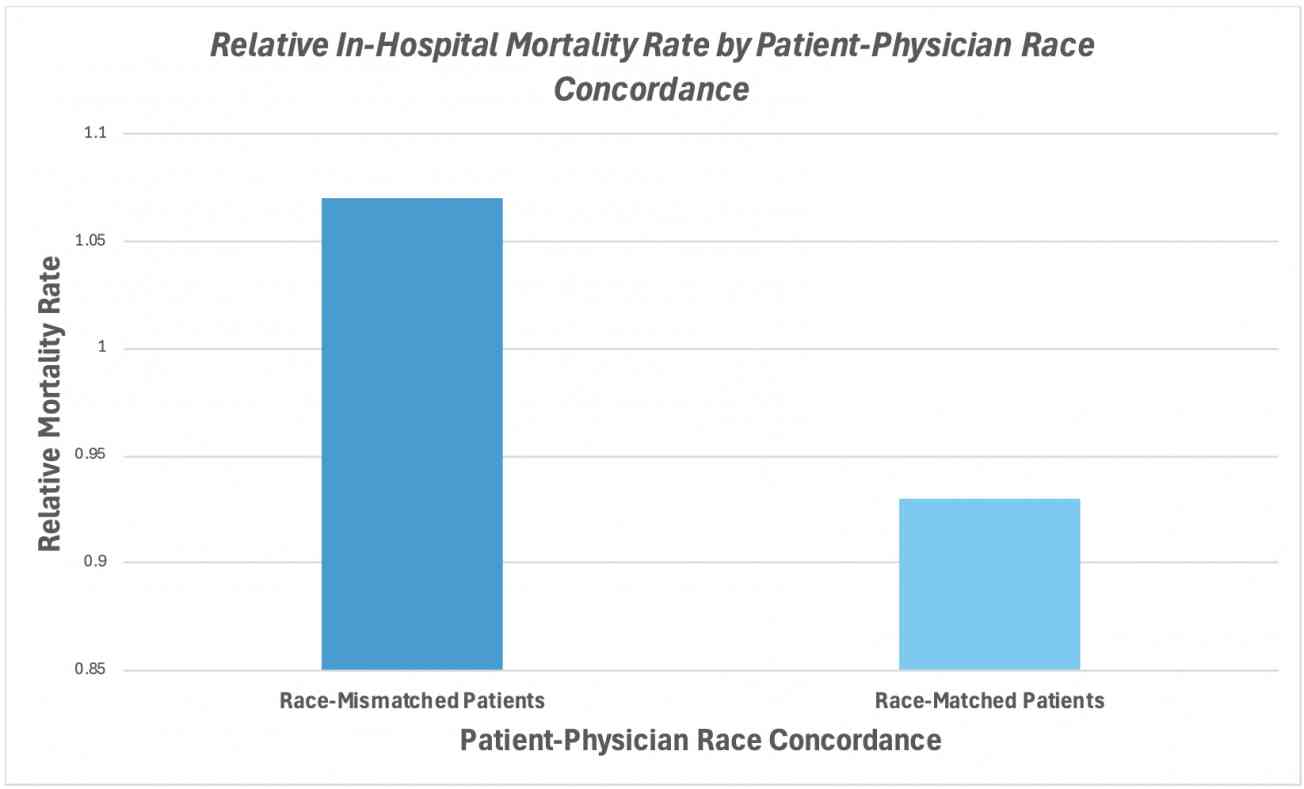
IMGs contribute more than medical expertise. They offer cultural competence, language skills, and lived experiences that build patient trust and improve communication. This is particularly crucial for minority patients. Studies show they experience significantly better outcomes when treated by physicians of the same ethnic background. For instance, a major study found race-matched patients were 13 percent less likely to die in the hospital compared to those who were not (“Impact of Patient-Physician Race Concordance on Mortality”)5
The chart below illustrates these mortality rate differences between race-matched and race-mismatched patients.
A Cost-Effective Solution for a Critical Need
The physician shortage requires innovative and inclusive solutions. Expanding Graduate Medical Education slots are expensive and slow. It often requires years to impact the physician supply. Meanwhile, thousands of qualified IMGs could be utilized to mitigate this costly issue.
By embracing the talent, dedication, and experience of international physicians, Medical Care Facility Executives in Virginia and in other states can create a healthcare system that is more equitable and resilient, all the while improving access to healthcare in Rural areas and HPSAs. Hiring and integrating IMGs is a strategic and forward-thinking investment in the future of American healthcare.
It’s time to work toward fully recognizing International Physicians as the essential solution they already are.
The Refugee Physicians Advocacy Coalition (RPA) hosts a registry of IMGs and works with career and upskilling partners at Upwardly Global, Virginia Career Works, and VCU Global Education to ready International Physicians for U.S. healthcare roles. Interested Physician Recruiters may contact us for more information about potential candidates.
Contact UsAssociation of American Medical Colleges (AAMC), New AAMC Report Shows Continuing Projected Physician Shortage, press release, March 21, 2024,https://www.aamc.org/news/press-releases/new-aamc-report-shows-continuing-projected-physician-shortage.
Health Resources & Services Administration | Workforce Projections, data.HRSA.gov.
Amisha Jaiswal, Virginia’s New Pathway for International Physicians: Key Insights from RPA’s Webinar for Medical Executives, Refugee Physicians Advocacy Coalition, January 17, 2025.
American Medical Association (AMA), IMG Facts — 2024, International Medical Graduates Section, October 11, 2024, https://www.ama-assn.org/system/files/ama-img-fact-sheet.pdf.
IHan Ye, Junjian Yi; Patient-Physician Race Concordance, Physician Decisions, and Patient Outcomes. The Review of Economics and Statistics 2023; 105 (4): 766–779. doi: https://doi.org/10.1162/rest_a_01236.
Helping ITPs Succeed: Insights from Leading Support Programs
De-skilling and the Mental Health Effects Among Refugee Physicians
Discussions of physician workforce policy tend to organize themselves around numbers. Shortage projections, residency slot allocations, and licensing timelines dominate the literature, and for understandable reasons. More than 83 million people in the United States currently live in areas without sufficient access to a primary care physician, and projections suggest the country could face a shortage of as many as 120,000 physicians by 2030.