READ OUR OFFICIAL STATEMENT ON THE U.S. FY2026 REFUGEE ADMISSIONS CAP AND PRIORITIZATION
SHARE YOUR EXPERIENCES WITH DISPLACEMENT, RESETTLEMENT, DEPORTATION, AND ICE #ANONYMOUSAMONGUS
July 24, 2023

What Supporting Refugees’ Mental Health Looks Like

Image2

I want to help newcomers because I see myself in them. A young Afghan woman I mentor, we’ll call her Sarah, reminds me of myself 6 years ago. She is the same age I was when I came to the U.S. She is by herself. Sometimes I get emotional thinking about Sarah managing to start a new life all by herself. Cooking for herself, taking care of herself, and doing it without family or community.

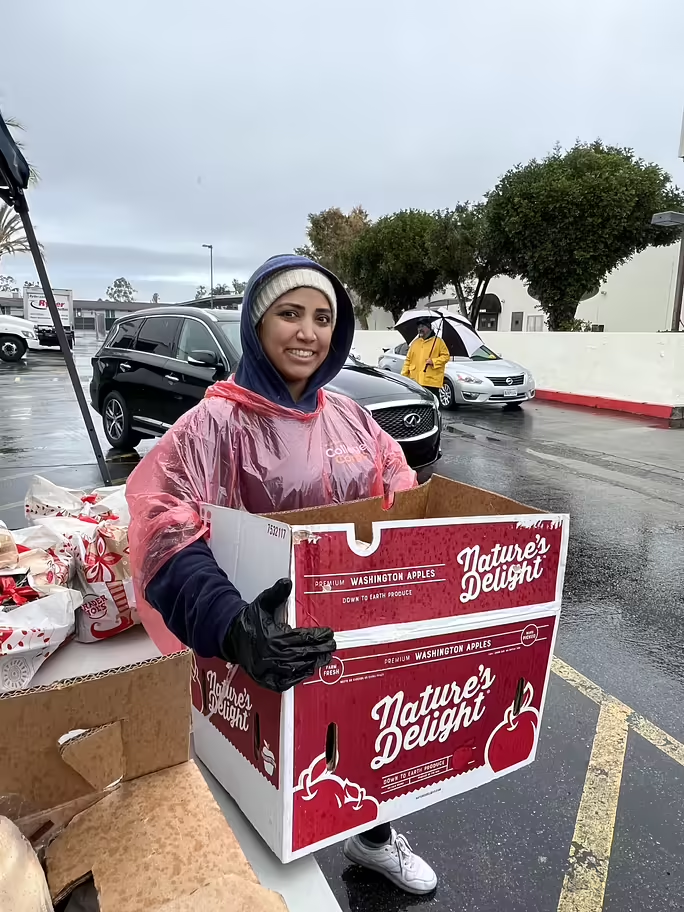
While studying at Irvine Community College, I joined the College Corps. College Corps is a California initiative where college students work to solve community problems. My College Corps chapter is working to help diminish food insecurity. We put together food boxes from the local food bank and distribute them via drive-through service. Every time I volunteer I am allowed to take 1 box and 1 bag. I don’t need the food, so I have been giving my box to Sarah. She lives by herself in a room she rents from an older woman. I know sharing food with Sarah saves her money and helps her support her family who is still in Afghanistan.

Life is tough here and it is hard to re-start in the U.S.. Supporting refugees with mental health is the most important thing. They have to start from scratch. They are fighting just to live, to live a life with peace and no drama or war. I helped Sarah understand that she has insurance and that she can use it to seek therapy. It would help her to talk.

People need to change their idea of therapy. Therapy is not just for people who suffer from severe mental health challenges. It is also for people who just need a little help, a little push, a little direction. I gave Sarah the tips that helped me when I was in therapy when she started her sessions. Sarah has done so much for herself. I am so proud of her.

Sarah’s journey reminds me of another of the individuals I mentor. She is a friend from Afghanistan who moved to Texas. I remember when I dropped her off at the airport, she was like, “I don’t know where I’m going but I want to move. Life here in California is so expensive and so I need to move somewhere I can afford.” She was also experiencing mental health challenges and having a hard time being away from her family. She connected with a therapist. And now she’s got her driver’s license. She is working toward getting a car. She has a job. She is able to move forward.
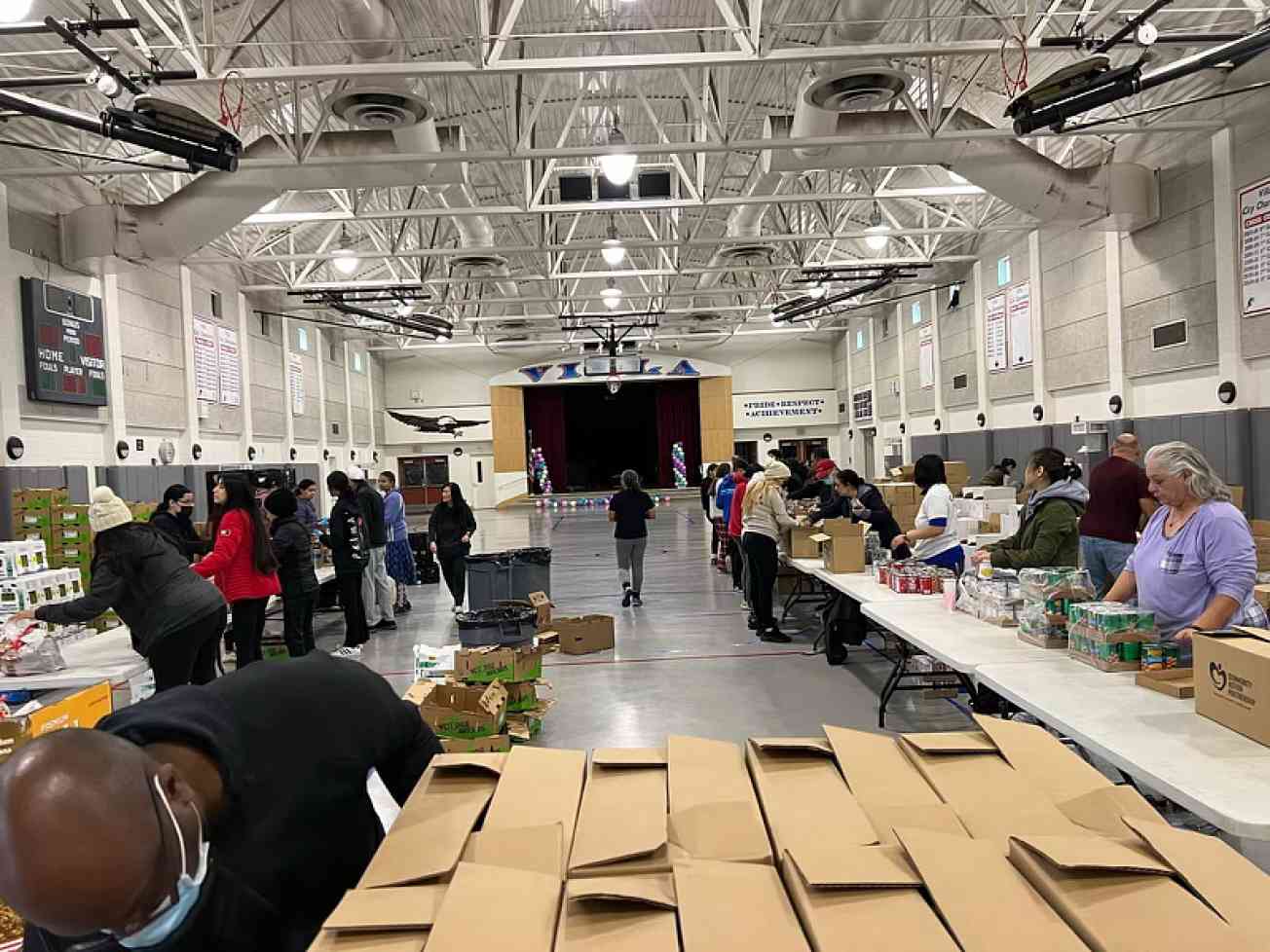

Image3
Food distribution through College Corps in Irvine California.

Refugees just need support. It doesn’t have to always be in person. We can connect with someone online. It is easy to volunteer to give a little support to someone new. Anyone can help. Even just by starting a new TSOS club at your community college or University. Young people have a passion to help.

Bringing joy to someone is an amazing feeling. Having someone help me made all the difference and I want to give that same gift to others. Helping newcomers is important to them, but it is also important to me. It brings me joy. I use my time on something valuable, and at the same time, I see people who have a harder situation than I have, and it reminds me to be thankful every single day. Being blessed to have a new day, new sunshine, and new opportunities. God has blessed me with another day and I am grateful to be able to experience it by helping others.


For more information about refugees' mental health, read TSOS’s Mental Health feature:

Not all wounds are visible

To volunteer in California or with one of our partner organizations near you, find a community programs team in your area:

TSOS Community Programs
What would you do if you had to leave everything behind?

By the end of 2024, more than 123.2 million people worldwide had been forcibly displaced from their homes due to war, persecution, or human rights abuses.

An increase of 7.2 million over 2023, that’s more than 19,619 people every day — roughly one person every 4.4 seconds.

They arrive in refugee camps and other countries, like the US, seeking the one thing they’ve lost: safety.

Fleeing political imprisonment, ethnic violence, religious persecution, gang threats, or war crimes, they come with what little they managed to carry:

Legal papers – if they’re lucky.

A single backpack.

Sometimes a child’s hand in theirs.

They also carry the weight of what they left behind: fractured families, homes they’ll never return to, professions they loved, friends and relatives they may never see again.

They carry loss most of us can’t imagine – but also the truth of what they’ve endured.

At TSOS, we believe stories are a form of justice. When someone shares their experience of forced displacement, they reclaim their voice. And when we amplify that voice – through film, photography, writing, and advocacy – the world listens. Hearts soften. Communities open. Policy begins to shift.

That shift matters. Because when neighbors understand instead of fear…

when lawmakers see people, not politics…

when a teacher knows what her student has survived…

Rebuilding life from the ashes becomes possible.

We’re fighting an uphill battle. In today’s political climate, refugee stories are often twisted or ignored. They’re reduced to statistics, portrayed as national threats, or used to score political points.

The truth – the human, nuanced truth – gets lost, and when it does, we lose compassion.

We are here to share their truth anyway.

At TSOS, we don’t answer to headlines or algorithms. We are guided by a simple conviction: every person deserves to be seen, heard, and welcomed.

Our work is powered by the people we meet — refugees and asylum seekers rebuilding after loss, allies offering sanctuary, and communities daring to extend belonging.

Your support helps us share their stories — and ensure they’re heard where they matter most.

“What ultimately persuaded the judge wasn’t a legal argument. It was her story.”

— Kristen Smith Dayley, Executive Director, TSOS

Will you help us keep telling the truth?

No donation is too small — and it only takes a minute of your time.

Why give monthly?

We value every gift, but recurring contributions allow us to plan ahead and invest more deeply in:

  • New refugee storytelling and advocacy projects
  • Resources to train and equip forcibly displaced people to share their own stories
  • Public education that challenges fear with empathy
  • Local efforts that help communities welcome and integrate newcomers

As our thank-you, monthly supporters receive fewer fundraising messages — and more stories of the impact they’re making possible.

You don’t have to be displaced to stand with those who are.

Can you give today — and help carry these stories forward?

Add Impact to Your Inbox
Sign up for our emails to get inspiring stories and updates delivered straight to you.
Subscribe
© 2025 Their Story is Our Story Privacy Policy
Their Story is Our Story is a 501(c)3 Non-Profit Organization under the United States Internal Revenue Code. All donations are tax-deductible. Our tax identification number is 812983626.