READ OUR OFFICIAL STATEMENT ON THE U.S. FY2026 REFUGEE ADMISSIONS CAP AND PRIORITIZATION
SHARE YOUR EXPERIENCES WITH DISPLACEMENT, RESETTLEMENT, DEPORTATION, AND ICE #ANONYMOUSAMONGUS
October 19, 2021

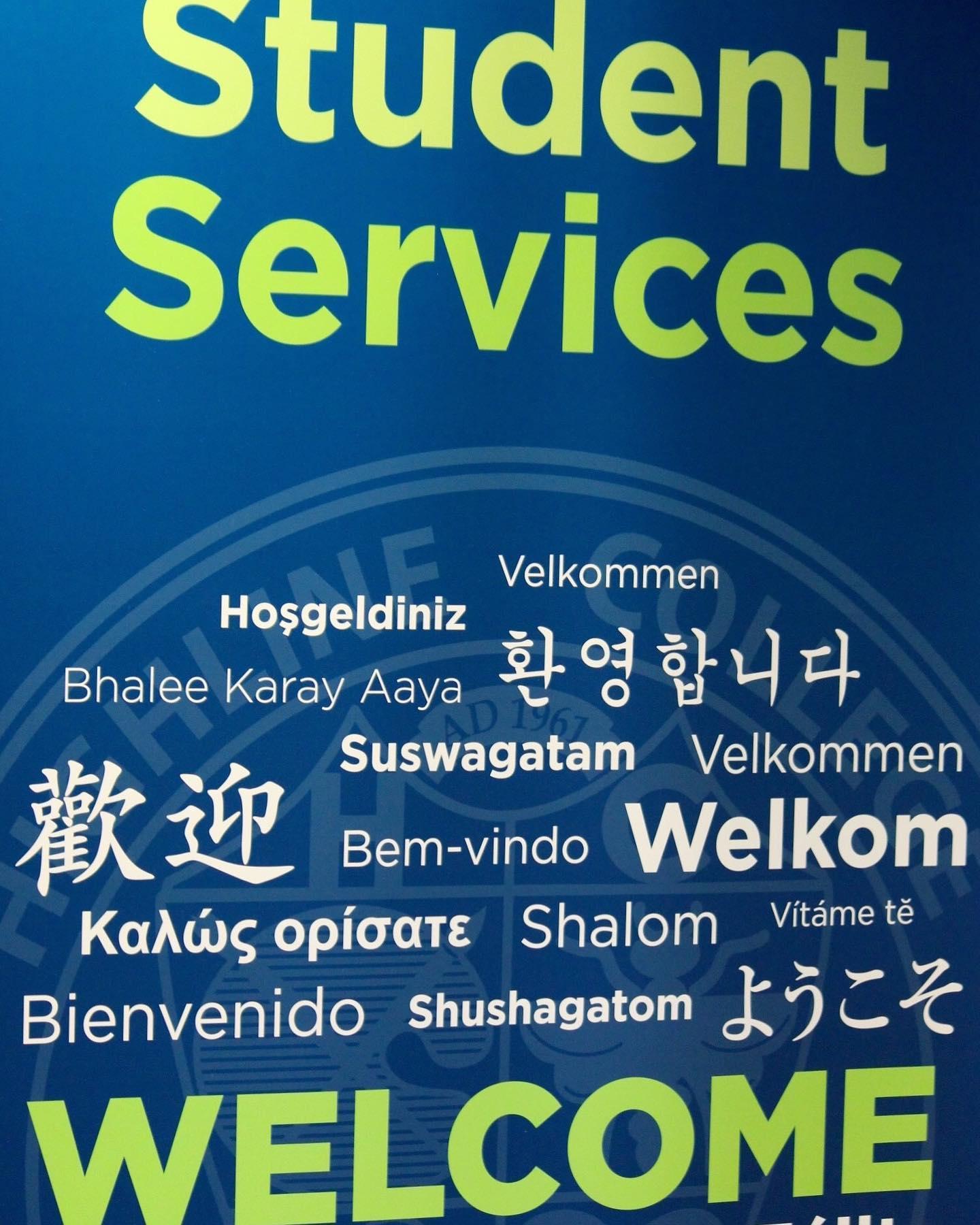
Puget Sound Welcome Back Center: Creating Career Pathways for High-Skilled Refugees
87957871 2576961372426967 1946961696648069120 n

Imagine years of experience in a career as a doctor, or engineer, or pharmacist being cut short in your prime. “Brain waste” occurs when a high-skilled immigrant or refugee is underemployed as a low-skilled worker because their skills, qualifications, or education are not recognized in the US. How can brain waste be mitigated?

Puget Sound Welcome Back Centers were established at Highline Community College and Edmonds Community College to assist internationally trained professionals to make the best use of their professional skills through innovative individualized career counseling and educational services. They work with individuals, employers, city and state agencies, and educational institutions to welcome people back to the careers they’ve been trained for. Linda Faaren, the director of the Puget Sound Welcome Back Center located at Highline College in Des Moines, Washington explains, “Qualifications to re-enter professional fields vary; every occupation is different. For example, teachers in Washington State need to have the equivalent of a bachelor’s degree. They need to have teacher preparation and take two tests. Many of our international newcomers can do that easily. It’s just putting all the pieces together. Refugees work so hard to get here, sometimes it’s just a matter of pointing them in the right direction so they can show what they know.”
81981014 2480310508758721 7524494677790162944 n
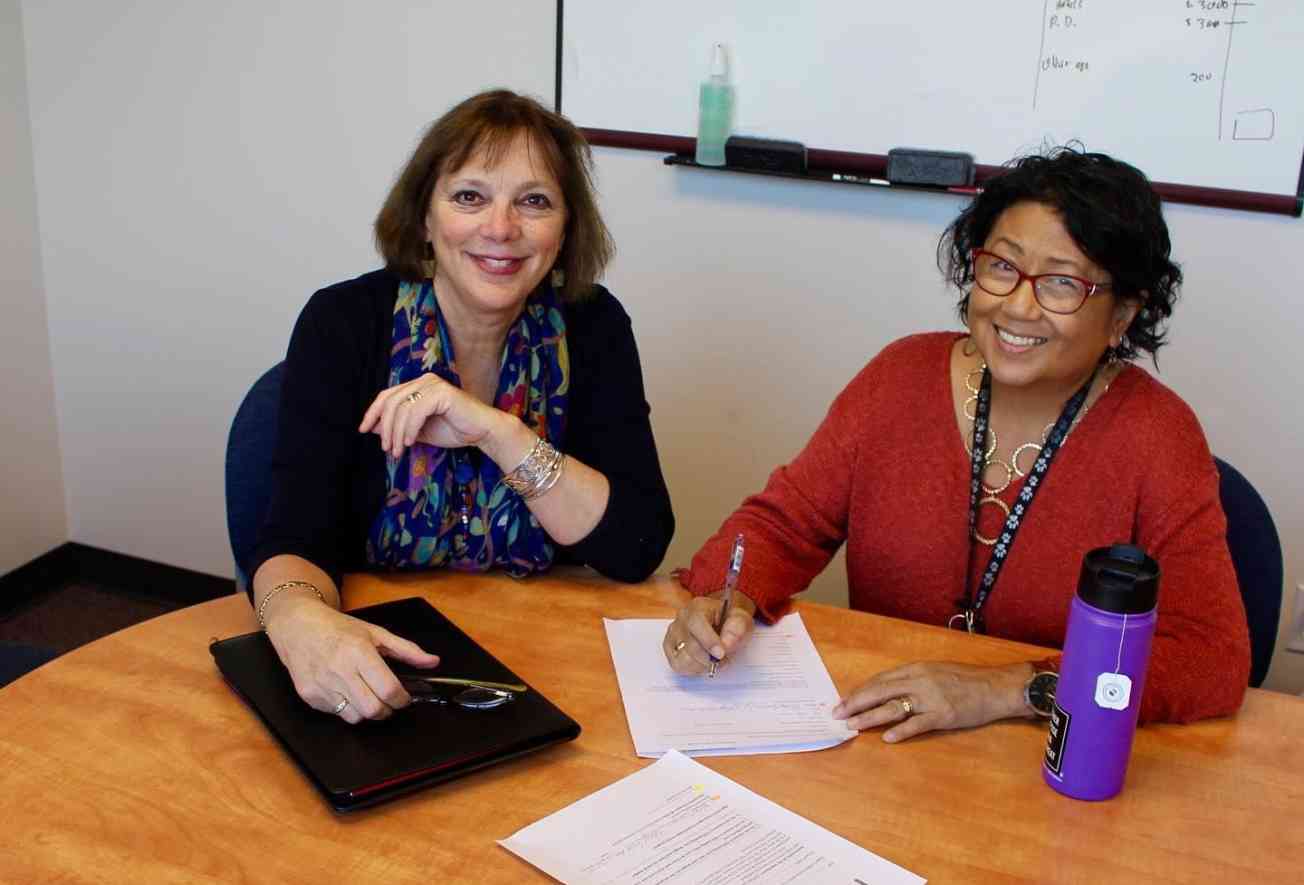
Linda Faaren (left) director of the Puget Sound Welcome Back Center located at Highline College in Washington; Cheryl Carino-Burr (right) is the center’s Health Care Case Manager. Photo by Sherianne Schow

“When it may take a long time to meet the requirements for a profession, we try to get them into a similar field. For example, foreign attorneys can become a paralegal rather quickly. That gets them into the professional environment, and, while working, they can pick up the classes they need to move up. Nurses start out as nursing assistants, teachers start out as parent educators, engineers start out as drafters — they’re in environments where they can show what they already know. And that’s the biggest thing. If they can impress their co-workers, they’ll gain champions for their cause.”

Cheryl Carino-Burr, the center’s health care manager tells professionals, “Even though you’re not a doctor in the United States, you’re still a doctor.” They come with the titles and degrees they have earned. If those are stripped away, it makes them depressed. We have a fully trained doctor who started working here as a medical research assistant but retained his title.”

One student, a trained pharmacist from Iraq, was hoping finding employment in the U.S. would be easy. Though she made every effort, she was unsuccessful until being introduced to the Welcome Center at Highline College where she was instructed on how to obtain the proper certifications, and was finally able find work in her field. To read her story, click here.

In 2001 Dr. Jose Ramon Fernandez-Pena founded a project at San Francisco State University with the intent of connecting the un-tapped pool of immigrant health professionals residing in California and the need for a health workforce that better reflects the linguistic and cultural diversity of our country. Since its inception, the Welcome Back Initiative has been working to welcome these skilled professionals back to their careers. This national initiative has served close to 15,000 participants from 167 countries. The national network is comprised of 10 centers in 9 states, two of which are here in Washington state.

What would you do if you had to leave everything behind?

By the end of 2024, more than 123.2 million people worldwide had been forcibly displaced from their homes due to war, persecution, or human rights abuses.

An increase of 7.2 million over 2023, that’s more than 19,619 people every day — roughly one person every 4.4 seconds.

They arrive in refugee camps and other countries, like the US, seeking the one thing they’ve lost: safety.

Fleeing political imprisonment, ethnic violence, religious persecution, gang threats, or war crimes, they come with what little they managed to carry:

Legal papers – if they’re lucky.

A single backpack.

Sometimes a child’s hand in theirs.

They also carry the weight of what they left behind: fractured families, homes they’ll never return to, professions they loved, friends and relatives they may never see again.

They carry loss most of us can’t imagine – but also the truth of what they’ve endured.

At TSOS, we believe stories are a form of justice. When someone shares their experience of forced displacement, they reclaim their voice. And when we amplify that voice – through film, photography, writing, and advocacy – the world listens. Hearts soften. Communities open. Policy begins to shift.

That shift matters. Because when neighbors understand instead of fear…

when lawmakers see people, not politics…

when a teacher knows what her student has survived…

Rebuilding life from the ashes becomes possible.

We’re fighting an uphill battle. In today’s political climate, refugee stories are often twisted or ignored. They’re reduced to statistics, portrayed as national threats, or used to score political points.

The truth – the human, nuanced truth – gets lost, and when it does, we lose compassion.

We are here to share their truth anyway.

At TSOS, we don’t answer to headlines or algorithms. We are guided by a simple conviction: every person deserves to be seen, heard, and welcomed.

Our work is powered by the people we meet — refugees and asylum seekers rebuilding after loss, allies offering sanctuary, and communities daring to extend belonging.

Your support helps us share their stories — and ensure they’re heard where they matter most.

“What ultimately persuaded the judge wasn’t a legal argument. It was her story.”

— Kristen Smith Dayley, Executive Director, TSOS

Will you help us keep telling the truth?

No donation is too small — and it only takes a minute of your time.

Why give monthly?

We value every gift, but recurring contributions allow us to plan ahead and invest more deeply in:

  • New refugee storytelling and advocacy projects
  • Resources to train and equip forcibly displaced people to share their own stories
  • Public education that challenges fear with empathy
  • Local efforts that help communities welcome and integrate newcomers

As our thank-you, monthly supporters receive fewer fundraising messages — and more stories of the impact they’re making possible.

You don’t have to be displaced to stand with those who are.

Can you give today — and help carry these stories forward?

Add Impact to Your Inbox
Sign up for our emails to get inspiring stories and updates delivered straight to you.
Subscribe
© 2025 Their Story is Our Story Privacy Policy
Their Story is Our Story is a 501(c)3 Non-Profit Organization under the United States Internal Revenue Code. All donations are tax-deductible. Our tax identification number is 812983626.