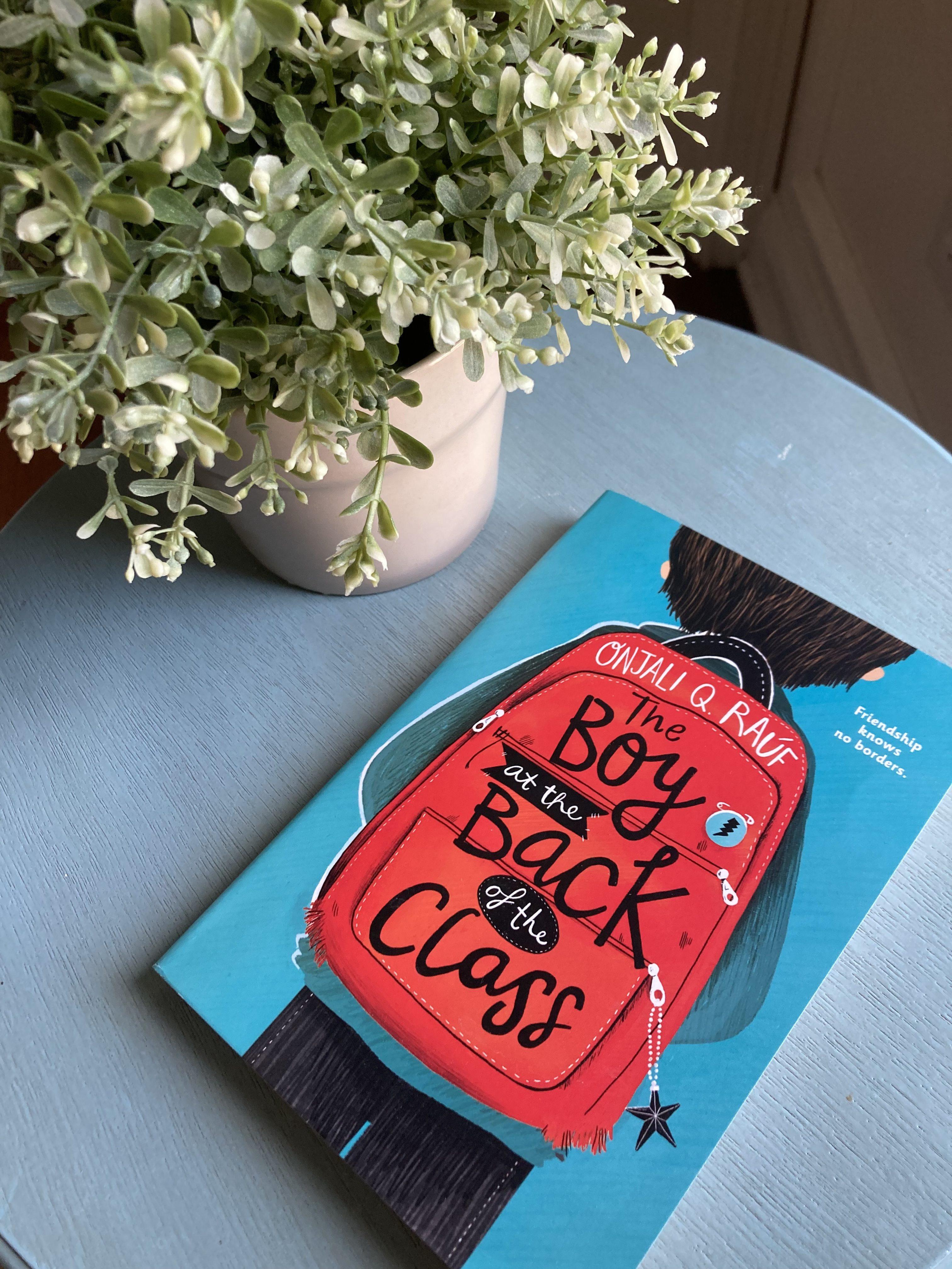
In The Boy at the Back of the Class, by Onjali Q. Rauf, five students learn they can make a difference and the value of friendship. Ahmet is a new student in school, he is a 9 year old Syrian refugee. This is the story of how he becomes friends with Alexa, Michael, Josie, and Tom. Ahmet continually shows his bravery as he learns to adapt to a new place and to trust his new friends. Alexa, Michael, Josie and Tom learn that they can speak out and stand up and that friendship is a joy no matter the differences. In this book, there were both children and adults that were unkind, something that we come across on a daily basis. However, the five main characters found ways to stand up to those that were unkind. They learned that by talking to helpful and kind adults around them, they could make plans and make a difference. This book would make a great read-aloud for 8 to 12 year olds and would provide for lots of discussion about how to be a friend and specifically how to support refugee friends. The book ends with several helpful pages of questions to consider and offers ideas of how individuals can help with the current refugee crisis. For other options to find ways to help visit: https://tsosrefugees.org/blog/2021/08/16/how-you-can-help-our-afghan-allies
Helping ITPs Succeed: Insights from Leading Support Programs
Partner Profile: No One Left Behind
Their Story is Our Story and No One Left Behind (NOLB) joined forces in 2025 to launch the StoryShield program.
We spoke with Matthew Marcellus, Director of Communications with NOLB, and asked what the partnership with TSOS has meant for his organization and their Afghan clients.
Context with Layma
Social media presents us with an endless scroll of headlines and ‘hot takes’. What’s often missing is context. What is the history that led up to an event? Whose interests are served by a certain policy? What effects is that policy having on people’s lives? Layma Murtaza produces and hosts the video series “Context with Layma”, featured on Their Story is Our Story’s social media channels. We spoke to her about the context of her own life, as an Afghan-American and a professional in humanitarian aid, that led her to use storytelling to illuminate the personal and political context behind the headlines.