2020 will probably not be remembered too fondly for most. The Coronavirus pandemic has wreaked havoc and heartbreak in so many lives. For individuals and families that have been forced to flee from their home countries and live in camps and make-shift accommodation it’s meant even tougher times, with essential supplies and aid being held up, and sometimes not being able to get through at all. It is sobering to consider that as many of us panic-bought and stocked up on ‘essential’ items how little those living in camps have. Though we could never really imagine the physical discomforts and fight for survival that must be endured, perhaps some of us have learnt a little something of the feelings of loneliness. For even when displaced individuals reach a destination where they feel safe and their basic physical needs are met, that loneliness and alienation must inevitably still be felt, and magnified by the Covid-19 pandemic. Language barriers as well as huge cultural, bureaucratic, and religious differences must be muddled through and managed in order to survive and try and re-establish life in a foreign country. In a country that has been in and out of lockdown for 5-6 months out of the last 9 how immensely difficult this must be.
The Khani Family, originally from Iraq, have been living in a basic central London hotel for 4 months, with the mother and 5-year-old daughter in one room and the father and seven-year-old son in another. They have finally been housed in a small flat in a London borough and have a place to call their own. They have had to negotiate registering with doctor’s surgeries, school administration, legal aid, as well as getting to grips with a new area in a near to lockdown situation.
Mum, Kalila, is suffering with chronic back pain, inevitably made worse by the plastic upright lounge furniture supplied by the council. Twice when we have delivered donations to the family she has been on the phone with a translator and a doctor desperately trying to get an appointment. Just a small hurdle, I’m sure, in what is to be a huge period of adjustment for them.
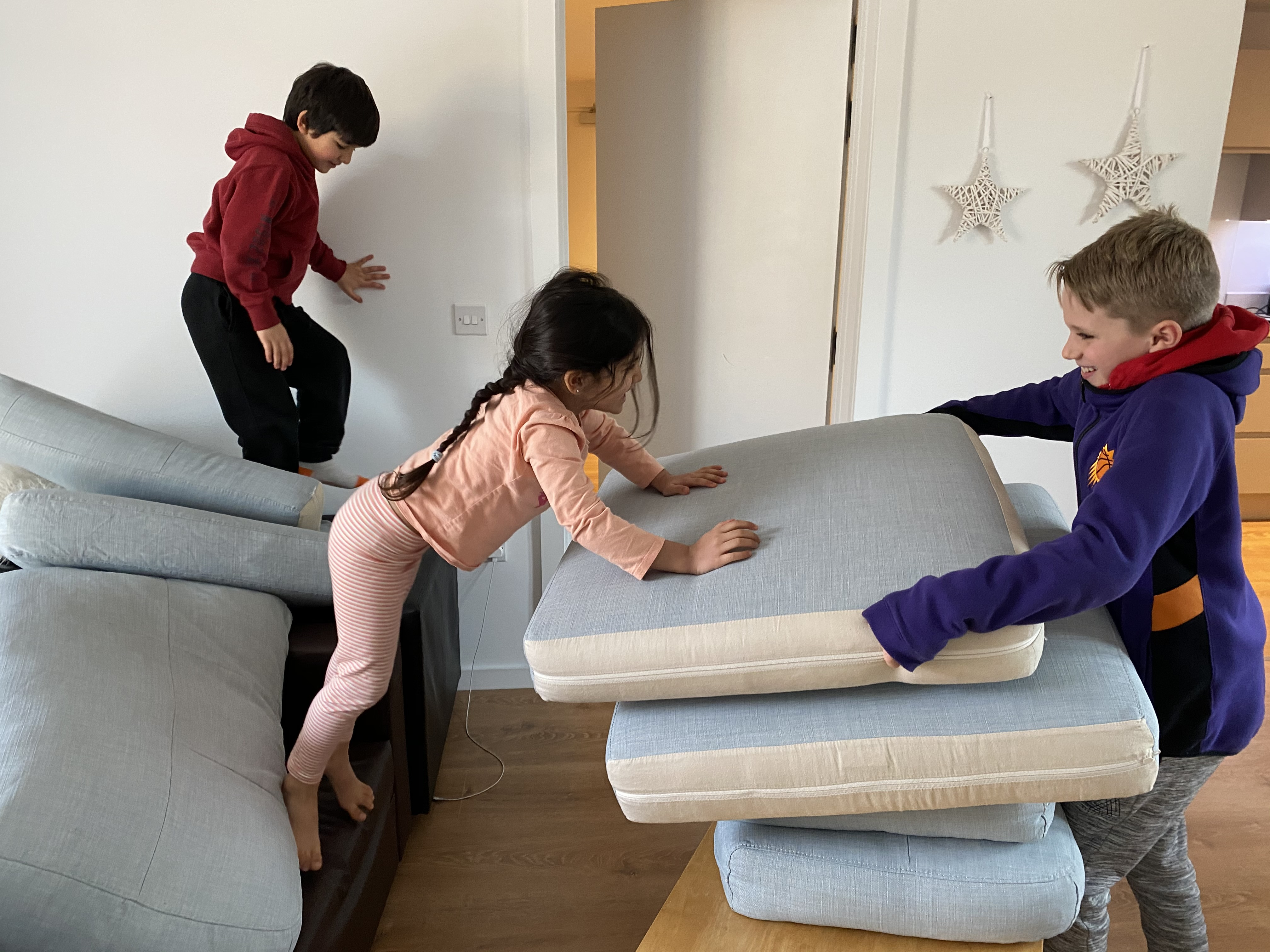
For all their uncertainty, one of their greatest needs, and probably one of the greatest needs of everyone, (after basic physical needs are met), is for friendship. As their infectiously cheerful seven-year-old son, Peros, threw his arms around my nine-year-old son’s neck and declared him his best friend, I felt overwhelmed. Kalila said her children were so desperate to play with others. And that need doesn’t diminish as we get older. The need for friendship, acceptance, and a listening ear is so important. Though we might feel that what we can do is limited during this unusual time, there are things we can do and organisations to help support our efforts. Have a look around your area, at facebook pages, and online resources. Host Nation offers a befriending service where matches, introductions, and initial befriending can take place online with regular video calls. A virtual hug and a listening ear is a good place to start for 2021. (Names have been changed)
Helping ITPs Succeed: Insights from Leading Support Programs
Partner Profile: No One Left Behind
Their Story is Our Story and No One Left Behind (NOLB) joined forces in 2025 to launch the StoryShield program.
We spoke with Matthew Marcellus, Director of Communications with NOLB, and asked what the partnership with TSOS has meant for his organization and their Afghan clients.
Context with Layma
Social media presents us with an endless scroll of headlines and ‘hot takes’. What’s often missing is context. What is the history that led up to an event? Whose interests are served by a certain policy? What effects is that policy having on people’s lives? Layma Murtaza produces and hosts the video series “Context with Layma”, featured on Their Story is Our Story’s social media channels. We spoke to her about the context of her own life, as an Afghan-American and a professional in humanitarian aid, that led her to use storytelling to illuminate the personal and political context behind the headlines.