Written by Twila Bird
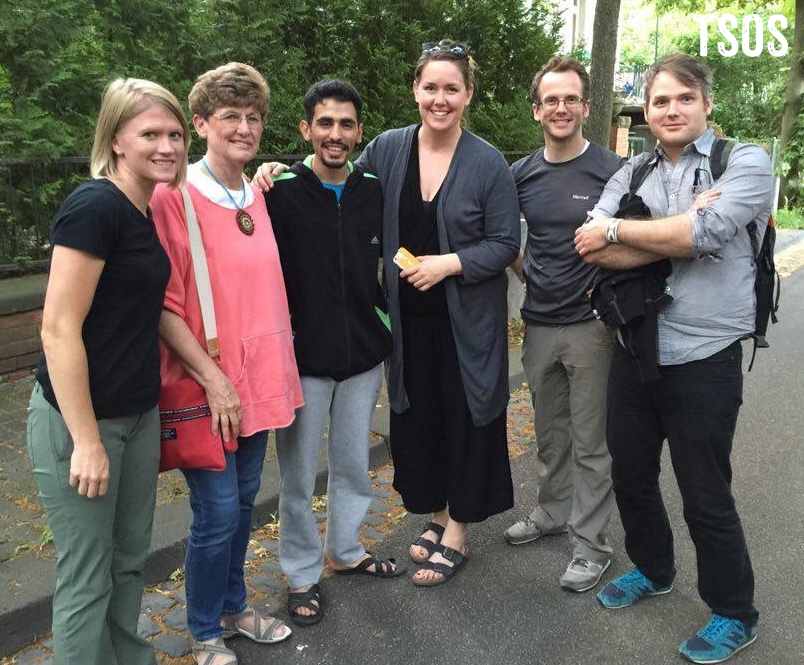
Here we are posing with award-winning pianist Aeham Ahmad near his temporary home in Wiesbaden, Germany, on the day we interviewed him (July 7, 2016). He had just returned from a long, tiring trip to Poland, where he had performed yet another concert without pay. He was tired but graciously met with us and shared his commitment to help solicit aid for his fellow refugees through his music. His longing for his wife and children, who were still awaiting travel documents before joining him, and his grief for those still suffering in his homeland were palpable.
Helping ITPs Succeed: Insights from Leading Support Programs
Partner Profile: No One Left Behind
Their Story is Our Story and No One Left Behind (NOLB) joined forces in 2025 to launch the StoryShield program.
We spoke with Matthew Marcellus, Director of Communications with NOLB, and asked what the partnership with TSOS has meant for his organization and their Afghan clients.
Context with Layma
Social media presents us with an endless scroll of headlines and ‘hot takes’. What’s often missing is context. What is the history that led up to an event? Whose interests are served by a certain policy? What effects is that policy having on people’s lives? Layma Murtaza produces and hosts the video series “Context with Layma”, featured on Their Story is Our Story’s social media channels. We spoke to her about the context of her own life, as an Afghan-American and a professional in humanitarian aid, that led her to use storytelling to illuminate the personal and political context behind the headlines.