The Journey: I've Learned to Be Grateful for Everything
Immigration is tough, very tough.
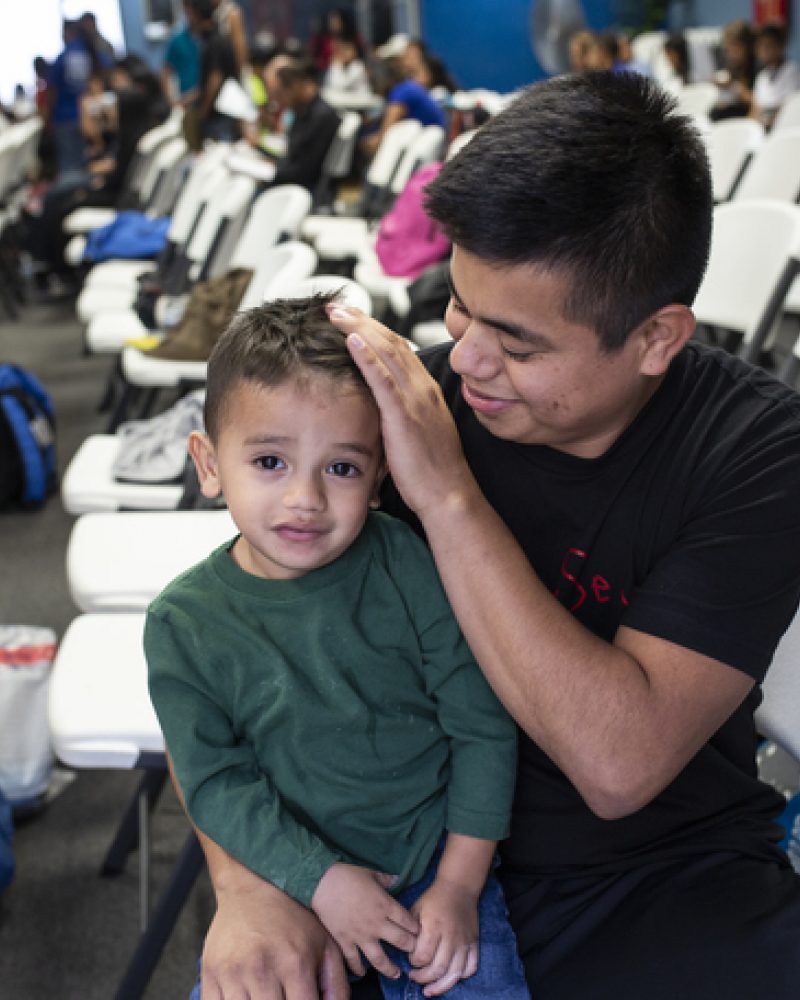
My childhood in Guatemala was a little hard and a little good. The best was when the whole family gathered together and just talked and laughed and had a good time. There was a lot of good food as well. But when my parents separated I had to take charge and begin working and going to school at a young age. I took any kind of job I could find. I left Guatemala with my wife and son because while I was searching for work I found myself with people that wanted to do bad things. I didn’t want to do it but they threatened to kill my family if I didn’t. So, it was either do what they wanted me to, or leave. This happened a while ago but after I moved the same gang found me and entered my home and robbed me. They told me that I only had a little time to think about joining them or they would come back and kill me along with my family. I tried to hide with my uncle but when they found me there I decided to leave and not endanger any more of my family.
When we finally arrived in the United States we were so happy and thankful to God. The fact that God had protected us along the way made me very happy.
But immigration is tough, very tough. When we first got here I was separated from my family. The rooms we were staying in were very cold and we weren’t able to eat anything.
The four days that I was there, I didn’t eat, I just had water, water and more water. We could have as much water as we wanted but it was given to us through a faucet that was in the room so it was a bit difficult to get large amounts because we didn’t have any kind of cup, we had to use our hands. There was food but it was bad. My wife said it was the same for her. They would give us burritos but they were pure ice, frozen solid. They wouldn’t warm them up for us and one time a younger guy spoke up and asked about it, one of the guards started yelling at him and said that it wasn’t their fault that we all decided to leave where we came from. In a small room there were 20 of us. Sometimes we even had to sleep standing up, for days. And the room was so cold.
When we arrived at the church, the feeling was very good. I felt that I had finally finished with such a hard process. I felt that from here on it was going to just be happiness. We threw away our old clothes and they gave us new ones. I was able to shower for the first time in eight days. I really loved it. it was a great place for a shower because I am used to only being able to get myself wet really quick and needing to move on so I didn’t have much time but it was nice to be able to take my time this time. Tomorrow we will go to New York to be with my Mom. I’m most excited to work. My dream job is to be an architect.
I don’t know when I’ll be able to remove my ankle tracker. It depends, but it could be months or years. It is definitely something that you have to get used to.
It isn’t great but I have a feeling that I will just have to get used to wearing it and the weight it has because there isn’t really another option. I’ve learned to be grateful for everything. For a house and for food and to be able to sleep. Eighteen days without any of that is difficult because you never know if it is going to be available the next day. But we have made it here so the hard part is over.
Our team members obtain informed consent from each individual before an interview takes place. Individuals dictate where their stories may be shared and what personal information they wish to keep private. In situations where the individual is at risk and/or wishes to remain anonymous, alias names are used and other identifying information is removed from interviews immediately after they are received by TSOS. We have also committed not to use refugee images or stories for fundraising purposes without explicit permission. Our top priority is to protect and honor the wishes of our interview subjects.