My Mom is the Reason for Our Safety
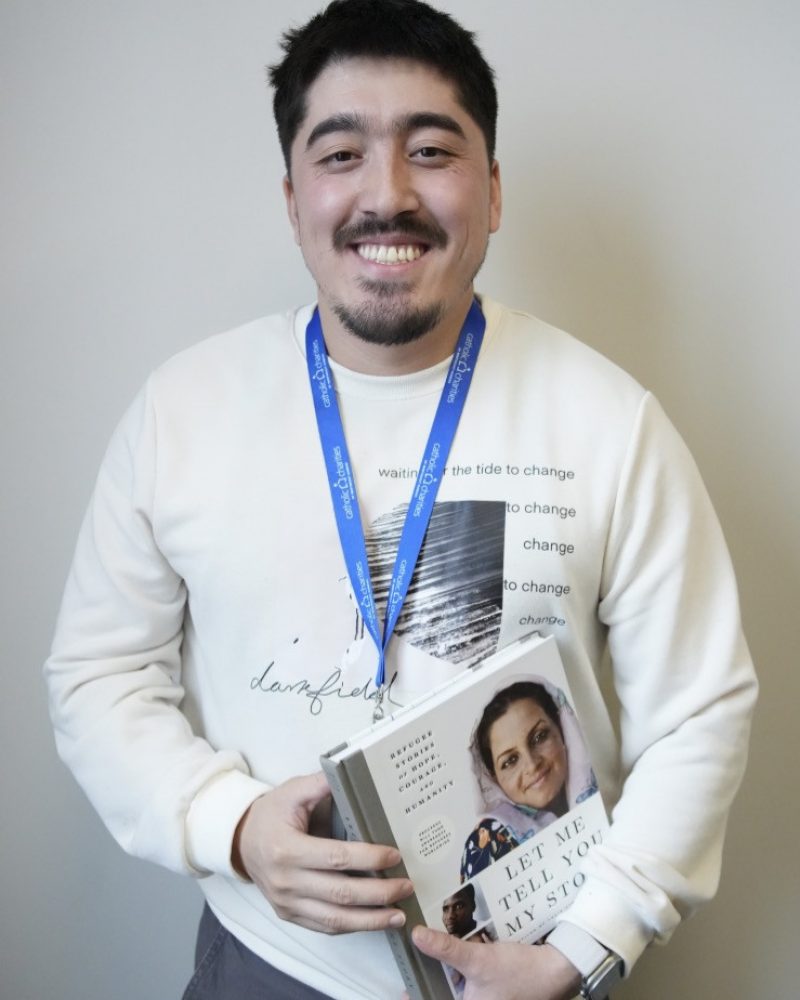
My name is Mohammad Ilyas Yousifi. I am from Afghanistan. Back home, they call me Ilyas, but since I’ve been in the US I prefer for everyone to call me Mohammad, since it is easier to pronounce.
I was born in Wardak, Afghanistan, but we moved when I was eleven, to Kabul. My mom worked with the US Embassy as an interpreter - she’s the reason for our safety. God blessed us and we are lucky. We were able to come on an SIV (Special Immigrant Visas for Iraqi and Afghan Interpreters). I was under 21, so I was able to come with her and my brother and sister.
It was challenging to get all the documents and money we needed. Afghanistan doesn’t have a secure government and didn’t always give us what they said they would. And in Afghanistan, they don’t pay very much, so my mom had to sell all her jewelry.
When we came we were blind. We had never spoken to someone who spoke a different language. My mom was our mentor. She showed us how to start our new life.
And now we are safe. My brother is a sheriff’s deputy and my sister, she's in the army. She can travel and see the world.
When I was young I always thought I’d become a lawyer. I even studied law for two years before moving to the United States. But, when I got here I found out that my two years worth of credits wouldn’t transfer because the legal system is different from back home. I decided to start from the beginning but to study computer science and information technology instead. I now have two years left and I hope to find a job in this field when I earn my degree.
When we came we were blind. We had never spoken to someone who spoke a different language. My mom was our mentor. She showed us how to start our new life.
I have been here for six years and everyone in my family is a US citizen. When we first arrived in the U.S., Catholic Charities helped us. They picked us from the airport, helped us find housing, and helped us pay bills.
Now, I work for Catholic Charities, I’ve worked with them for almost two years in their match grant program. When we have newcomers we enroll them in this program within their first month of being here. We assess their needs and provide them with aid for up to eight months. The goal is for refugees to become self-sufficient so the match grant can help with housing, bills, job interviews, transportation, and even supplies like clothes or shoes for job interviews. We help them learn how to budget so that by the end of the program they can sustain themselves.
The match grant program is very successful in the sense that we help people get driver’s licenses and we have a good connection with the local driving school. However, there are still some challenges, like transportation for those who don’t have cars or driving skills. We can offer them a ride to a doctor’s appointment or a class at Catholic Charities, but many of them have personal business as well. They want to visit their families or go to the grocery store. The challenge is that we don’t have very many volunteers available to provide rides and support.
We also offer English classes to help reduce the language barrier. Refugees have the option to take an English class at various levels. Some of them have never had the chance to go to school, especially the ladies from Afghanistan. They are excited to take those English classes and work with their husbands to support their families.
Coming here and working with Catholic Charities has given me opportunities that are much different than the ones I expected in my life. This job even allowed me to take a leave that was longer than expected to go to Afghanistan and help my wife travel to the US. Now she is here with me and we just had our first child.
After two years, I was able to go back to my country. I was nervous so I wore the clothes that they normally wear there. I was scared too, to show my US passport.
When you’re alone, and you don’t have a male with you, you cannot fly in Afghanistan. My wife tried several times, but she wasn’t able to. So I went back to bring her home. They wouldn’t let her leave so I called the State Department to ask if there was any chance that we could fly together.
I was lucky. They made a plan for that and we flew to Doha. I was at the refugee camp at Doha for a month. And I bless this job and Catholic Charities. I had started not too long ago, but they helped me when I was out of the office.
I had just requested 10 days off to help my wife take a flight. But I was there for two months. Catholic Charities didn’t say they would fire me. They work with refugees so I think they understood my problem.
I am proud to be safe with my family and I’m grateful for the various opportunities my family has gotten since being here. I’m not sure if we would have reached our educational and professional goals had we stayed in our home country. I enjoy my work at Catholic Charities because we work as a family. We smile and we help each other and we’re here for each other. That’s what this work is all about.
Our team members obtain informed consent from each individual before an interview takes place. Individuals dictate where their stories may be shared and what personal information they wish to keep private. In situations where the individual is at risk and/or wishes to remain anonymous, alias names are used and other identifying information is removed from interviews immediately after they are received by TSOS. We have also committed not to use refugee images or stories for fundraising purposes without explicit permission. Our top priority is to protect and honor the wishes of our interview subjects.