I Lied To Save My Family, but We Didn’t All Make it to Safety
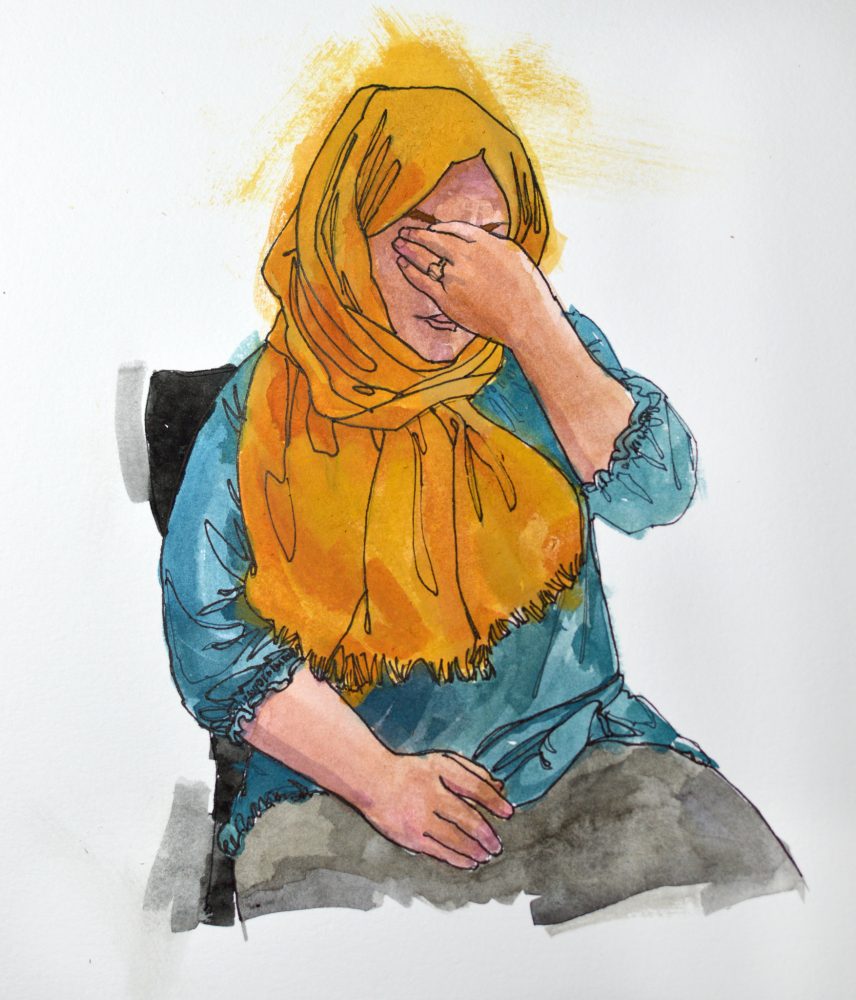
My name is Mirzae. I’m from Kabul, Afghanistan.
In Afghanistan, I loved to sew, embroider, shop, and visit my friends.
I have six kids. Four are with me, but two of my sons are still in Afghanistan.
My husband was working as a guard in the block where all the government employees lived. It was near August and the government was a little unstable. The Taliban had captured some provinces, but not Kabul. The news was talking about the Taliban coming. Because my husband was a guard, he saw who was coming and who was going. He saw someone go into the one empty apartment.
Later he saw more than 55 people come to that apartment. He was a little scared about that. 55 people in one room. He was worried that they were making plans - maybe they planned to bomb the apartment complex. They had knives. He thought that wasn’t good for all the people around the apartment. He reported it to the police.
Then the police came and talked to all the people.
The men found out that my husband was the one that reported them. It was not safe for us. We looked for a way out of Afghanistan.
We decided to drive to the Iranian border and cross into Iran. We all had passports. So I just bought a backpack and got my passport. It was illegal because at that time the border was blocked.
But then, my brother-in-law came and told me that there were many people at the airport and there was an opportunity to go to America. With that news, we went to the airport on the 19th of August.
The fourth day after Kabul fell, I tried to enter the airport and it was crowded with too many people. I got separated from my husband, he was on the other side of the gate. The Taliban asked, if I had a passport, I told them I had a passport with an American visa and they gave me permission to enter the gate. I entered and found my husband. And we came here.
It was a scary time for me. I told a lie. There was no visa in my passport, but I told a lie to him.
Then I came and ran up to this American soldier and he told me we were all of us, safe. He said, “You are safe here. Don’t worry about anything.” I was still worried because I didn’t have any documents, any visa. How could I be safe without that? But some people who knew English, asked the American soldier if we needed any documents. The American soldiers said, no, even without any kind of document you’re safe. And eventually we came here.
My two older sons (17 and 18) couldn’t cross the gate. They are still in Afghanistan.
I like it here. The nature, it’s very beautiful and it’s so calm. Beautiful. My husband is always trying to go from here but I think no, this is a good place for us. I want to stay here.
We met Refuge Bowling Green because I couldn’t drive. But now, I have a license and am an instructor for their course.
I didn’t drive in Kabul but here it is important because I lost my environment.
In Kabul it wasn’t necessary, but here, it is very important for me to know how to drive – for myself and my kids. So I can get them where they need to go - school, appointments - all those things.
And soon, my sons will be here too. We have been working on getting them here. And they were both approved. Both their cases were approved. They are still processing some paperwork and we are still waiting on the visa. But soon we will be together.
Our team members obtain informed consent from each individual before an interview takes place. Individuals dictate where their stories may be shared and what personal information they wish to keep private. In situations where the individual is at risk and/or wishes to remain anonymous, alias names are used and other identifying information is removed from interviews immediately after they are received by TSOS. We have also committed not to use refugee images or stories for fundraising purposes without explicit permission. Our top priority is to protect and honor the wishes of our interview subjects.