READ OUR OFFICIAL STATEMENT ON THE U.S. FY2026 REFUGEE ADMISSIONS CAP AND PRIORITIZATION
SHARE YOUR EXPERIENCES WITH DISPLACEMENT, RESETTLEMENT, DEPORTATION, AND ICE #ANONYMOUSAMONGUS
Hazrat  ·  Afghanistan

Always Be Proud That You Are Working

I am an engineer
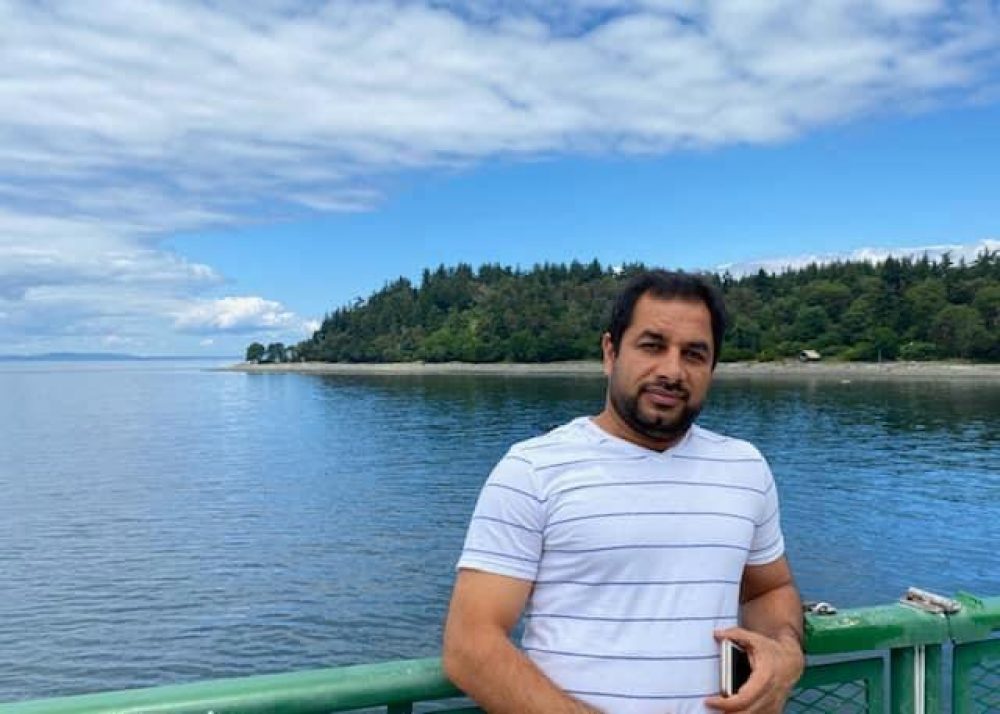
Edited by Heather Oman
Interview by Sarah Jacobsen and Nicole Taylor
Hazrat

I am an engineer. In Afghanistan, I worked for the U.S. Army.

I got my bachelor’s degree in construction engineering from Kabul Polytechnic University in 2007. I studied for this degree for five years. When I graduated, I went to work for an energy company. A year later, the company was contracted by the US army for a rehabilitation project in Kabul. The project manager saw that I was doing a good job, so he offered me a job in the US Army. The job offered a better opportunity than my local job, so I took it. The army moved me down to Helmand, a very insecure province, with many problems with the Taliban.

My parents lived in Kunar province where most of the insurgents were operating. When I went to visit my parents the local people would tell the Taliban, “This man is working for the US Army.” My father and I would both get warnings that the Taliban was looking for me. Once, I was carrying architectural plans for the US Army on a flash drive, and the Taliban tried to arrest me. Luckily, I escaped, because that would have been very bad if the Taliban had seen sensitive US Army plans. The Taliban was always making trouble for me. I could not travel between Kabul and Kunar.

I did not feel my life was safe.

So my project manager with USAID helped me secure a SIV (Special Immigrant Visa) and my wife and 4 children and I came to the United States. We settled in Seattle.

At first, we were not happy here, because we had lost our home. My wife and children were very sad. But we see on the news how bad things are in my country, how much fighting there is with the Taliban, and we are happy that we are safe.

The biggest problem I have here is finding work in my career. I have 10 years of experience with construction engineering, but I can’t get a job with a construction company. It is difficult to get my credentials from Afghanistan to transfer to the US, and I don’t have any contacts who can vouch for my experience. And it is difficult to find the kind of job I want when I am still learning English. Everybody tells me, you need English! So I am trying to get my English stronger.

In the meantime, I am working at the airport. I work long shifts. But I feel that in America, people don’t care where you work. You don’t have to be embarrassed about your job. You can always be proud that you are working, supporting your family. In my country, I was an engineer and a manager. Now I am a laborer. But I am safer and happier here. And I am hopeful that if I keep working and improve my English skills and connect with the right people, I will still have a future in America as an engineer.

Update December 2021:

Hazrat has been taking English classes & is now enrolled in engineering classes to re-certify in his field. Hazrat has a new job as a security guard that fits with his school schedule. His wife Sima has also been taking online English classes and got her driver’s permit. All 4 of his children are enrolled in school and are thriving.

Informed Consent

Our team members obtain informed consent from each individual before an interview takes place. Individuals dictate where their stories may be shared and what personal information they wish to keep private. In situations where the individual is at risk and/or wishes to remain anonymous, alias names are used and other identifying information is removed from interviews immediately after they are received by TSOS. We have also committed not to use refugee images or stories for fundraising purposes without explicit permission. Our top priority is to protect and honor the wishes of our interview subjects.

What would you do if you had to leave everything behind?

By the end of 2024, more than 123.2 million people worldwide had been forcibly displaced from their homes due to war, persecution, or human rights abuses.

An increase of 7.2 million over 2023, that’s more than 19,619 people every day — roughly one person every 4.4 seconds.

They arrive in refugee camps and other countries, like the US, seeking the one thing they’ve lost: safety.

Fleeing political imprisonment, ethnic violence, religious persecution, gang threats, or war crimes, they come with what little they managed to carry:

Legal papers – if they’re lucky.

A single backpack.

Sometimes a child’s hand in theirs.

They also carry the weight of what they left behind: fractured families, homes they’ll never return to, professions they loved, friends and relatives they may never see again.

They carry loss most of us can’t imagine – but also the truth of what they’ve endured.

At TSOS, we believe stories are a form of justice. When someone shares their experience of forced displacement, they reclaim their voice. And when we amplify that voice – through film, photography, writing, and advocacy – the world listens. Hearts soften. Communities open. Policy begins to shift.

That shift matters. Because when neighbors understand instead of fear…

when lawmakers see people, not politics…

when a teacher knows what her student has survived…

Rebuilding life from the ashes becomes possible.

We’re fighting an uphill battle. In today’s political climate, refugee stories are often twisted or ignored. They’re reduced to statistics, portrayed as national threats, or used to score political points.

The truth – the human, nuanced truth – gets lost, and when it does, we lose compassion.

We are here to share their truth anyway.

At TSOS, we don’t answer to headlines or algorithms. We are guided by a simple conviction: every person deserves to be seen, heard, and welcomed.

Our work is powered by the people we meet — refugees and asylum seekers rebuilding after loss, allies offering sanctuary, and communities daring to extend belonging.

Your support helps us share their stories — and ensure they’re heard where they matter most.

“What ultimately persuaded the judge wasn’t a legal argument. It was her story.”

— Kristen Smith Dayley, Executive Director, TSOS

Will you help us keep telling the truth?

No donation is too small — and it only takes a minute of your time.

Why give monthly?

We value every gift, but recurring contributions allow us to plan ahead and invest more deeply in:

  • New refugee storytelling and advocacy projects
  • Resources to train and equip forcibly displaced people to share their own stories
  • Public education that challenges fear with empathy
  • Local efforts that help communities welcome and integrate newcomers

As our thank-you, monthly supporters receive fewer fundraising messages — and more stories of the impact they’re making possible.

You don’t have to be displaced to stand with those who are.

Can you give today — and help carry these stories forward?

Add Impact to Your Inbox
Sign up for our emails to get inspiring stories and updates delivered straight to you.
Subscribe
© 2025 Their Story is Our Story Privacy Policy
Their Story is Our Story is a 501(c)3 Non-Profit Organization under the United States Internal Revenue Code. All donations are tax-deductible. Our tax identification number is 812983626.