A Woman Raised in a Refugee Camp Becomes a Successful Farmer
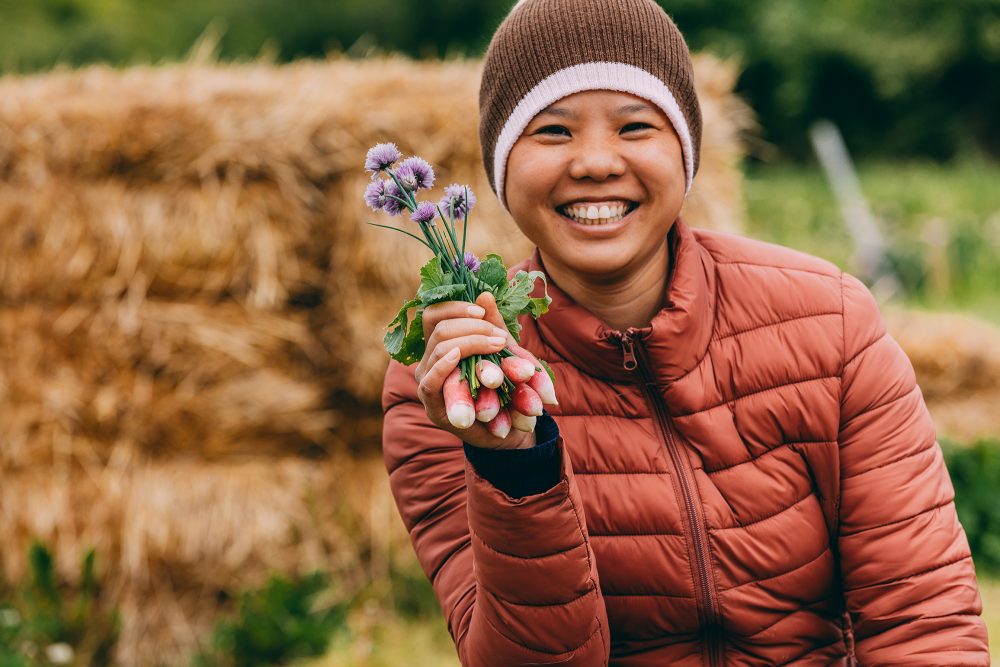
My name is Tawmeh. I was born in Myanmar. Because of some military stuff happening, my parents had to move to Thailand when I was 5 or 6. So I spent 15 years living in Thailand in a refugee camp. I have no memories of Myanmar. In the refugee camp in Thailand, we only went to school, and other than that we didn’t really do anything else. My parents couldn’t go to work; they had to stay in the refugee camp. The UN organization gave my parents food and supported us. My parents would sometimes go out to do work to earn money, but because they weren’t allowed to go out, sometimes the police arrested them.
The UN organization told us in the refugee camp that we could apply to go to the United States. So in 2010 I came to the US with my parents and most of my 8 siblings. Some of them were married and came with their spouses. I was 19 and not married yet.
When I came to Kansas City I felt very isolated.
It was scary and hard, because I had only known the refugee camp, and there were too many places to go.
I didn’t have a car here and couldn’t get around. I went to an ESL class for three months and then got a job at a meat processing store.
I met my husband at work. He’s also from Myanmar, but he’s from a different state, and he spoke a different language. He’s Korinh, and I’m Khorine. We used to speak a little bit of Burmese and a little bit of Thai to each other, but now that we have kids who speak English, we try to speak English every day.
I heard about NewRoots from my (then future) mother-in-law. She is a farmer who graduated from the NewRoots program and got her own land outside of Juniper Gardens. After I got married, I didn’t want to stay home - I wanted to work. I had applied to NewRoots before I was married, but I didn’t have a car, so I couldn’t go in to interview or start. But after I got married and was more established and had transportation, I got in.
I was interested in farming because I thought farming would be easier to do with kids and allow me to take care of them. I now have two kids, a girl and a boy, ages 6 and 3. I’m starting my fifth year with NewRoots, and I’m leasing land from Juniper Gardens. My husband didn’t want me to work while pregnant, but he was okay with farming.
I have learned a lot of things from NewRoots - like how to grow in season. And if you don’t like to plant something, you can try something different. My favorite things to grow are flowers and tomatoes. I grow what people like to buy. And people at the farmers markets love to buy flower bouquets. My favorite flowers to grow are sunflowers. People here love sunflowers because they are the state flower for Kansas.
My future plan is to have my own land, and to do farming my whole life. I’m really interested in flowers.
I am proud of myself because I came from a refugee camp and didn’t know anything about farming or planting stuff. I had to learn, step by step. And now I finished my 4th year and graduated, and I know a lot of things. I finished the program, and I’m a successful farmer.
Our team members obtain informed consent from each individual before an interview takes place. Individuals dictate where their stories may be shared and what personal information they wish to keep private. In situations where the individual is at risk and/or wishes to remain anonymous, alias names are used and other identifying information is removed from interviews immediately after they are received by TSOS. We have also committed not to use refugee images or stories for fundraising purposes without explicit permission. Our top priority is to protect and honor the wishes of our interview subjects.