A Little Help Goes a Long Way for Refugee Families
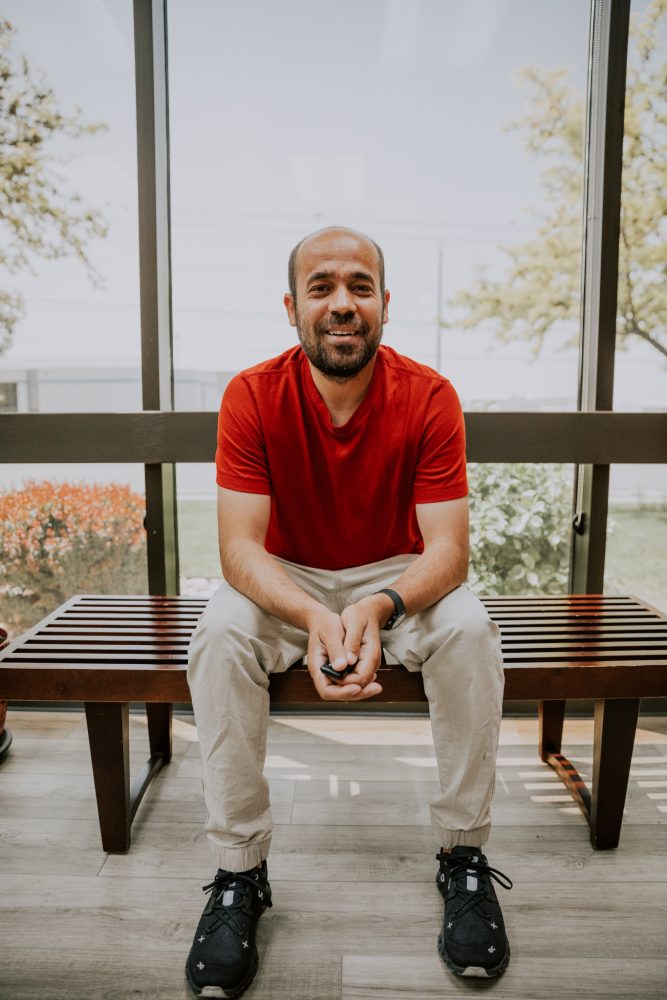
I come from a family with 12 kids so choosing names for each child was not easy. When they asked my father what my name was going to be he said, “I’m going to my job now, but put whatever name you guys think is good.”
I really appreciate my father’s effort that went into raising such a large family in Afghanistan. For 35 years he was the only one working to support us all. He would only be able to visit his family once every three months because he had to travel to a different province.
My birthplace is the same as my father’s. It is a place called Panjshir. It is a unique province of Afghanistan. It has a history of a lot of brave people who are still resisting the Taliban.
After I finished high school I got a job right away as an interpreter for the U.S. army. As I was working, I enrolled myself at Kabul University to continue my education in political science. A year before I was going to graduate I had to stop because my job transferred me to a different place.
Almost all of my family is well educated. We always show the same level of respect to my sisters as we do my brothers. There aren’t a lot of opportunities in Afghanistan for women, but my family supports and motivates us all to work.
We never say, “No, you can’t work. You need to stay at home and take care of things at home here.” We try to be the source of motivation for our sisters as well. I have a very close relationship with my sister that lives here. I call her my “best sister”.
I was thinking it might be hard for me to settle in the US because it’s a new culture and a new way of life. I didn’t know how to visit a doctor and have basic medical information. So we spent a couple months in Abu Dhabi, which is next to Dubai. While we were there my kids were sick, but they only had a very small clinic. When we eventually moved to the US the services we received especially from the CCS (Catholic Community Service) were unimaginable. The way they helped us take the kids to the doctor appointments, providing us with support, and transportation no matter the time of day was incredible and I really appreciate their help.
A lot of things were confusing during the first couple appointments, especially when they would ask me to pay a couple dollars before taking the medicine or before being checked in. They would say I needed to pay a copay or they would ask if I was going to be paying with credit or cash.
When I wasn’t sure what to do I would call the CCS and they would walk me through it.
We have also been to dental appointments a couple of times. They did the teeth cleaning for my son and my daughter. Another medical procedure we were really happy the US provided was circumcision. My son got it done and my whole family was really happy he was able to get it done in the US. He was delivered here in the US.
The CCS helped us from the time my wife was pregnant to the time she delivered. When we moved to the U.S. my wife was two months pregnant so the CCS helped us with the appointments. They would help with transportation and her follow up appointments that were sometimes once a week. It made me feel really comfortable because I could stay home with the kids while she was going to her appointments with someone from the CCS health team.
It’s been almost four months and my wife is still talking about how comfortable she felt while doing the delivery here in the U.S. All the doctors and nurses turn your day around and make you feel happy. My wife still talks about how nice the doctors were and she said if it’s going to be like this she can have maybe five more kids.
When we first came here we took a culture awareness class for a couple weeks. They had a lot of families in one classroom and showed us slideshows about everything about health, U.S. culture, how to get your license, how to talk to the police if you get pulled over, and the overall way of life in the U.S. This class was so helpful for all the Afghan refugee families.
CCS has always been involved with every step whether it was helping us with our benefits or our immigration status. Not only have they helped us with our health, but they also helped us stay entertained. When we first moved here we felt a little bored. We didn’t even know how to cross a sidewalk. I had to ask people if I should wait at a red light.
Our kids would be so excited when we had an appointment because they would come in with a nice car, the AC turned on and then would show us places. I remember one time after a doctor’s appointment I asked them if they could help us do some shopping at Walmart. They said they could fit it in before going to another appointment. They taught us how to do the shopping with our snap card and were very helpful.
Their friendship and camaraderie gave us the strength to live here.
Our team members obtain informed consent from each individual before an interview takes place. Individuals dictate where their stories may be shared and what personal information they wish to keep private. In situations where the individual is at risk and/or wishes to remain anonymous, alias names are used and other identifying information is removed from interviews immediately after they are received by TSOS. We have also committed not to use refugee images or stories for fundraising purposes without explicit permission. Our top priority is to protect and honor the wishes of our interview subjects.