Today we recognize that many of our friends and neighbors are afraid and uncertain about what might await them and their families in the new year. These individuals have already endured trauma and pain due to calls for mass deportations, misinformation about immigrant communities, and threatened legal status.
The United States’s history is one of displaced people, from our origin story of the Pilgrims to the waves of immigrants from countries around the world who came to start over due to famine, war, and violence.
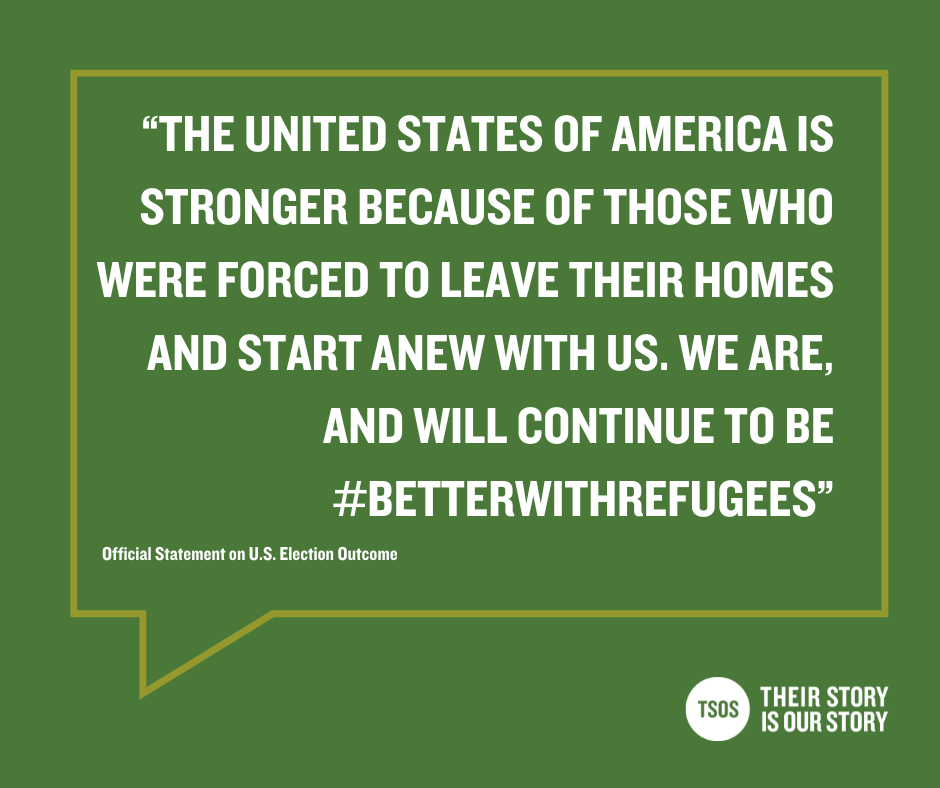
Here at Their Story Is Our Story, we know that the United States of America is stronger because of those who were forced to leave their homes and start anew with us. They bring vitality, determination, fortitude, and are essential to our economy, our culture, our communities, and our country. We are, and will continue to be, #betterwithrefugees.
Helping ITPs Succeed: Insights from Leading Support Programs
Partner Profile: No One Left Behind
Their Story is Our Story and No One Left Behind (NOLB) joined forces in 2025 to launch the StoryShield program.
We spoke with Matthew Marcellus, Director of Communications with NOLB, and asked what the partnership with TSOS has meant for his organization and their Afghan clients.
Context with Layma
Social media presents us with an endless scroll of headlines and ‘hot takes’. What’s often missing is context. What is the history that led up to an event? Whose interests are served by a certain policy? What effects is that policy having on people’s lives? Layma Murtaza produces and hosts the video series “Context with Layma”, featured on Their Story is Our Story’s social media channels. We spoke to her about the context of her own life, as an Afghan-American and a professional in humanitarian aid, that led her to use storytelling to illuminate the personal and political context behind the headlines.