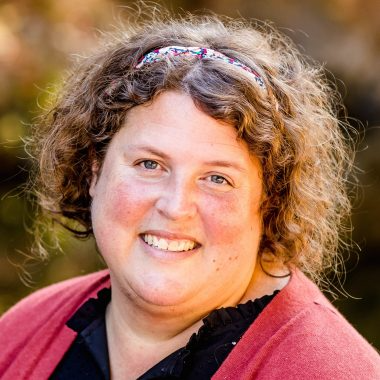
Sarah Kippen Wood, Former Executive Director of Their Story is Our Story (TSOS), shares how stories connect and lead to change in an interview with Darien Laird, our Director of External Media. Sarah gives us an inside look at how TSOS functions and shares how telling her story helped her fight a stage four cancer diagnosis. Watch the story.
Darien:
How have you seen stories make an impact on your community and then have you had any personal experiences with stories, maybe with you or your family?
Sarah:
TSOS taught me a lot about how to share my own story. I had to step away from my work with TSOS when I was diagnosed with stage four cancer…I had to find someone willing to give their liver to me, which meant I had to quickly become a teller of my own story… It was pretty uncomfortable at times. I never really wanted to be a cancer poster child, and I especially didn’t want to exploit my kids in the process. But I had to share my story to get attention on the issue in order to find a good match.
What began as me reluctantly sharing my personal story for primarily selfish motives, hopingnto find my own donor match, wound up having a bigger impact on my community. What I didn’t realize, was that sharing my story inspired someone else to take action in their own life.
Now, their story is linked to my story. This linking of stories is what TSOS is all about.
Darien:
You were sharing stories during your chemotherapy treatments… Is there any particular story that really impacted you?
Sarah:
Noor’s story impacted, has impacted, and continues to impact my life. And where do I go from here? I can turn to my neighborhood with a newcomer family and welcome them in ways that they need to be welcomed. Because I heard Noor’s story and because it increased my understanding and empathy. And because when I welcome someone else, maybe instead of welcoming them with these twinges of pride or unknowingly patronizing condescension, I can see in someone else’s face myself. And I think that that is the way we can welcome people in a way that helps them feel like they truly belong somewhere, helps us all feel like we belong to the same community.
Helping ITPs Succeed: Insights from Leading Support Programs
Partner Profile: No One Left Behind
Their Story is Our Story and No One Left Behind (NOLB) joined forces in 2025 to launch the StoryShield program.
We spoke with Matthew Marcellus, Director of Communications with NOLB, and asked what the partnership with TSOS has meant for his organization and their Afghan clients.
Context with Layma
Social media presents us with an endless scroll of headlines and ‘hot takes’. What’s often missing is context. What is the history that led up to an event? Whose interests are served by a certain policy? What effects is that policy having on people’s lives? Layma Murtaza produces and hosts the video series “Context with Layma”, featured on Their Story is Our Story’s social media channels. We spoke to her about the context of her own life, as an Afghan-American and a professional in humanitarian aid, that led her to use storytelling to illuminate the personal and political context behind the headlines.