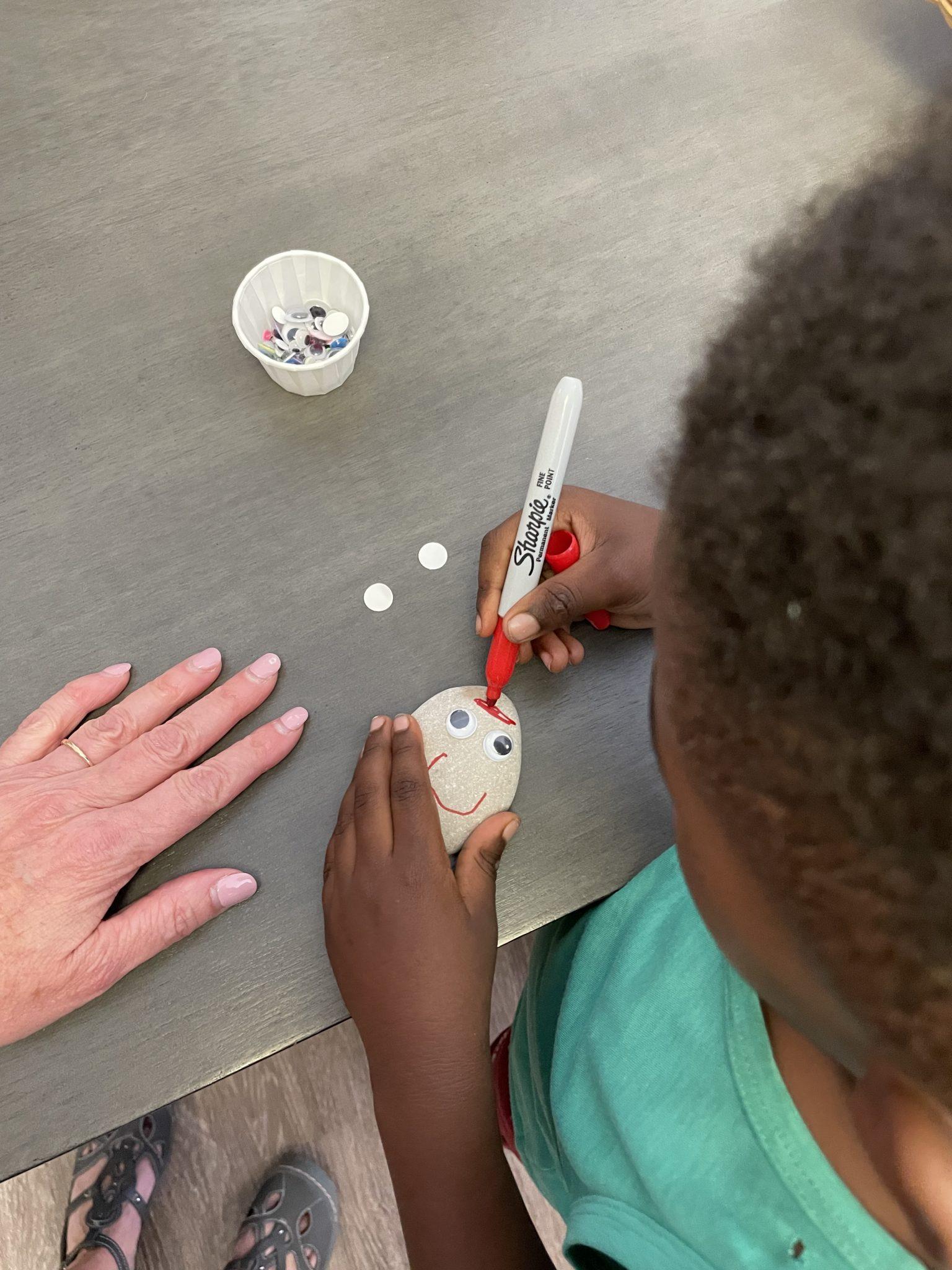
For World Refugee Day in Boise, a group of volunteers read to local refugee children. We then did a craft together!
At Monarch Landing, a local shared transitional housing facility for refugees, a volunteer read “Lubna and Pebble” while a youth translated for many of the children. It is a touching story about refugee children and friendship. Afterwards everyone was able to choose a pebble and make it their own. It was a fun and interactive activity that we all enjoyed. A copy of the book was donated to the facility.
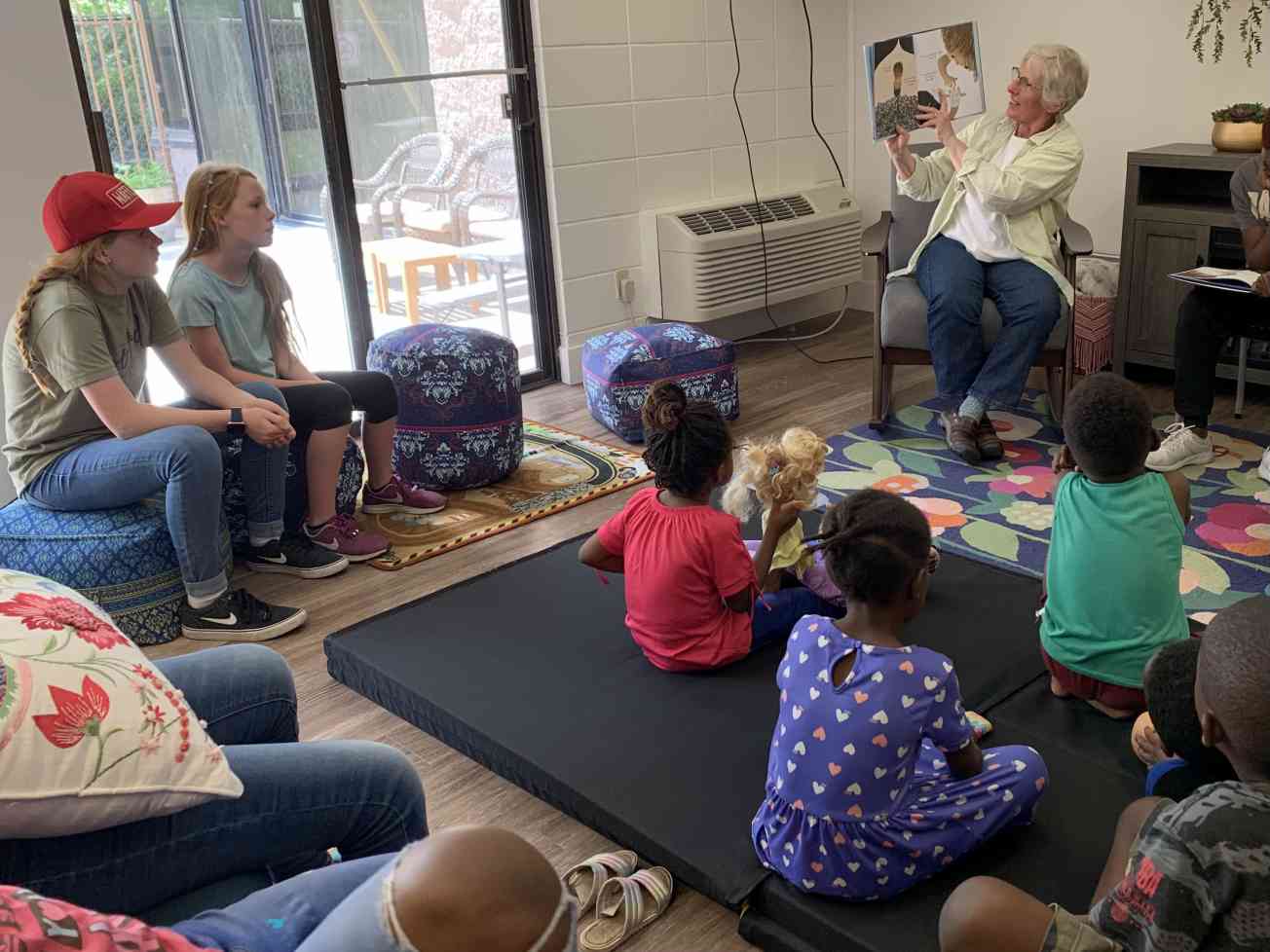
One could think that the language barrier was an issue, but it wasn’t. A smile is worth a thousand words.
I was once a child in a foreign country, not speaking the language, and I was immersed in a school where no English was spoken. I don't remember much about that process, but I do remember watching other kids, following along, and making friends.
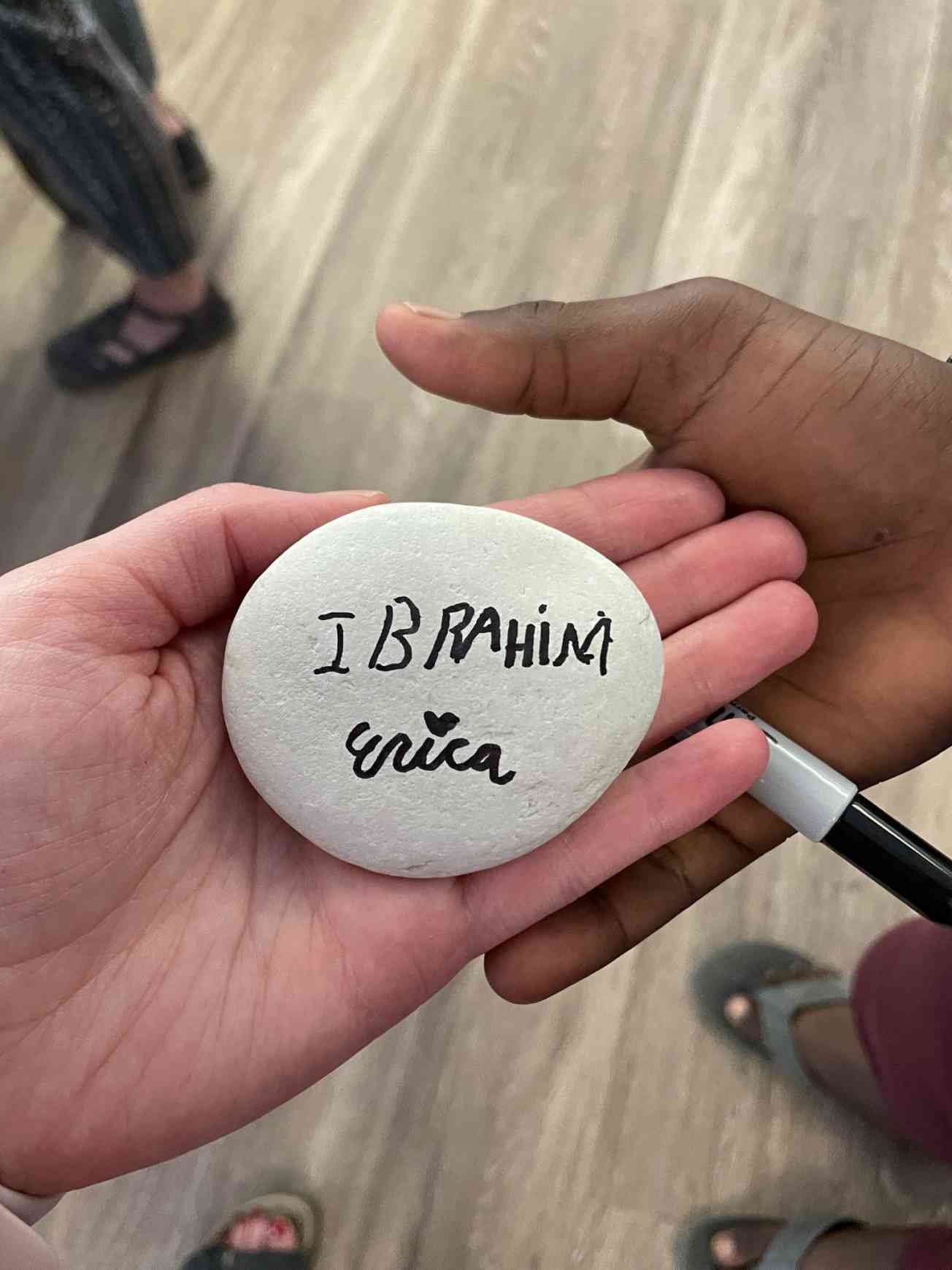
I’ve been drawn to working with the refugees for numerous reasons. First, I just love to help and serve others in need. Second, I recognize that because I have been given much, I too must give. Third, I was once a child in a foreign country, not speaking the language, and I was immersed in a school where no English was spoken. I don’t remember much about that process, but I do remember watching other kids, following along, and making friends. Children are so resilient and they love so easily. It didn’t take long for the children to go from being shy, to asking me to sign their rock.
I have enjoyed watching children for refugee parents doing a cultural orientation class. We read a book about shapes and then practiced drawing shapes and writing the shape names. Then we had an activity outside blowing bubbles. We had bubble soap, but no wands, so we were resourceful and made wands out of pipe cleaners. There were lots of smiles and laughter! The most rewarding thing of my day. I look forward to helping again.
I’ve also helped transport families to a school to register their child for kindergarten. Such a simple thing to me, but such a big need from them. Then I later ran into the father at a local park, where I was watching my grandson play soccer. I’m sure he was grateful to see a familiar face among so many new ones.
We also have an ongoing collection box for donations for local refugee families. We collect bedding, toiletries, kitchen supplies, cleaning supplies, etc.
There really is something that everyone can do. Whether you just have time to donate a hygiene item, or you have an hour to drive a family to school, or you have 3 hours to do activities for children, there is something all of us can do to lift and love our new neighbors.
Want to get more involved in helping local refugees? Opportunities can be found at:
JustServe.org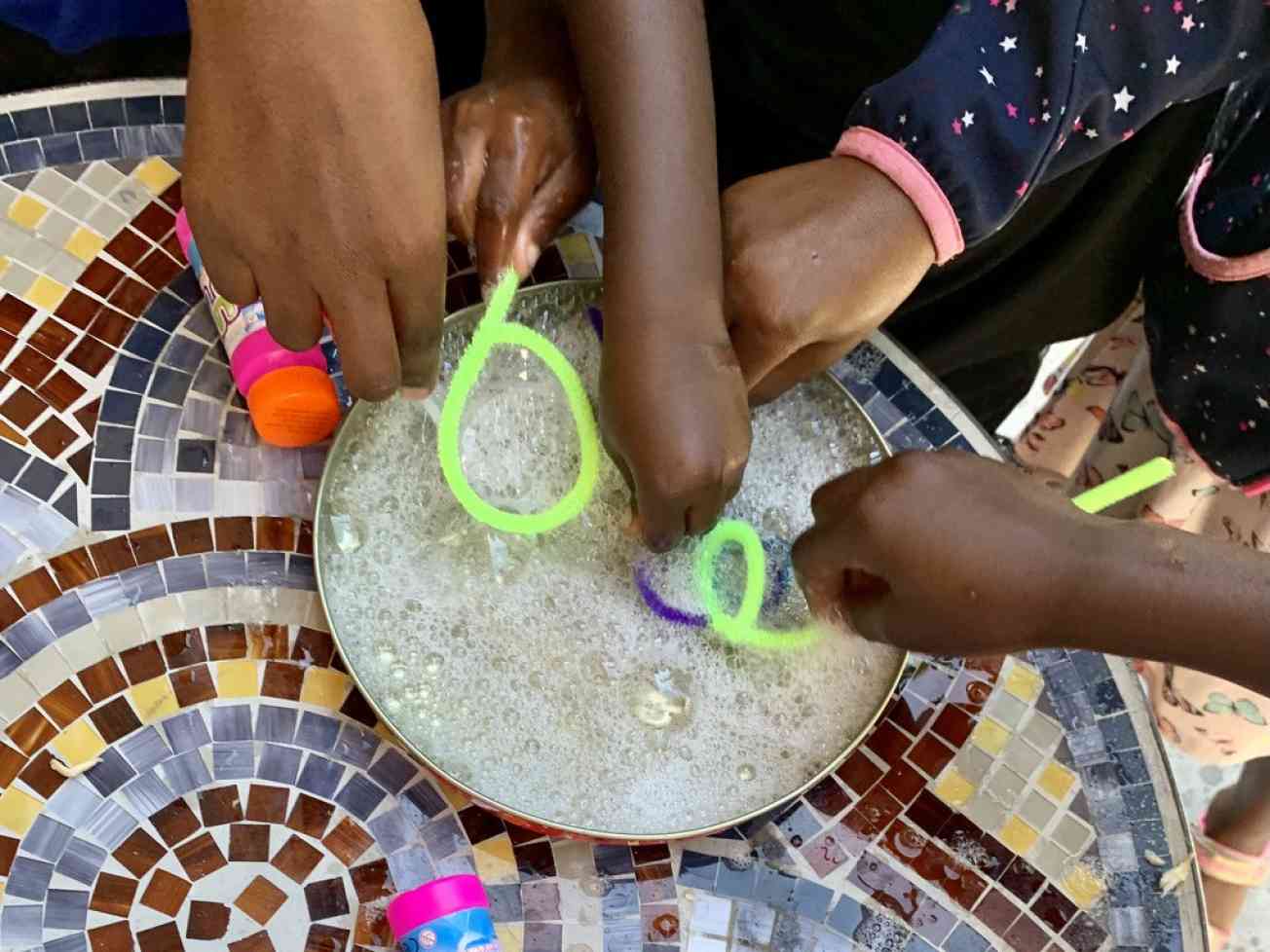
Helping ITPs Succeed: Insights from Leading Support Programs
Partner Profile: No One Left Behind
Their Story is Our Story and No One Left Behind (NOLB) joined forces in 2025 to launch the StoryShield program.
We spoke with Matthew Marcellus, Director of Communications with NOLB, and asked what the partnership with TSOS has meant for his organization and their Afghan clients.
Context with Layma
Social media presents us with an endless scroll of headlines and ‘hot takes’. What’s often missing is context. What is the history that led up to an event? Whose interests are served by a certain policy? What effects is that policy having on people’s lives? Layma Murtaza produces and hosts the video series “Context with Layma”, featured on Their Story is Our Story’s social media channels. We spoke to her about the context of her own life, as an Afghan-American and a professional in humanitarian aid, that led her to use storytelling to illuminate the personal and political context behind the headlines.