USAHello.org and Welcome.US: Two Helpful Online Tools for our Refugee Friends and U.S. Locals who are Welcoming them

USAHello.org
A free online center for refugees and immigrants of all backgrounds. The nonprofit website offers information and education in Arabic, Chinese, Persian/Dari, French, Pashto, Spanish, and Vietnamese to help you reach your goals in the United States. USAHello.org is your home for trusted information and free online classes you can count on to help you build a bright future in the United States.
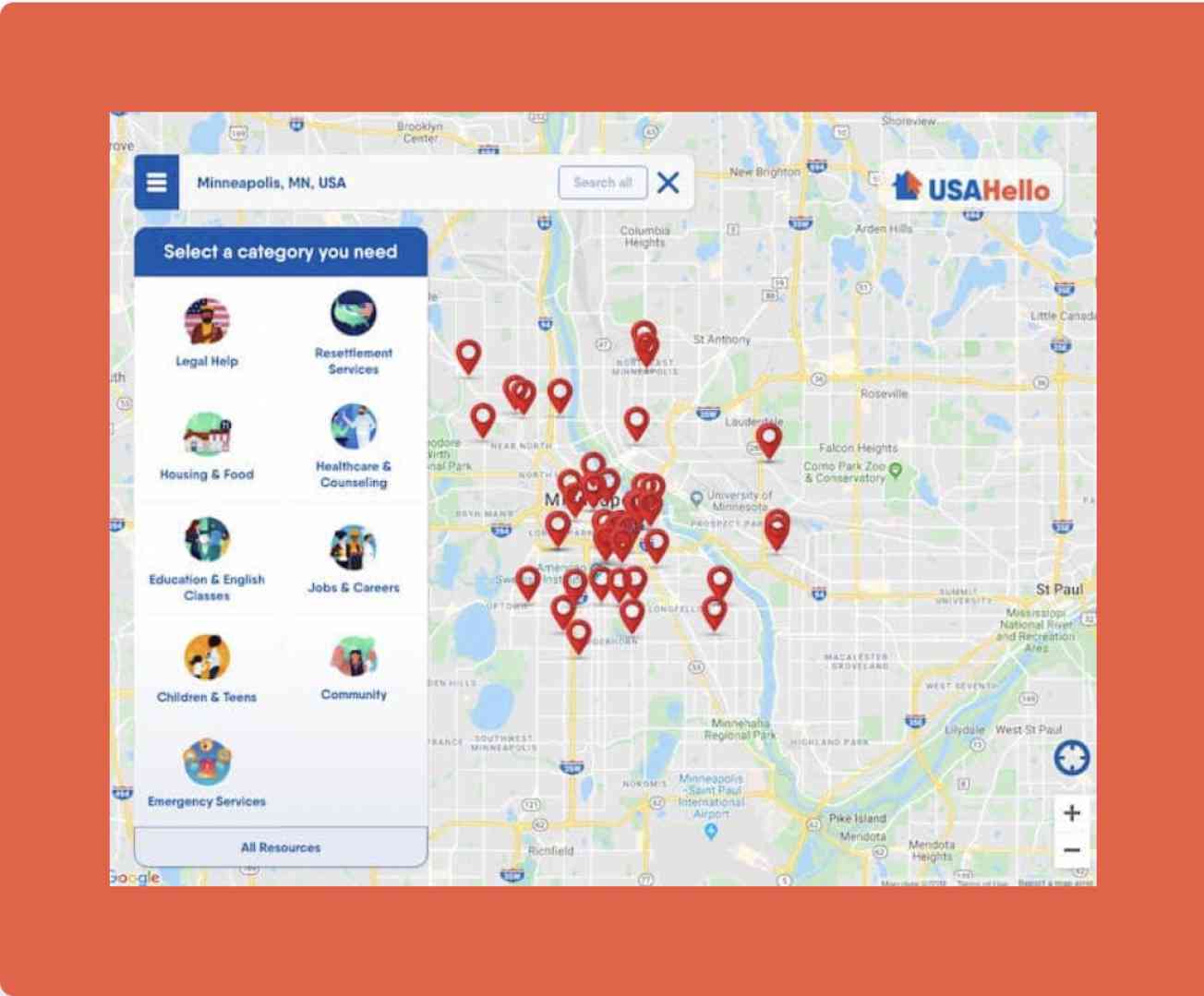
Find resources near you on https://find.usahello.org/#/list.
Search for job advice, lawyers, healthcare, English classes and other services near you. FindHello has help and services for immigrants, refugees, asylum seekers and undocumented people in the USA.
Afghan Resource Center
This Resource Center is also translated in:
The Afghan Resource Center offers practical information and resources for newly arriving Afghans to the USA. Find information in English, Dari, or Pashto on services and benefits, immigration, jobs, daily life, American culture, U.S. laws, money, health, and education. Use our FindHello app to connect to local services in cities across the country. Find help for every status including Special Immigrant Visa (SIV), refugees, and people with humanitarian parole.

Welcome.US Launches Effort to Meet Urgent Needs of Afghan Refugees and Nation’s First In-Kind Giving Platform
In December 2021, Welcome.US announced a first-of-its kind tool called the Welcome Exchange— an online portal for matching businesses that are willing and able to give support and resources with the specific local needs of Afghan newcomers identified by nonprofits and resettlement groups.$3 million in supplies and resources have been committed by organizations including Accenture, CVS, Harry’s, Target, Starbucks, Serta Simmons Bedding, Walgreens, and P&G.
Visit the Wecome.US website to learn how businesses and community leaders are getting involved.
Helping ITPs Succeed: Insights from Leading Support Programs
De-skilling and the Mental Health Effects Among Refugee Physicians
Discussions of physician workforce policy tend to organize themselves around numbers. Shortage projections, residency slot allocations, and licensing timelines dominate the literature, and for understandable reasons. More than 83 million people in the United States currently live in areas without sufficient access to a primary care physician, and projections suggest the country could face a shortage of as many as 120,000 physicians by 2030.