Cheering Louder
Written by Sarah Wood
In the last few years, I’ve closely followed media reports regarding asylum seekers at the southern border of the U.S. I arrived in Arizona a month ago for a story gathering trip feeling somewhat prepared for what our interviews with individual asylum seekers might reveal about their journeys. I knew the trip would be emotionally heavy.
Since returning from that trip, I’ve asked myself what I experienced that felt different from all the media reports I’ve read over the past months. Getting up close, I did see weary eyes, dusty shoes, and heart wrenching testimonies pouring out of people who reminded me of my own family members.
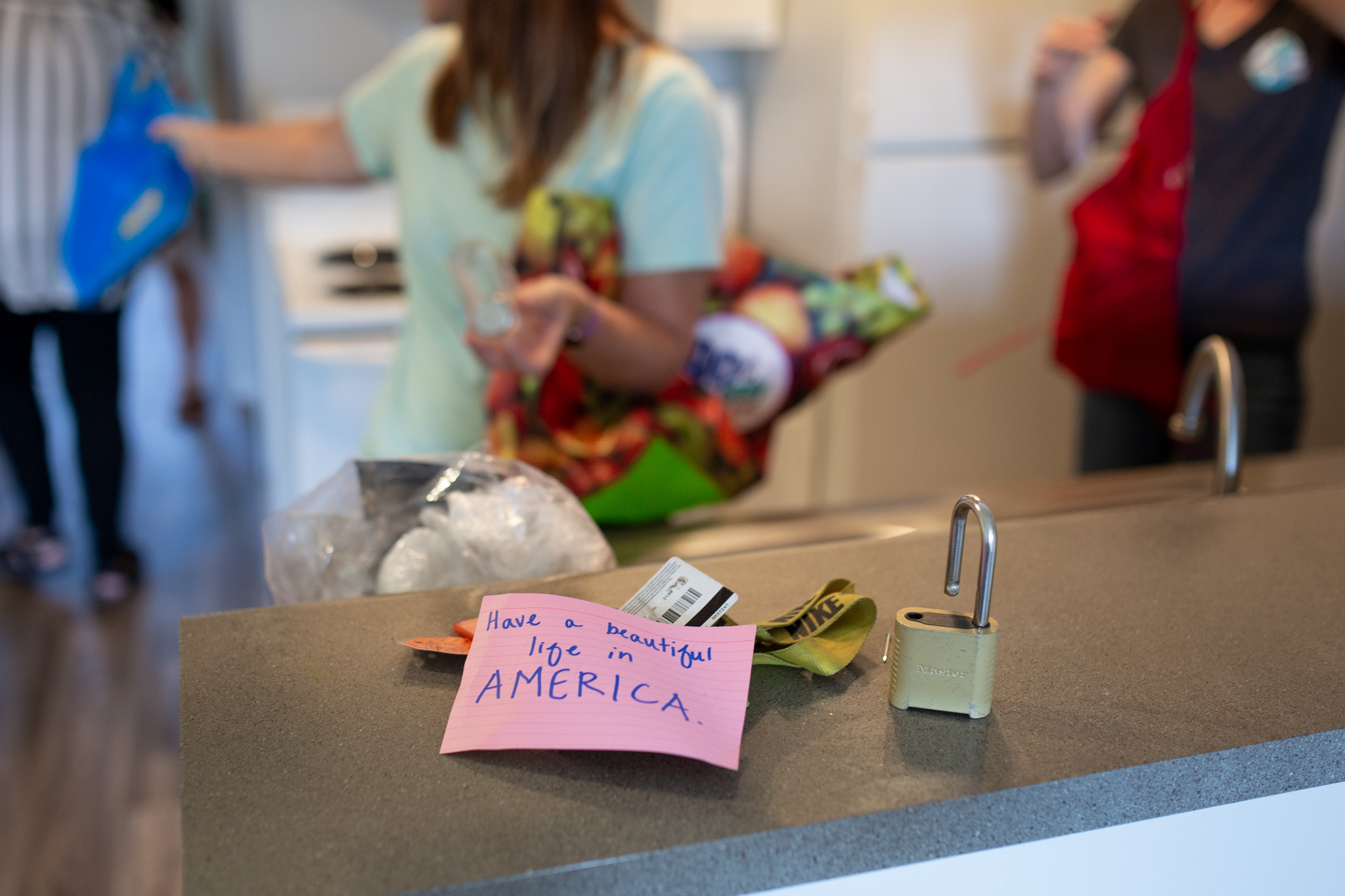
But that is not all I saw. It was the vignettes of human connection that took my breath away, evoking an unexpected sense of beauty and awe in the midst of bleak pasts and uncertain futures.
I met heroic parents who, after recounting everything they’d suffered, would look at their young children and talk with glimmers of hope in their eyes about their determination to provide a safe life for their kids to grow and thrive.
I saw so many good people--recent immigrants, former asylum seekers, and longtime community residents--all working together, reaching out to love and welcome newcomers. The needs are so simple: backpacks with snacks, toothbrushes, and water bottles for the bus ride, shoes and shoelaces, a shower, and the dignity of being seen by another human being.
A few volunteers recounted how groups sometimes show up to mock and yell at asylum seekers when they arrive in the city. But the volunteers stand, arm-in-arm in front and cheer louder than the people who mock.
I returned home from this trip with a renewed desire to do more to welcome newcomer families in my own town. Everyone can do something to drown out hate with love. We can all go to the places where newcomers are settling in our own communities and cheer louder.
Image credit: TSOS/Kristi Burton
Helping ITPs Succeed: Insights from Leading Support Programs
Partner Profile: No One Left Behind
Their Story is Our Story and No One Left Behind (NOLB) joined forces in 2025 to launch the StoryShield program.
We spoke with Matthew Marcellus, Director of Communications with NOLB, and asked what the partnership with TSOS has meant for his organization and their Afghan clients.
Context with Layma
Social media presents us with an endless scroll of headlines and ‘hot takes’. What’s often missing is context. What is the history that led up to an event? Whose interests are served by a certain policy? What effects is that policy having on people’s lives? Layma Murtaza produces and hosts the video series “Context with Layma”, featured on Their Story is Our Story’s social media channels. We spoke to her about the context of her own life, as an Afghan-American and a professional in humanitarian aid, that led her to use storytelling to illuminate the personal and political context behind the headlines.