The ethics of photographing refugees: what is our role?
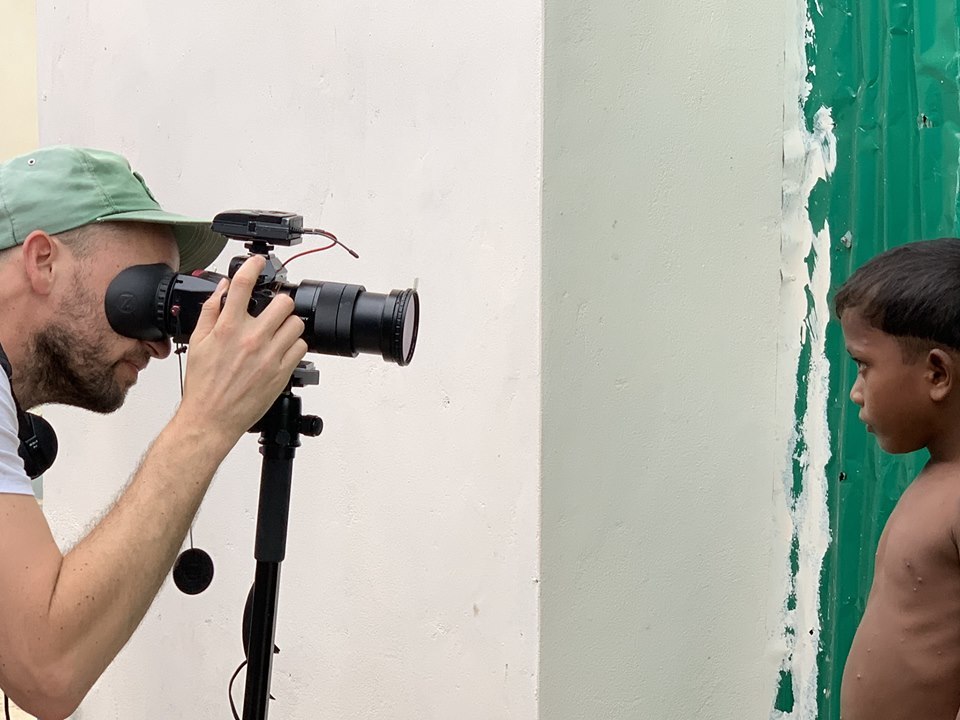
Painful conversations. We’ve had many as a team here at Their Story is Our Story, and we’ll keep having them.
The Number One topic has been: what we are doing; what is the added value of sticking a lens in the face of a traumatized child, a raped woman, a beaten man?
We come from extreme privilege. We live in safety. We have not been forced to flee to save our lives and those of our children. So, what dynamic might we be perpetuating? Is it a moral obligation to tell these stories when refugees themselves cannot? Or is it an amoral exploitation?
Because listen to me closely (lean into your screen, even, and listen to me whisper): sometimes it feels a bit indecent. Sometimes we wonder if going on location and bringing back these stories might, in the end, not close the gap between the powerful and the powerless but expand it, thus perpetuating the whole problem.
Because there is something I’ve feared, and it makes me sick at heart and crazy in brain: I have feared folks admiring the people behind the lens and not the ones in front of it.
Capturing stories is sacred, gutting, and demanding. But, it is the refugees whom we should admire and not us. Their Story is Our Story aims to create virtual proximity between refugees and you, our audience. We don’t want you to think about us. We want you to think about them.
If we point a lens towards someone’s face, let them tell their story, and bring that story to the world for the world to then get stuck in admiring the beauty of the image, craft of the film, or depth of the writing, then we have not humanized them. But, we have, in a small way, dehumanized ourselves.
What do you think?
HOW YOU CAN HELP
Share refugee stories online and in life amongst your friends and colleagues to help challenge misconceptions and misunderstandings about refugees to aid integration and acculturation in communities.
Donate to Their Story is Our Story (TSOS) so that we can continue sharing refugees’ personal stories.
Donate to Hope Foundation for Women and Children of Bangladesh so that Hope Field Hospital for Women can continue to provide a safe haven for women and children inside the Refugee Camps.
Get involved with HumaniTerra by donating funds or volunteering to work on the ground to help rebuild the care system in a sustainable way.
Donate to Unicef or Save the Children to help build temporary safe spaces for Rohingya children to go to school.
Author: Melissa Dalton-Bradford
Image credit: Christophe Mortier
Helping ITPs Succeed: Insights from Leading Support Programs
Partner Profile: No One Left Behind
Their Story is Our Story and No One Left Behind (NOLB) joined forces in 2025 to launch the StoryShield program.
We spoke with Matthew Marcellus, Director of Communications with NOLB, and asked what the partnership with TSOS has meant for his organization and their Afghan clients.
Context with Layma
Social media presents us with an endless scroll of headlines and ‘hot takes’. What’s often missing is context. What is the history that led up to an event? Whose interests are served by a certain policy? What effects is that policy having on people’s lives? Layma Murtaza produces and hosts the video series “Context with Layma”, featured on Their Story is Our Story’s social media channels. We spoke to her about the context of her own life, as an Afghan-American and a professional in humanitarian aid, that led her to use storytelling to illuminate the personal and political context behind the headlines.