Connecting Around the Dinner Table
Written by Tarah Westover
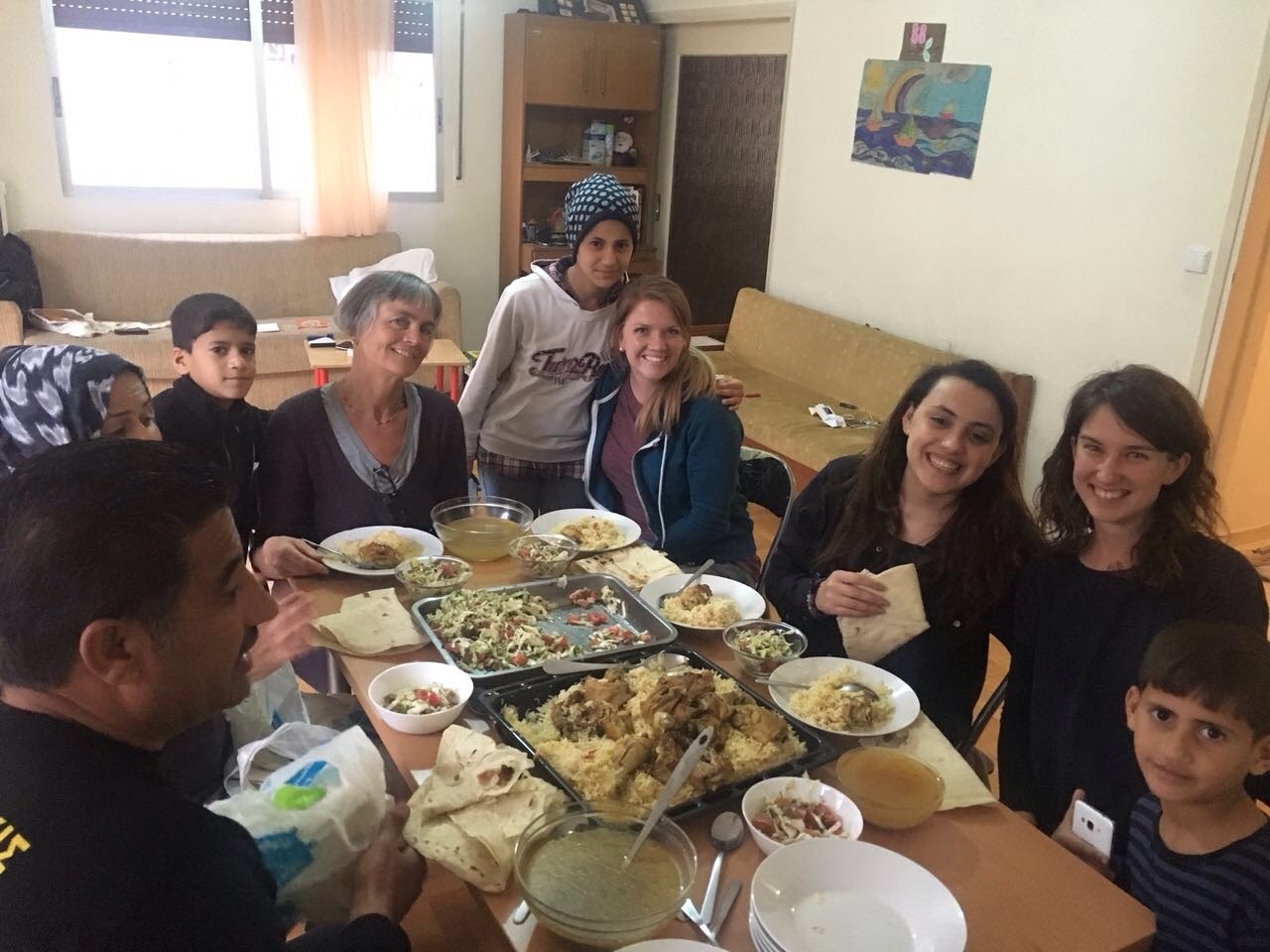
About 17 months ago I was sitting on the floor of a one-bedroom apartment in the heart of Thessaloniki Greece, where a Syrian family of eight was residing. I asked Randa, the mother of the family, if she would teach me how to make an authentic Syrian meal for me to make with my friends and family when I returned to the United States. She was surprised and delighted that I would think to ask. She enthusiastically agreed.
As we gathered that night to learn how to make Kabsa, we had such a blast! Two completely different languages and cultures, but we communicated with genuine smiles and sincere eyes.
We laughed as we watched Amara (the 2-year old) dance along with her siblings as they demonstrated cultural dance and music. We cried as they reminisced the careers, family, friends and life they knew in Syria and the child they lost there in the bombs. We listened as they told us of their hopes for a brighter future free of persecution; a future that would allow their six children to study in public schools and build a future better than theirs.
When we finally gathered around the table together to eat the meal we prepared together, the father shared with us something I’ll never forget. He told us they were scared. They heard stories from their two sons who were already in Finland trying to learn the language and they weren’t treated well. They get spit on and called names as they walk home from language classes. They were scared but expressed that they had no choice but to be hopeful.
“Thank you for treating our family with so much love and dignity. Thank you for making us your friends rather than your enemies. So many people judge us by the way we look but they do not know our hearts. Just because we are Syrian does not mean we terrorists. There are good and bad people no matter where you go in the world. We did not choose to leave our home and find a new one here in Europe. We don’t want this life. We miss our family and our home and our lives in Syria. We are no different than anyone else. We sit and eat dinner around a table just like you do.”
I went home that night to my little flat in Greece and I wept. My heart ached for the suffering of so many. I felt angry and frustrated because it didn’t make sense. Nothing added up.
As I’ve come to know individual refugees fleeing danger in their home countries, I’ve been in awe of their unwavering compassion, devotion to their religion, and their resilience in the face of so much persecution and hardship.
Our newly published book, Let Me Tell You My Story is a meaningful account of hundreds of refugees who have opened their hearts and shared their stories with us. It is so important that we understand what is happening to our brothers and sisters throughout the world - that war, genocide and persecution are not things that we merely read and study out of history textbooks in school. These things are happening NOW. It’s not okay.
Marjorie Pay Hinckley once stated, “There isn’t a person you would not love if you could read their story.” They are so much more like us than they are different.
As my Syrian friend said: they sit and eat dinner around a table just like we do.
Helping ITPs Succeed: Insights from Leading Support Programs
Partner Profile: No One Left Behind
Their Story is Our Story and No One Left Behind (NOLB) joined forces in 2025 to launch the StoryShield program.
We spoke with Matthew Marcellus, Director of Communications with NOLB, and asked what the partnership with TSOS has meant for his organization and their Afghan clients.
Context with Layma
Social media presents us with an endless scroll of headlines and ‘hot takes’. What’s often missing is context. What is the history that led up to an event? Whose interests are served by a certain policy? What effects is that policy having on people’s lives? Layma Murtaza produces and hosts the video series “Context with Layma”, featured on Their Story is Our Story’s social media channels. We spoke to her about the context of her own life, as an Afghan-American and a professional in humanitarian aid, that led her to use storytelling to illuminate the personal and political context behind the headlines.