Arthur Brooks and the Power of Stories
Written by Megan Carson
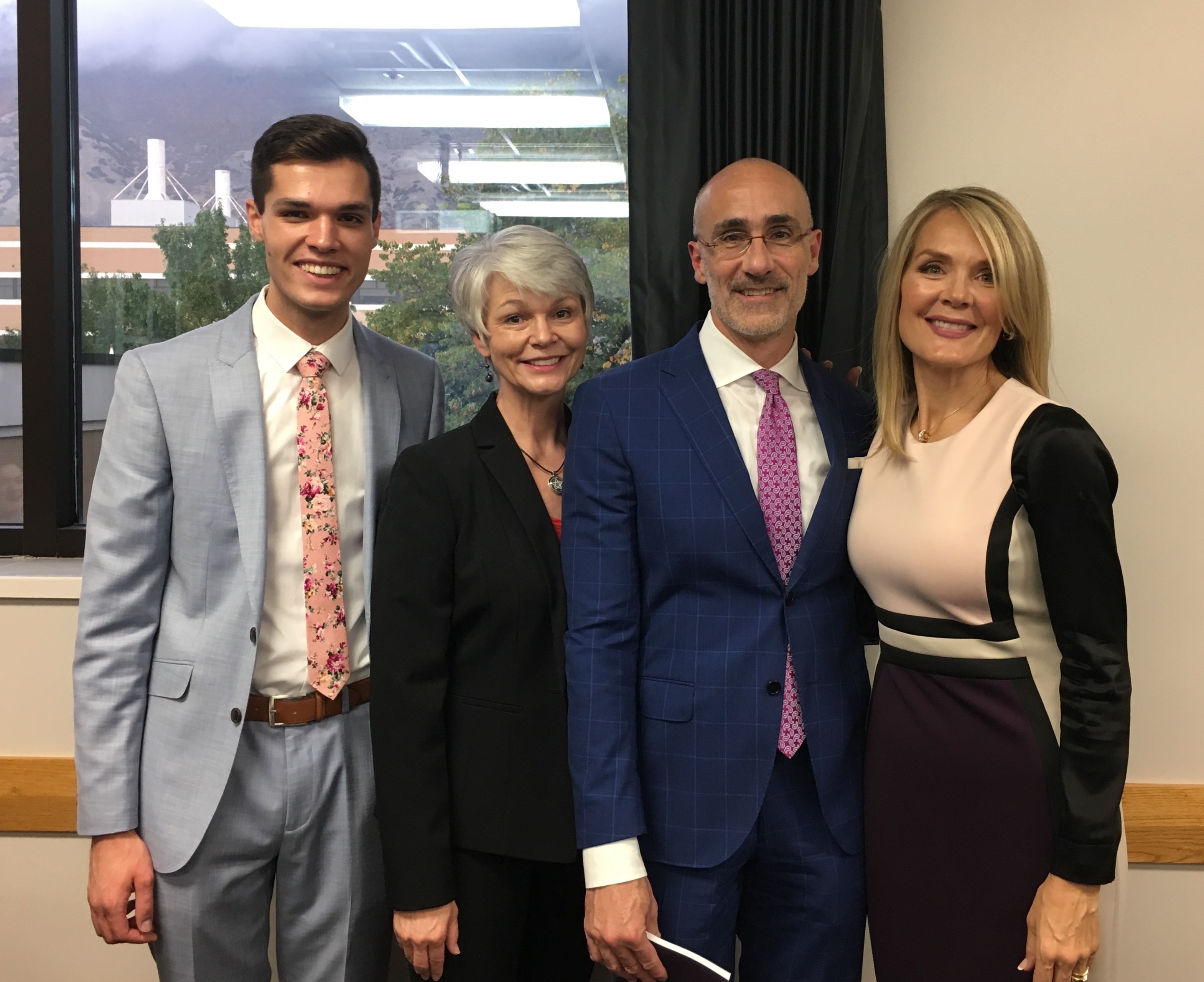
Melissa Dalton-Bradford, co-founder of Their Story Is Our Story, had the opportunity while traveling through Utah last week to attend a reception and a lecture with Arthur Brooks, a prolific writer, remarkable public speaker, president of American Enterprise Institute, and a leading voice for caring for the vulnerable and needy.
It is a gift to connect with people like Arthur Brooks, to learn from the research and work that he is doing, and to share with him the important story-telling work we are doing.
Mr. Brooks recently shared a powerful and fascinating podcast on the power of stories. As you listen to this podcast, you’ll understand the reason for why this group of unpaid volunteers dedicates so many hours to trying to make these refugees’ stories heard.
The work of storytelling is the key to this crisis. Stories, told with the right balance, simply and truthfully, will change hearts. That is exactly what we aim to do.
Do yourself a favor and listen to Arthur Brooks’ podcast “Tell Me a Story.”
Summary: “The smartest person in the room doesn’t always win the debate — the best storyteller does. This episode explores the power of storytelling and how we can use stories to more effectively persuade, inspire, and unify others. We hear from sociologist Kathy Edin, neuroeconomist Paul Zak and Grant Gordon of the International Rescue Committee.”
Helping ITPs Succeed: Insights from Leading Support Programs
Partner Profile: No One Left Behind
Their Story is Our Story and No One Left Behind (NOLB) joined forces in 2025 to launch the StoryShield program.
We spoke with Matthew Marcellus, Director of Communications with NOLB, and asked what the partnership with TSOS has meant for his organization and their Afghan clients.
Context with Layma
Social media presents us with an endless scroll of headlines and ‘hot takes’. What’s often missing is context. What is the history that led up to an event? Whose interests are served by a certain policy? What effects is that policy having on people’s lives? Layma Murtaza produces and hosts the video series “Context with Layma”, featured on Their Story is Our Story’s social media channels. We spoke to her about the context of her own life, as an Afghan-American and a professional in humanitarian aid, that led her to use storytelling to illuminate the personal and political context behind the headlines.