Newcomers
Written by Amy Stevenson
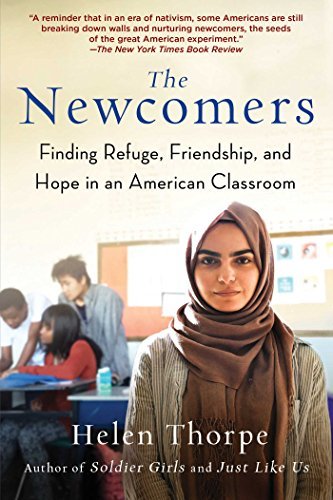
I have been reading “The Newcomers: Finding Refuge, Friendship, and Hope in an American Classroom.” The author, Helen Thorpe, spent a year in a Colorado high school classroom following the first year of transition for newly resettled refugees. The class was made up of 22 refugee adolescents speaking 14 different languages. Their amazing teacher, Mr. Williams, was tasked with teaching them English and helping them learn to live in America.
Something that was fascinating for me was the reminder that even families that are fortunate enough to enter legally into the country have adjustments to make. In a chapter titled “We Hate Sheep,” Thorpe describes the huge shift in culture that a family from Democratic Republic of Congo was making.
She learned that even the idea of making an appointment was new to them. They didn’t arrange to visit people at certain times, they just showed up and if someone was there, they had a nice visit.
Guests ate from the common family bowl not with individual place settings.
They did not have the concept of choosing a career. Everyone just did the work that was available and necessary back in their village.
Nobody took out loans or needed a bank to buy a house. You bought what you could with the money in your hands.
The sound of fireworks to celebrate the Fourth of July were terrifying and brought instant fear because they sounded like the gunfire they had lived through years earlier.
I have come to respect the sacrifices refugees are making. To save their own lives they have willingly left so much of their comforts and traditions behind. They work to integrate their past into the present and must learn new traditions and languages in order to live in a better and safer place. They are remarkable.
Helping ITPs Succeed: Insights from Leading Support Programs
Partner Profile: No One Left Behind
Their Story is Our Story and No One Left Behind (NOLB) joined forces in 2025 to launch the StoryShield program.
We spoke with Matthew Marcellus, Director of Communications with NOLB, and asked what the partnership with TSOS has meant for his organization and their Afghan clients.
Context with Layma
Social media presents us with an endless scroll of headlines and ‘hot takes’. What’s often missing is context. What is the history that led up to an event? Whose interests are served by a certain policy? What effects is that policy having on people’s lives? Layma Murtaza produces and hosts the video series “Context with Layma”, featured on Their Story is Our Story’s social media channels. We spoke to her about the context of her own life, as an Afghan-American and a professional in humanitarian aid, that led her to use storytelling to illuminate the personal and political context behind the headlines.