Overcrowded Boats
Written by Melissa Dalton-Bradford
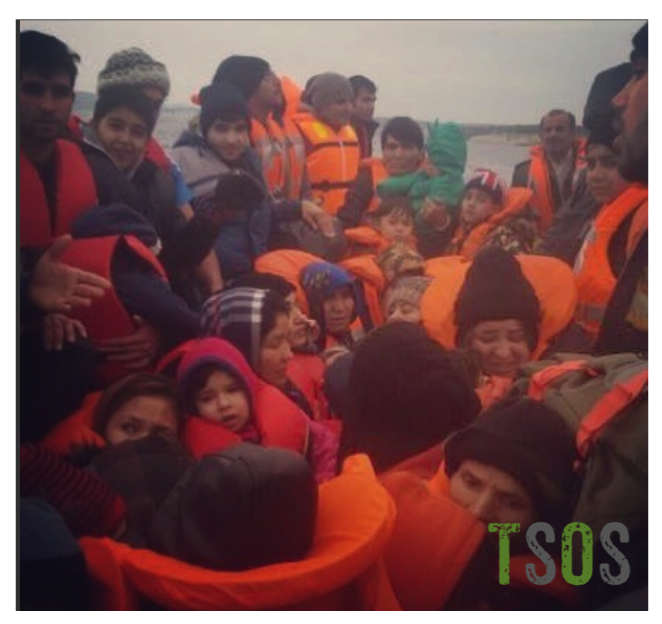
I hesitate to post this picture.
It is sacred.
It is terrifying.
It is true.
And it is not mine.
This is on the Aegean, crossing from Turkey to Greece. In the middle of this boat is a family, and they are my friends.
Their stories are featured in our book, Let Me Tell You My Story.
If you’ve ever wondered why those overloaded inflatable rafts coming to the shores of Greece seemed to be filled only with men (as I believe some US news outlets claimed), let me explain:
The men surrounded the outer rim of the vessels because they let women and children embarks first. The women and children weighted the center of the vessels, steadying them as men helped them shove off from land.
And most importantly, the men sat on the edges to protect the women and children from potential gunfire from both Turkish and Greek forces who were supposed to be curbing these smuggling routes, remember?
Finally, when smugglers, out of fear of coast guards, fled from navigating these vessels and jumped ship (we’ve heard several of those accounts), it was the men (who could drive) who took over.
Helping ITPs Succeed: Insights from Leading Support Programs
Partner Profile: No One Left Behind
Their Story is Our Story and No One Left Behind (NOLB) joined forces in 2025 to launch the StoryShield program.
We spoke with Matthew Marcellus, Director of Communications with NOLB, and asked what the partnership with TSOS has meant for his organization and their Afghan clients.
Context with Layma
Social media presents us with an endless scroll of headlines and ‘hot takes’. What’s often missing is context. What is the history that led up to an event? Whose interests are served by a certain policy? What effects is that policy having on people’s lives? Layma Murtaza produces and hosts the video series “Context with Layma”, featured on Their Story is Our Story’s social media channels. We spoke to her about the context of her own life, as an Afghan-American and a professional in humanitarian aid, that led her to use storytelling to illuminate the personal and political context behind the headlines.