Refugee Perspective: Memories of the Sea
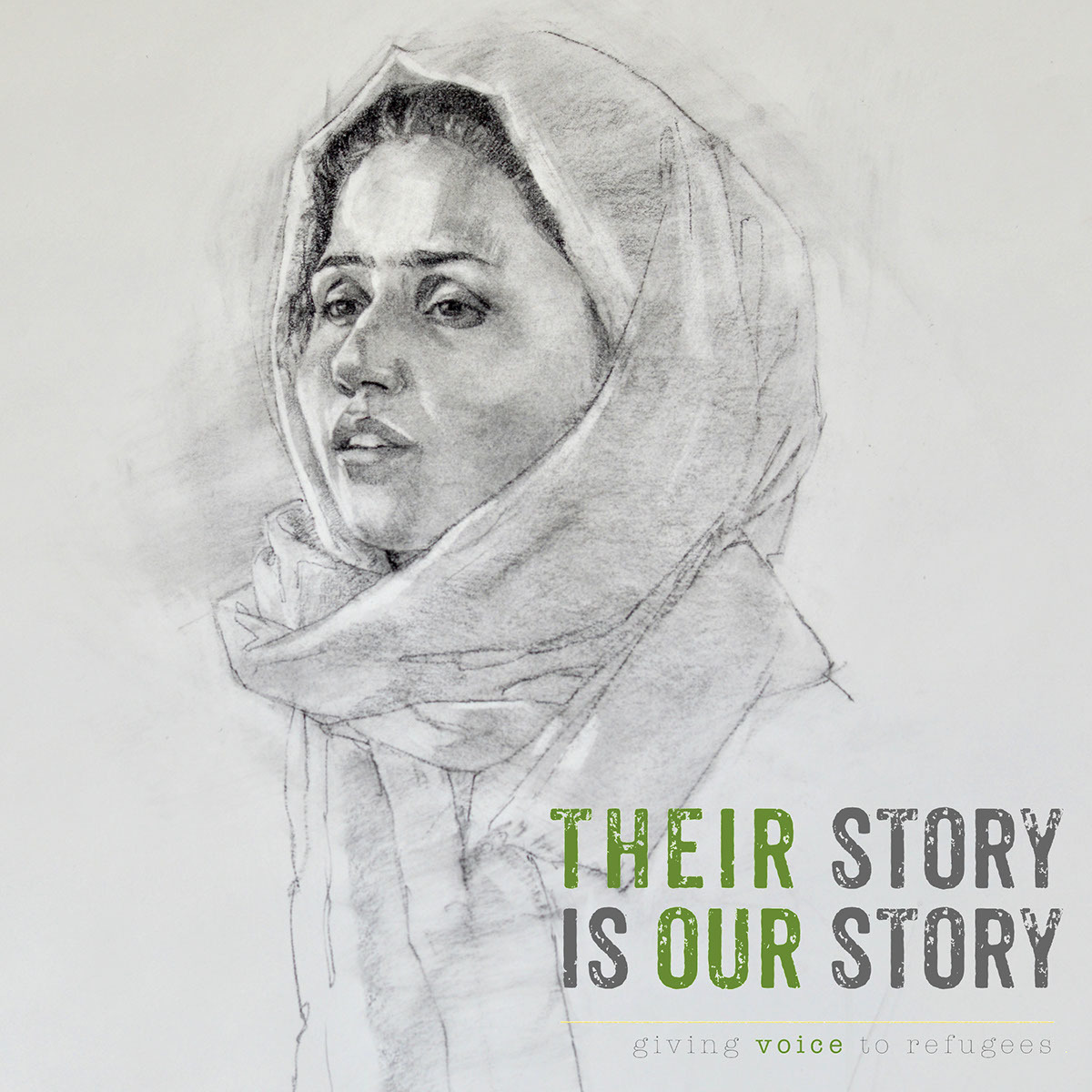
Written by Twila Bird
Artist by Elizabeth Thayer
I watched old home movies last night. Saw myself years ago playing in the California surf with my children and elderly parents. We hadn’t intended to go into the water. It was a cold, fall day and we hadn’t come prepared to swim but the big, curling waves were irresistible. We all waded in fully clothed. The waves were so strong they almost bowled us over with each slapping surge. We struggled to stay upright. And laughed. And looked like beached seals when we were through. When we moved from California, the ocean was what I missed most.
Not until recently did I realize others had views about the ocean diametrically opposed to mine — not until I met Zarrin, a refugee our NPO, Their Story Is Our Story, interviewed in Greece. After escaping the Taliban in Afghanistan, the most horrific part of her family’s journey was when they reached the coast in Turkey and climbed into an unseaworthy boat to cross the Aegean Sea to reach their destination. Zarrin said:
“I went to the ship [rubber raft] despairing. When we got into the boat, lots of water was coming in—my clothes, my children—I was afraid my children would die in the sea. The sea was stormy! Very rough! The waves were coming into the boat, but we could see the border police were coming. My husband saw them and shouted that he didn’t want to stay in Turkey, so we stayed in the boat despite the danger.
“My husband had gathered all of our money into a backpack, and the backpack was with me in the back [of the boat]. The mafia said to us, ‘All in the back, take and throw your things into the sea. If you do not throw everything into the sea, you will all drown.’ The ship was full of water. Water! I was so distressed I didn’t remember our money was in the backpack. The Mafia took all things in the back [of the boat] and threw them into the sea.”
“When we arrived in Greece, my husband asked, “Where is your bag?” I said, “In the sea.” My husband began shouting and fell on the ground. My family was shouting. My husband couldn’t speak. He couldn’t open his eyes. He couldn’t hear. And he wasn’t breathing. My children were crying and I was crying. After two hours of oxygen and some tablets, the doctor examined him and let him go on the bus into the island. Now he is OK. It was very difficult.
“When I sit in the day, I think about the journey, about the sea. And at night in my dreams I see my family drowning. I don’t ever want to go back to the sea!”
Helping ITPs Succeed: Insights from Leading Support Programs
Partner Profile: No One Left Behind
Their Story is Our Story and No One Left Behind (NOLB) joined forces in 2025 to launch the StoryShield program.
We spoke with Matthew Marcellus, Director of Communications with NOLB, and asked what the partnership with TSOS has meant for his organization and their Afghan clients.
Context with Layma
Social media presents us with an endless scroll of headlines and ‘hot takes’. What’s often missing is context. What is the history that led up to an event? Whose interests are served by a certain policy? What effects is that policy having on people’s lives? Layma Murtaza produces and hosts the video series “Context with Layma”, featured on Their Story is Our Story’s social media channels. We spoke to her about the context of her own life, as an Afghan-American and a professional in humanitarian aid, that led her to use storytelling to illuminate the personal and political context behind the headlines.