Written by Megan Carson
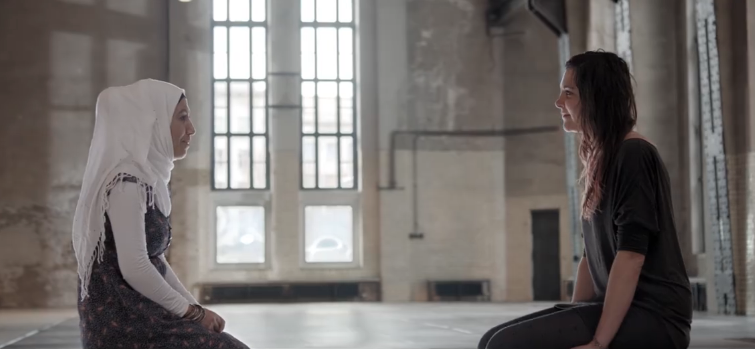
While watching this moving video by Amnesty International, I was reminded of an experience I had last week. I took a day trip to a bigger city with a higher population of refugees. While out grocery shopping, I came across a family who caught my eye. I could hear them speaking in a language unfamiliar to me and noticed other details that told me they were likely from somewhere in the Middle East. I felt an urgent desire to know their story.
We passed each other in the store three or four times, each time my tongue tied up, preventing any words from coming out. I worried about putting them on the spot or making them uncomfortable. But, when we serendipitously found ourselves in the parking lot across the way from each other, I knew it was my last chance and I’d regret it if I didn’t go say something.
I saw them stiffen a little as I approached their car with determined purpose in my step. I started by asking if they spoke English. The young adult son said he did, so I spoke to him, asking where they were from and if they were refugees. I introduced myself and explained that I noticed them in the store and I simply wanted them to know how happy I was that they are here.
The parents and the younger son all watched in anticipation, eager to understand what we were talking about. The young man turned to them to explain and when they turned back to me with beaming smiles stretched across their faces, I reached my hand out to each of them and said, “Welcome to America. Welcome.”
They were stunned, as if they were being seen for the first time. Was it a little awkward to make the initial approach? Yes. Was that awkwardness worth it after seeing the joy on their faces, erasing any feeling they might’ve had of invisibility, then to be welcomed and accepted? Absolutely! It filled my heart with love and I imagine it did the same for them.
Go try it out. Find someone who looks lonely or perhaps feels invisible. Look them in the eye. See them. And then let them know that you see them. We all want to be seen, heard, and understood... but there are some among us who need it more desperately than we can possibly understand.
Helping ITPs Succeed: Insights from Leading Support Programs
Partner Profile: No One Left Behind
Their Story is Our Story and No One Left Behind (NOLB) joined forces in 2025 to launch the StoryShield program.
We spoke with Matthew Marcellus, Director of Communications with NOLB, and asked what the partnership with TSOS has meant for his organization and their Afghan clients.
Context with Layma
Social media presents us with an endless scroll of headlines and ‘hot takes’. What’s often missing is context. What is the history that led up to an event? Whose interests are served by a certain policy? What effects is that policy having on people’s lives? Layma Murtaza produces and hosts the video series “Context with Layma”, featured on Their Story is Our Story’s social media channels. We spoke to her about the context of her own life, as an Afghan-American and a professional in humanitarian aid, that led her to use storytelling to illuminate the personal and political context behind the headlines.