Top of Mind: Live in America for Refugees with Dr. Abdul Nasser Kaadan
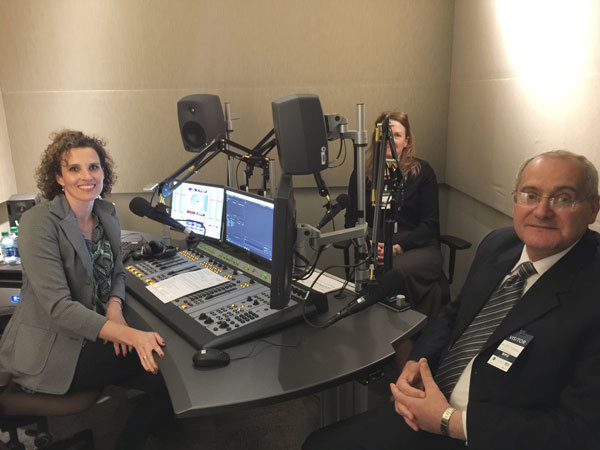
Dr. Abdul Nasser Kaadan, Orthopedic Surgeon and a Syrian Visiting International Professor currently teaching at Weber State University in Ogden, Utah, was a guest on Brigham Young University’s news and public affairs radio program titled “Top of Mind with Julie Rose.” The interview aired on April 21, 2017.
Host Julie Rose introduced her interview with Dr. Kaadan by saying,
“We’re hearing stories about what it’s like to be an immigrant in the United States: the challenge of finding work, even when immigrants are highly educated and respected in their own countries. This scenario applies to many Syrian refugees whose country had one of the best systems of higher education in the Middle East, before it became embroiled in war and chaos”
You can listen to a podcast of the radio interview online.
Helping ITPs Succeed: Insights from Leading Support Programs
Partner Profile: No One Left Behind
Their Story is Our Story and No One Left Behind (NOLB) joined forces in 2025 to launch the StoryShield program.
We spoke with Matthew Marcellus, Director of Communications with NOLB, and asked what the partnership with TSOS has meant for his organization and their Afghan clients.
Context with Layma
Social media presents us with an endless scroll of headlines and ‘hot takes’. What’s often missing is context. What is the history that led up to an event? Whose interests are served by a certain policy? What effects is that policy having on people’s lives? Layma Murtaza produces and hosts the video series “Context with Layma”, featured on Their Story is Our Story’s social media channels. We spoke to her about the context of her own life, as an Afghan-American and a professional in humanitarian aid, that led her to use storytelling to illuminate the personal and political context behind the headlines.