When the War Started, We Thought It Was Fake
How Can It Be Possible? We Live in the 21st Century
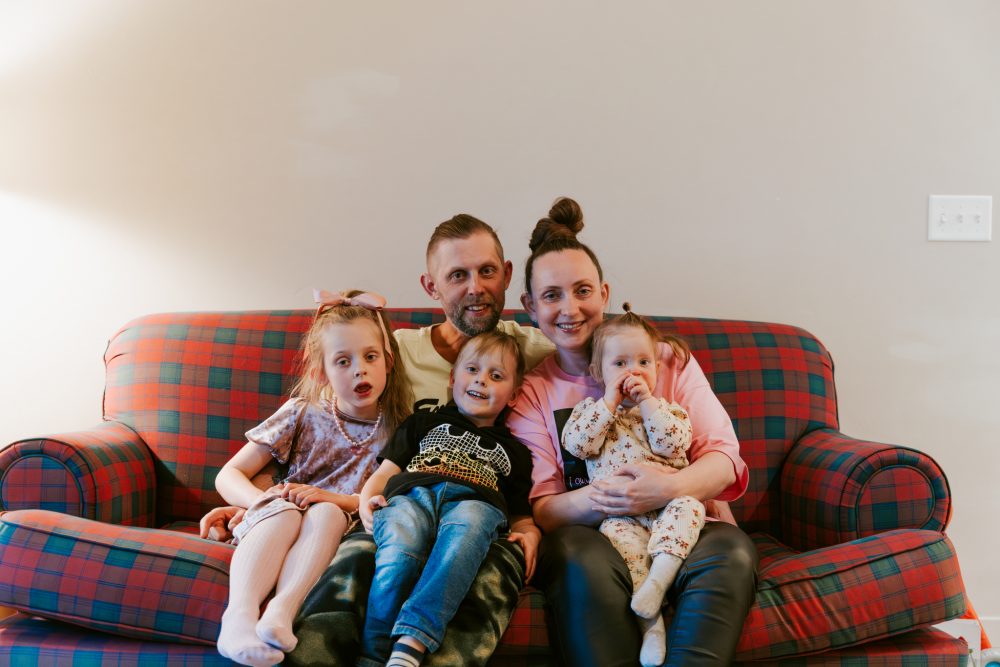
My name is Kyrylo Burlaka. I’m from Ukraine. And now I live in the US, in Utah. Before we came to the United States, we lived in Poland for one year, to escape the war. Our youngest child was born in Poland.
When war started our family lived in Sumy, Ukraine. It’s a city very near the Russian border. Russian soldiers were coming out of the city. For us it was a surprise. It was a bad surprise. Every time we heard some news, or read something in a magazine or the internet that said, “War is starting” we thought it was fake. We thought it was impossible because we live in the twenty-first century. How is it possible? It’s not possible. It’s crazy. It’s only Putin’s dream. It’s not possible. The night before the war, we slept well. And when we woke up at 9am, I looked at my phone and there were so many missed calls from my parents and my friends. My wife said maybe something happened. I called my friends who live in Kyiv, and my friends said it is now war.
We found some information on the internet and knew it was true. And we know that it’s the Russian soldiers who are coming. But Russian soldiers are not human. People know what they did in Bucha. What they did, it was not human.
We didn’t have a need for guns, in Ukraine, in our house. In Ukraine it’s illegal to have a gun. And I think, what do I have to protect myself? I have only one knife.
Glory to God, the Russian army came to our city, but they only took photos and video and went on.
But we have many brave men and women in Ukraine who fought the Russian army and the Russian army was surprised. They did not expect us to fight.
We stayed in the city for two more weeks. Then the Russian government offered a humanitarian pathway where we could get out of the city. We needed to go because it was very dangerous to stay. So my family went to Poland.
At first my family went without me. I stayed in the city and helped my city fight the Russian soldiers. We didn’t fight like soldiers. We united together and organized warehouses with supplies and medicine to help others. When Russian soldiers occupy a city, the people who leave need food, money, and medicine. And we also taught Ukrainian soldiers some basic first aid, like how to stop a wound from bleeding. We taught more than 3000 soldiers. We worked very hard to organize something to help soldiers and other people. We had many people volunteer.
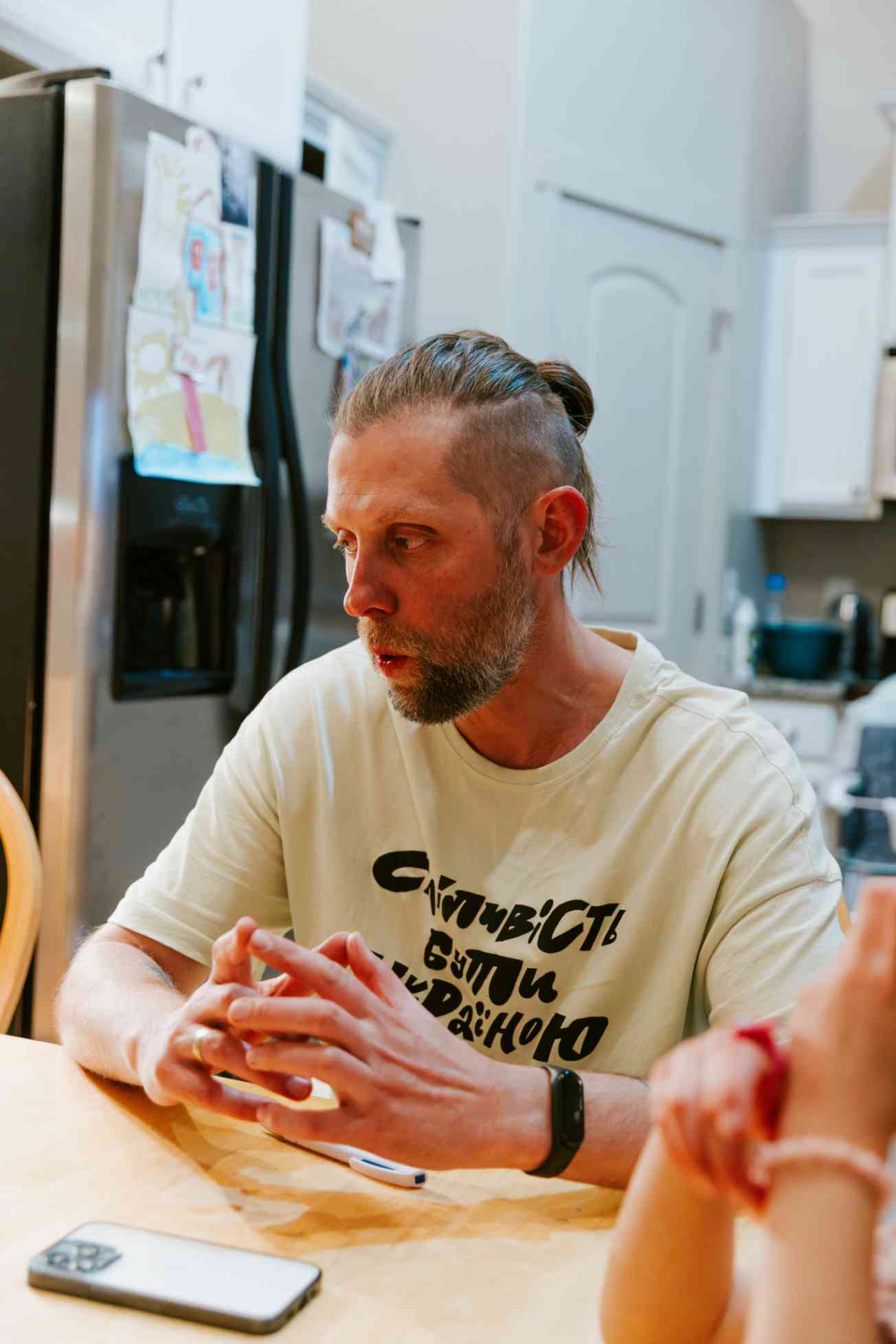
I did this for six months. And then I joined my family in Poland. My wife was pregnant. One week before the war we found out that she was expecting. And our baby is beautiful, but this beautiful baby has never seen Ukraine.
Now we live in Utah. It is safe for our kids. It’s a good place for kids. There are good schools.
Before the war I was the owner and CEO of a non government organization. This organization is named Extreme Style. We organized a street culture festival and a magic project and a teenage musician festival. We organized volunteers. We taught volunteers. We organized many projects. For 20 years my wife helped me as an administrator. This was my permanent job, my career. And when I came to America, everybody said you need to look for a job at an entry level position. Like in construction, or maybe in a restaurant.
So now we start a new life. For us, it is not easy. We have no benefits. We got no help from the government, but many people and organizations helped us like Lifting Hands International. For us that’s very important. Helping people is the government’s job. It’s normal for a government to do that.
But when people who never know you help you, you see how people think about you, why people help you, how people open up their life for you.
For our kids, the new language is hard. Our daughter is a leader but when she went to school, she had no language and no skills. Now she has friends. It’s really cool our kids know Ukrainian and now English.
Another big problem is the bureaucracy. We waited for months for a work permit. And when I said I’m from Ukraine they asked if I have a work permit. I said, “No.” No permit, no job. But now I have a job and life is a little bit better. Many people helped us, not only with furniture, but also to help us pay our rent.
I also think when you are refugees you need help with assimilation. We are from Ukraine but now we live in this country and we need to know how this country works. We need to learn the culture. The whole nation is different. And we understand if we want to live here, if we want a better life, we need to understand how everything works. It’s a very important thing so we need to understand the culture. And sometimes for Ukrainian people it’s very hard because people don’t understand you need time to learn how to live here.
My dream for us is for the war to be done and finished.
It's not only Ukraine’s war. It's the world’s war.
If Ukraine loses this war, it’s very bad for everyone. When we learn some history about the second World War, we know it is very important for this war to stop.
When Ukraine wins the war, it will take a long time for Ukraine to recover. We won’t go back until we know it is safe for our kids. It’s hard to think about the future. That’s why we are starting a new life here. We will not sit and wait and wait for something to happen. We are starting a new life. We will work hard.
Click here to see videos of the work Kyrylo did in Ukraine.
Our team members obtain informed consent from each individual before an interview takes place. Individuals dictate where their stories may be shared and what personal information they wish to keep private. In situations where the individual is at risk and/or wishes to remain anonymous, alias names are used and other identifying information is removed from interviews immediately after they are received by TSOS. We have also committed not to use refugee images or stories for fundraising purposes without explicit permission. Our top priority is to protect and honor the wishes of our interview subjects.