This Is My Life
Oksana from Ukraine reflects on rebuilding her life in the United States
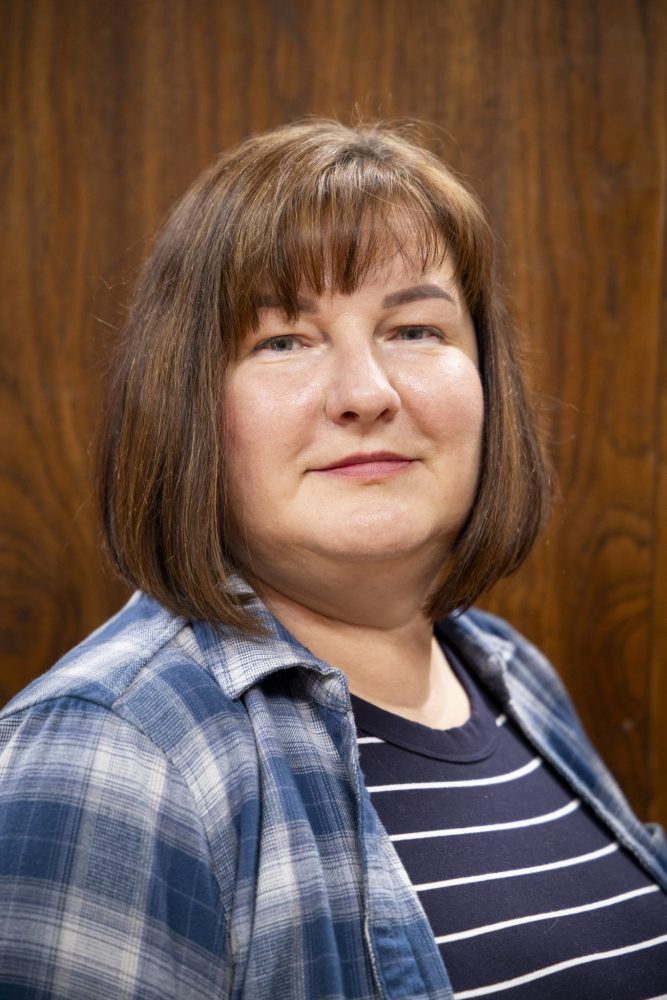
Their Story is Our Story previously interviewed Oksana in 2024.
When I lived in Ukraine, I always tried to maintain a balance between work and rest. I love spending time outdoors. Every morning, I take a walk for about an hour, listen to the birds singing, and enjoy the sunrise.
I spent several months studying healthy nutrition. I see how important it is not only for physical health but also for emotional well-being.
American food culture sometimes surprises me. Heavy, high-calorie foods are very popular here, even though grocery stores offer an enormous selection of fresh vegetables, fruits, and other nutritious products.
Of course, my son loves burgers too, and he often asks me to buy them.
I believe healthy eating habits should be developed from childhood. Children can enjoy less healthy foods occasionally, but nutritious meals should form the foundation of their diet. In Europe, considerable attention is paid to children’s nutrition, including in schools.
I have even thought about a business idea: teaching people how to make simple, delicious, and healthier baked goods. I believe healthy food does not have to be complicated or expensive.
Americans and U.S. Politics
I am sincerely grateful to the American people for the kindness, support, and opportunities my family has received here.
I have met many wonderful people who treat Ukrainians with understanding and compassion. At the same time, I find some of the changes in government and immigration policies difficult to understand.
I believe the primary responsibility of any president is to improve people’s lives, create stability, ensure safety, and give families and businesses the confidence to plan for the future. Unfortunately, when it comes to the issues directly affecting my family, I have not yet seen those results. Instead, the uncertainty has increased.
Humanitarian Parole, and TPS
We came to the United States legally through the Uniting for Ukraine humanitarian program. We work, pay taxes, follow the law, and do everything we can to maintain our lawful presence in the country.
However, over the past two years, changes in immigration policy have created enormous uncertainty for Ukrainian families like mine. Even when we submit our applications on time and pay all the required fees, we may have to wait months for a decision.
This month, I paid $1,430 per person to apply for a new period of humanitarian parole for myself and my son. As I understand it, if our applications are approved, we will have to pay an additional $1,000 per person. That would bring the total to $2,430 for each of us.
But the hardest part is that no one can tell me how long it will take to process our applications. It could take months, a year, or even longer. There is a risk that waiting for a decision could take up almost the entire period of parole we are requesting.
How can you plan your life, work, support your family, and build a future when, even after doing everything required of you, you still do not know when your documents will arrive or how long they will remain valid?
When we first arrived through the humanitarian program, we received work authorization for two years. Now the situation has changed, and even if humanitarian parole is granted for two years, work authorization may be valid for only one year.
In February 2025, I applied for Temporary Protected Status (TPS) and employment authorization. I paid all the required government filing fees, approximately $500 and submitted my documents on time. I waited approximately a year and a half for a decision. My application was finally approved in June 2026, after I sought assistance from a member of Congress.
What surprised me most was that my TPS was set to expire in October 2026. After such a long wait, I had only about four months left under the approved status.
We are not asking for special treatment or public assistance. We want a clear, fair, and predictable process that allows us to follow the law and remain financially independent.
My Career and Professional Goals
I currently work as an accounting assistant at a construction company. I am grateful for the experience I have gained, but I want to continue growing professionally.
I have a degree in food process engineering and for 15 years before coming to the United States, I worked as a regional manager, leading a team of approximately 50 people. My responsibilities included sales development, negotiations, budget management, financial performance, and business operations.
I understand how to build strong client relationships, identify new business opportunities, and develop effective sales strategies. I especially enjoy challenging negotiations. The more complicated the situation and the more demanding the business partner, the more interested I become in finding a solution.
I would love to return to a career in sales, business development, or management, where I can apply my experience and continue to grow.
I believe everyone should have the opportunity to do work that inspires them and allows them to reach their full potential.
This is my life. And despite everything that has happened, I still want to build my future, develop professionally, and make my own decisions.
My Son’s Future
My son is eleven years old. He loves sports, although I am not particularly interested in them myself. Sometimes he asks me whether we will return to Ukraine. I explain that, right now, returning would not be safe for our family.
In Ukraine, I had an established career, professional connections, and a familiar life. But my son has already built a life here. I do not want his opportunities to be limited by war, borders, or circumstances beyond his control.
If he wants to study in America, Europe, or another country, I want him to have that opportunity, the freedom to build his own future. I want to do everything I can to make sure he has a choice.
The War and Losing My Mother
When the war began, my mother was seriously ill. She could not leave with us. I did not know how to arrange for her transportation in such a fragile condition.
When I had to flee my hometown during the Russian invasion, access to medical care and medication was extremely limited. My mother was in very serious condition, and she passed away shortly afterward. There was nothing I could do.
My apartment building in Sumy is still standing, but shelling continues in the surrounding area. The kindergarten my son attended was also bombed. Now the situation has become even more frightening.
[A long pause. Oksana continues speaking through tears.]
Russian drones attack places where ordinary people are: post offices, hospitals, and kindergartens. I cannot understand how something like this is even possible.
Children in Ukraine are forced to attend classes in school basements and bomb shelters. Small drones constantly fly over the city. People have become so accustomed to their sounds that they barely react anymore. My mother-in-law told me: “It’s like the radio now.”
I ask her to leave Sumy, but she says: “No. This is my city. This is my life.” Many people feel the same way. I have friends with three children who still live in Sumy and do not want to leave. It is very difficult for me to understand because I am constantly worried about their safety.
On Ukrainian Life in America
Americans have treated us very well. I feel their friendliness and willingness to help. I know of an organization called Lifting Hands that supports refugees.
But Ukrainian families often cannot take advantage of all the opportunities available to them because they have to work so much. To support our family independently and cover all our expenses, we have to work significantly more than 40 hours a week, sometimes juggling two or three jobs. Life here is expensive.
I would love to spend more time meeting people, making friends, taking English language classes, and participating in community life, but there is almost no time left for that. We are constantly working and often feel exhausted.
Still, I deeply value the opportunity to support my family independently.
Languages in Our Family
Our family has found itself in a rather unusual situation. I speak Ukrainian, Russian, and some English. I study English every day, trying to improve my speaking skills. I would really like to attend an English-language school so I could study more intensively. But I work so much that finding time for regular classes is extremely difficult.
Additionally, I am afraid to go to places where immigrants gather because I worry about encountering immigration enforcement officers and being detained. Even though we try to follow all immigration requirements, the current uncertainty makes me anxious.
It is a very difficult feeling. I want to learn, become more integrated into American society, and grow professionally. But the circumstances we are facing limit even these basic opportunities.
My husband speaks Ukrainian and Russian, but he does not speak English. Our son, meanwhile, now speaks mostly English. He has started to forget Ukrainian. That is why we arranged online Ukrainian-language lessons with a teacher every weekend. Sometimes it is funny: when we go to a store, my husband asks our son to help him ask questions in English.
Inner Strength and Overcoming Hardship
I learned to be strong through some very difficult experiences. Even before the war, I survived cancer and other challenging periods in my life. Then the war began. I lost my mother, had to leave my home, and start my life over in another country.
All of these experiences changed me profoundly. I realized that I cannot control everything happening around me, but I can choose how I respond to it.
I still want to grow, work, enjoy life, and create opportunities for my family. After everything I have been through, I sometimes ask myself:
What else is there for me to be afraid of?
Our team members obtain informed consent from each individual before an interview takes place. Individuals dictate where their stories may be shared and what personal information they wish to keep private. In situations where the individual is at risk and/or wishes to remain anonymous, alias names are used and other identifying information is removed from interviews immediately after they are received by TSOS. We have also committed not to use refugee images or stories for fundraising purposes without explicit permission. Our top priority is to protect and honor the wishes of our interview subjects.