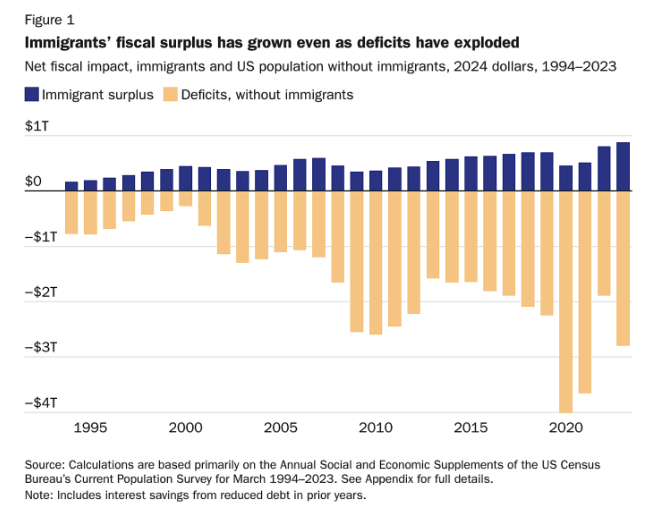
A new Cato Institute study demolished one of the most persistent myths in American politics, the false belief that immigrants are draining the country’s finances. Thirty years of data says the opposite.
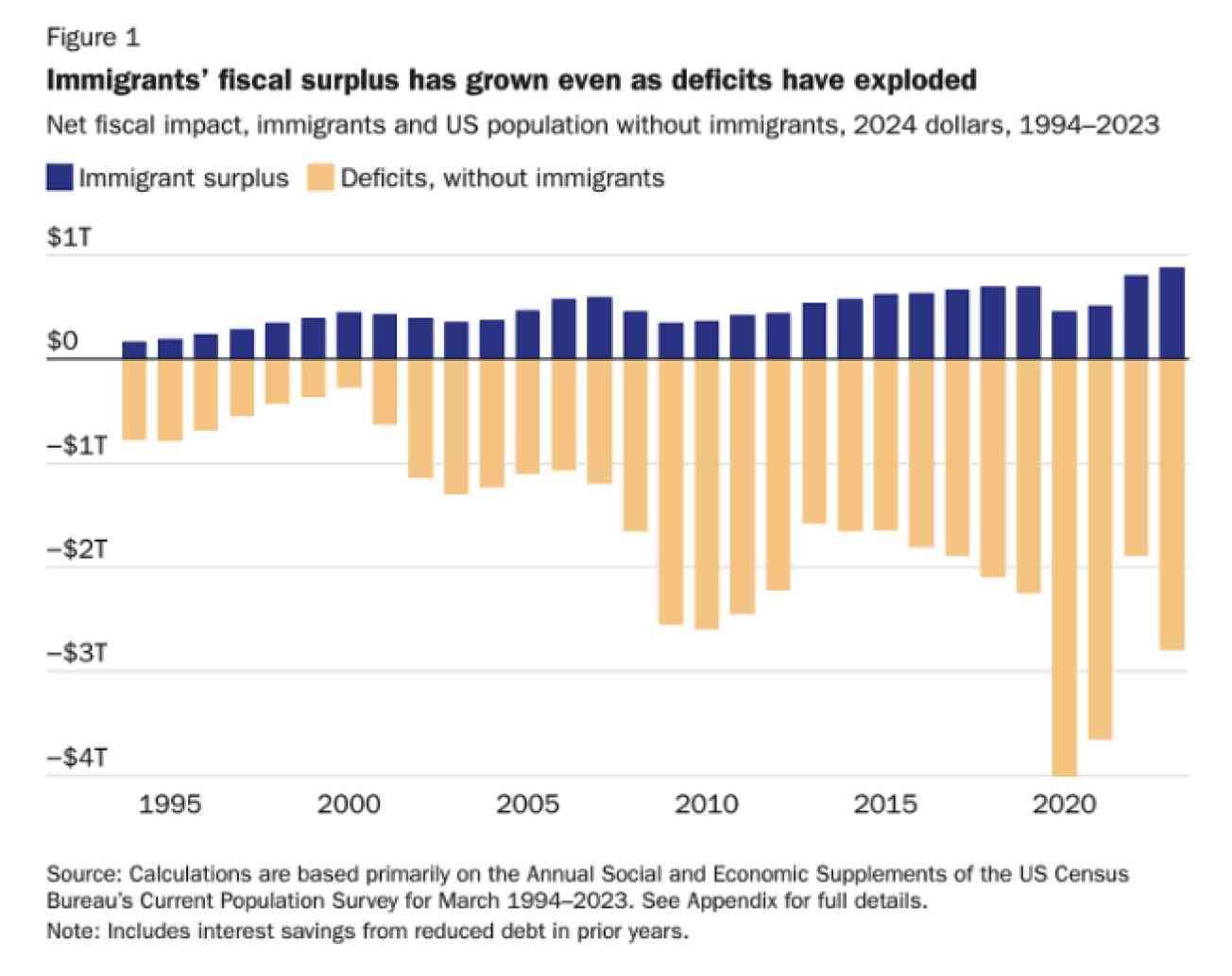
Between 1994 and 2023, immigrants generated a $14.5 trillion fiscal surplus.
Immigrants—both legal and illegal—paid more in taxes than they received in benefits. Every year. For the last 30 years.
Without the contribution of immigrants, public debt at all levels would be above 200% of U.S. GDP; nearly double the current levels and well past the threshold economists believe would trigger a fiscal crisis.
In other words, immigrants have kept the United States from falling off a financial cliff.
The Model
The Cato Institute—a libertarian think tank—analyzed three decades of federal, state, and local budget data to determine the effect of immigration on the U.S. fiscal system. This was the first study of its kind.
The model was based on a program originally designed by the National Academies of Sciences, Engineering, and Medicine (NASEM).
The NASEM model tracks the fiscal flows to and from immigrants in the U.S. by analyzing the highest quality data available from the U.S. government. According to the Cato Institute, it accounts for both direct and indirect government spending, revenue, and tracks all levels of government (federal, state, and local) since 1994, when the government began collecting such data.
The Cato Institute took the model, refined it, and added significant new data, including from the Annual Social and Economic Supplement from the U.S. Census Bureau’s Current Population Survey. This made the NASEM-Cato model more robust and refined.
Did You Know that Immigrants Save U.S. Taxpayers Money?
In fact, immigrants pay more in U.S. taxes than the average American citizen AND they receive fewer benefits than most citizens.
“From 1994 to 2023, on a per capita basis, immigrants paid nearly $100,000, or 17 percent, more taxes than the average US-born person.” – Cato Institute
How can that be?
First, according to the Cato Institute, immigrants are, on average, 12 percentage points more likely to be employed than U.S.-born citizens. Immigrants often arrive in the U.S. as young adults of working age, and they frequently return to their home countries before retirement age.
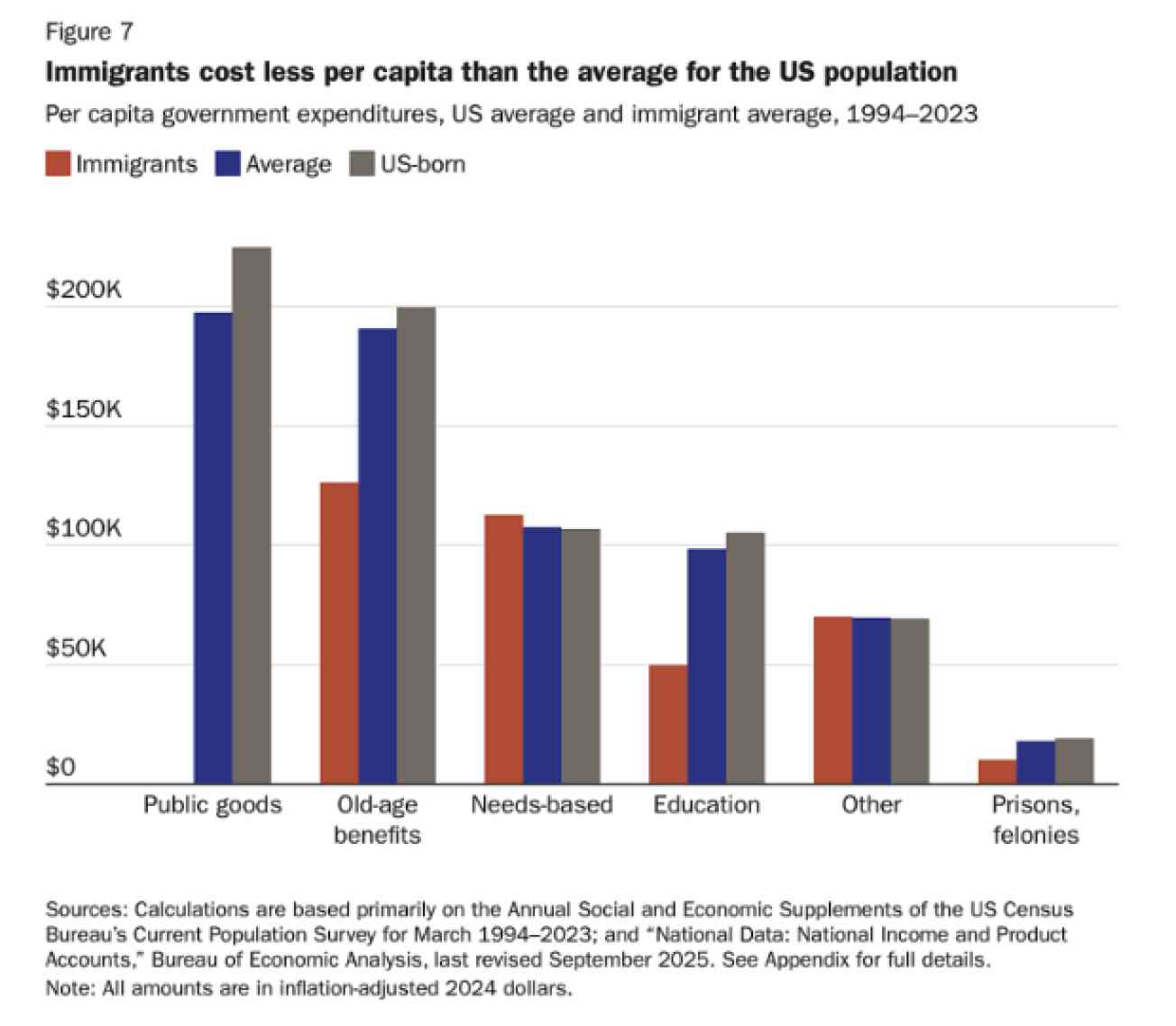
Second, government spending tends to be in two broad categories: fixed, universal public goods and variable entitlement/welfare benefits. Most people assume that if an immigrant is deported from the U.S., the government would no longer need to spend money on them, and that would help reduce the deficit.
However, this is inaccurate because a significant amount of U.S. spending is on these fixed, universal public goods—basically things that benefit all U.S. citizens and don’t increase or decrease based on population size.
Think of things like military spending, NASA spaceflights, the nuclear arsenal, etc.
When it comes to variable government expenditures, some of the largest are old-age benefits: things like Social Security, Medicare, and government pensions. However, the Cato Institute found that immigrants used old-age benefits 34% less frequently than U.S. citizens. This is because of legal status rules and fewer public pensions are available to them.
In a related but separate 2026 study, the Cato Institute found that in 2023 immigrants were also less likely to enter the welfare system, less likely to remain on welfare for long periods, and less likely to age into the most expensive entitlement programs.
By the Numbers
Here are a few of the surprising statistics that Cato discovered:
From 1994 to 2023, immigrants generated $24.2 trillion in taxes and cost the U.S. $13.6 trillion in benefits, producing a net fiscal gain of $10.6 trillion.
In 2023 alone, immigrants paid $1.3 trillion in taxes and received $761 billion in benefits.
Without the tax contributions of immigrants, U.S. public debt would have already exceeded 200% of GDP.
Low-skilled immigrants with less than a bachelor’s degree, including those here illegally, contributed more to U.S. taxes than they cost in benefits.
“Even if illegal immigrants used benefits at the exact same rate as all noncitizens, they would still be, on average, fiscally beneficial to the United States—both by reducing the debt in real terms and by lowering debt-to-GDP.” – The Cato Institute
The Cost of Deportations
Where has immigration cost taxpayers money? Immigration enforcement and deportations.
According to a 2024 report by the American Immigration Council, deporting one million immigrants per year would cost U.S. taxpayers roughly $88 billion annually. The Cato Institute estimates that increased immigration enforcement spending passed by Congress in 2025 (H.R. 1 aka “One Big Beautiful Bill”) ultimately will cost taxpayers nearly one trillion dollars.
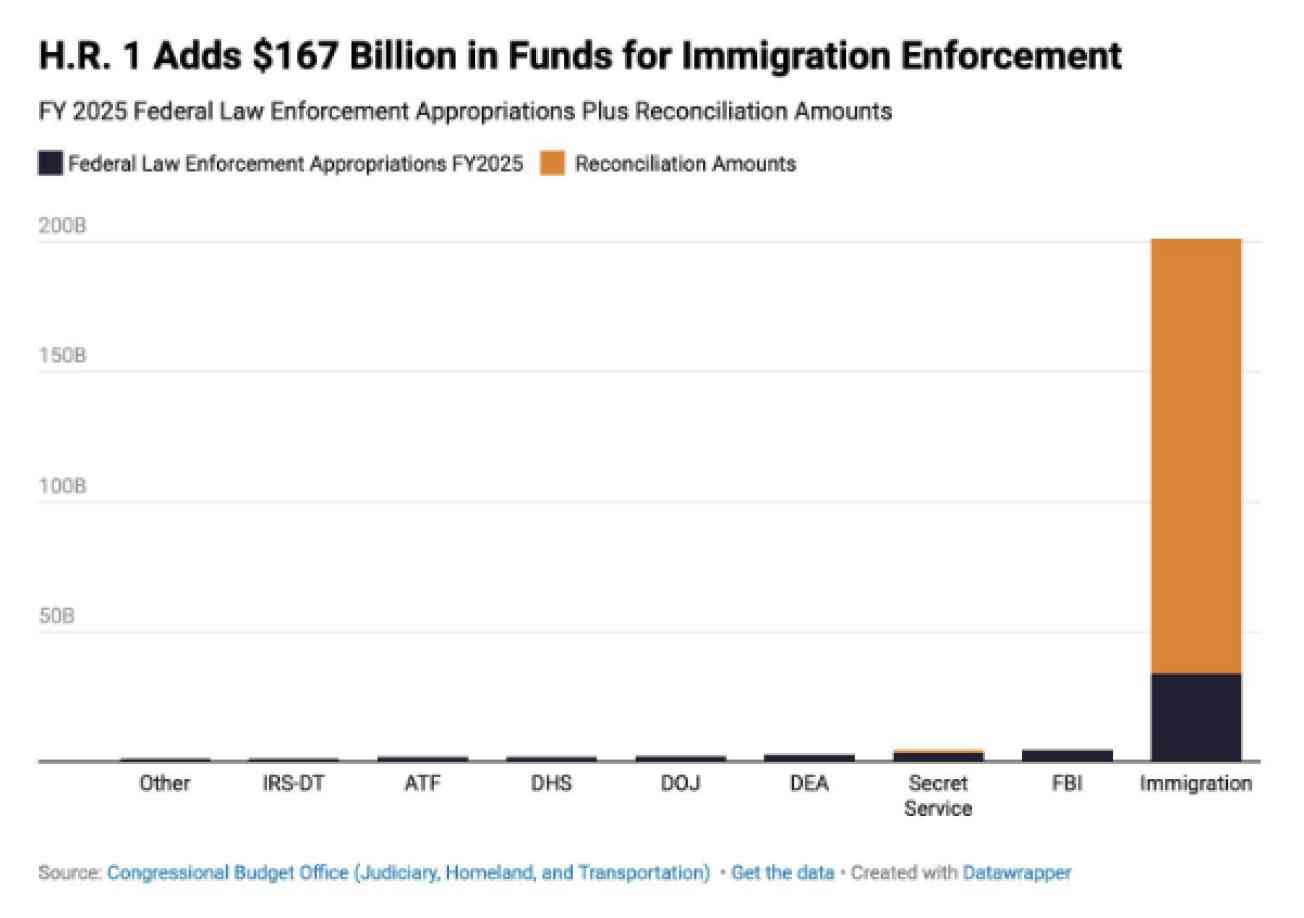
Furthermore, Cato predicts that—if government estimates are correct and 8.7 million illegal immigrants are removed over the next five years—this will increase the debt by about $900 billion. The loss could double if the current funding increases are made permanent.
Immigrants are Subsidizing the U.S. Government
The immigration debate in the U.S. is complicated and opinions swirl. On the specific question of whether immigrants drain government resources, however, the data is clear. Immigrants save the U.S. money, and have done so for the last 30 years.
As the Cato Institute has shown, immigrants have generated a fiscal surplus of $14.5 trillion; the average immigrant is much less costly than the average U.S.-born citizen; and immigrants impose lower costs per person on old-age benefits, education, and public safety programs.
Every year from 1994 to 2023—through 9/11, two wars, immigration waves, the dot-com crash, recessions, and the Covid-19 pandemic—immigrants have benefited the U.S. fiscal system.
Immigrants have given more to the United States than they have taken.
Helping ITPs Succeed: Insights from Leading Support Programs
De-skilling and the Mental Health Effects Among Refugee Physicians
Discussions of physician workforce policy tend to organize themselves around numbers. Shortage projections, residency slot allocations, and licensing timelines dominate the literature, and for understandable reasons. More than 83 million people in the United States currently live in areas without sufficient access to a primary care physician, and projections suggest the country could face a shortage of as many as 120,000 physicians by 2030.