We Got too Many People who Depend on Us
Tally from Haiti is supporting family back home facing political instability, gang violence, and destruction since the 2010 earthquake
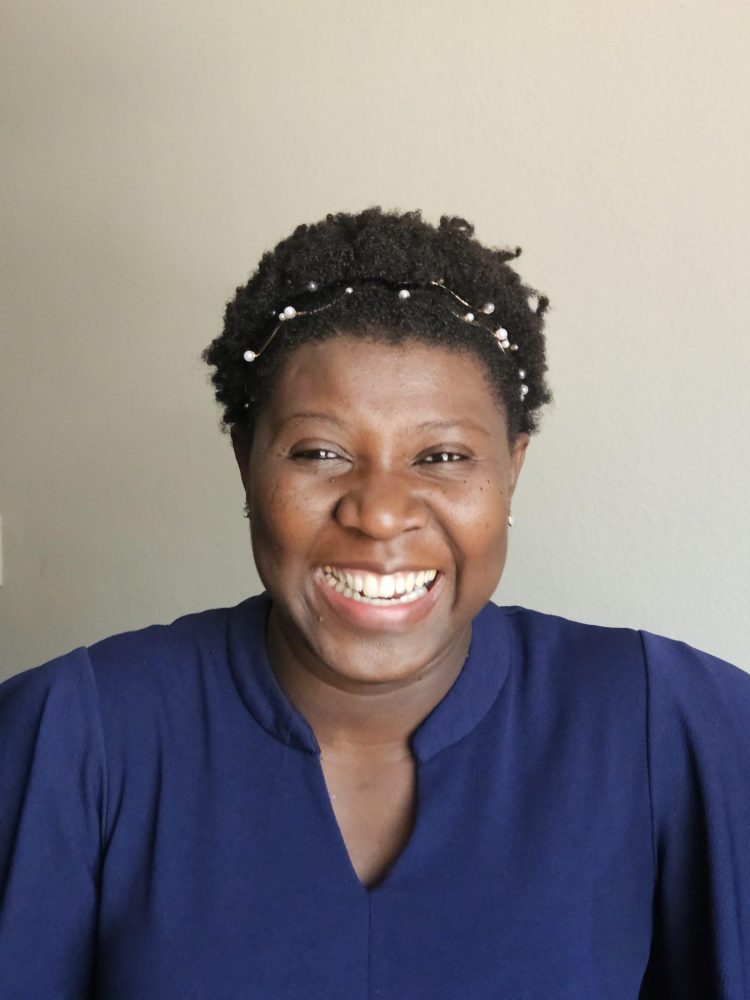
My name is Tally. I’m from Haiti.
I grew up in a family with eight people. It was hard for me because my biological mother moved to the United States. She told me she wasn’t my real mother.
In Haiti, my life wasn’t good since the earthquake in 2010. It was very, very difficult for all Haitians. Every time I start to study something, I can’t finish because it’s always people protesting in the street. I was studying nursing for three years, and before that, I was in administration. I didn’t feel safe in my country.
Three years after the earthquake, in 2014, I chose to move to Dominican Republic and start my life over here.
Even in Dominican Republic, it was really difficult too. We have a way to go to school, but it’s not free. We must spend a lot of money to translate documents.
I spent almost a year and a half translating all my documents, and after that, they told me the translation was bad, and I lost all my money and I must start over again.
It was difficult to find work, and when we find it, they don’t pay you the way they are supposed to pay you. And after they change the president, it was more difficult because he didn’t want us with passport and visa. And that visa, it’s like $800 for one year, and every month for $20 we must check that. And we don’t have work.
When I hear about the Parole Program [Cuba, Haiti, Nicaragua, Venezuela (CHNV) Parole Program] my husband say his cousin gonna apply for us. I say, “What do you think if we apply for Canada?” Because my family moved here (USA) in 2008 and it was a lot. I say, “If they are not happy there, I don’t want to come there too.” But when you are married, we got a baby, I say, “If my husband choose, I must choose too. It can be better for me and for my daughter.” And I know many people would like to come here. We come for a better hope, better life.
Sincerely, for me, it wasn’t a big change, because I was leaving my country five or six years ago, I know what it is to start over again. I just say, “I’m strong. I’m gonna try to keep going, doing everything it takes to see how we can have a better life.” But my surprise is that decision from the government right now [terminating the CHNV parole program]. But I think United States is not the problem. It’s the government taking bad decisions, because we got good people in United States. We can hope that they help us.
The earthquake [in 2010] was a bad experience because we could not have a home. I remember we passed almost three months sleeping on the street.
And we lost some close family. I lost a cousin in that earthquake. We don’t have food. We can’t drive to another city to find food. It was really really bad. It’s a bad memory for me. And after that, I could not go to school because my school was all down on the floor. And for too many months we can’t have water to drink. I remember one day I just take three bottles of water to try to take a bath, because some people just take a towel and clean up. But I feel like I need to wash all my body. This was very, very bad.
It was getting worse and worse after that earthquake [in 2010]. Nothing was good. It was really, really, really difficult to continue to live there. But we still have people living there. So many people living in my country depend on us living in the United States. But sometimes it’s a shame too. When I see I’m doing a transfer, $30 or $100, it’s not enough for 15 days. It can’t help them because they need more than that to live there.
It’s both government and gangs, but right now gangs are the worst we got in that country. After the president died– they kill him in his house. Who can be safe in a country like this?
Some streets right now in Haiti, we don’t have them anymore. Everything is different. I remember a city where we had a cousin who had a graduation. They can’t take a taxi. They say they gonna take a boat. They say “We don’t have any street.”
And they are worried too because the gangs take those streets. And the government – I don’t know if we got a government after they kill the president. I never hear the notice we got a new president. It’s really really hard.
To protect my immigration status [after the CHNV parole program was terminated in 2025], I applied for asylum. My husband, my daughter, and I. Because I don’t have nothing in Haiti. I don’t have a house anymore. The gangs take this. They kill people. Police are doing bad things. And no way to go there to live. We must have money to buy a house.
But how we gonna have money if we don’t have any status in United States and we can’t work? I know many Haitians, their plan wasn’t to spend 10 years or 20 years living here. They just need some savings. They’re coming to work hard and to go back to our country to live.
No, it’s not possible in Haiti. The country can’t be functional.
I love Arizona. I love Arizona because in that state, I find a community.
I start in Miami. I pass three months living there. We can’t find work and I move to New York. Because it is there my family is living, and they find work for me and for my husband. But New York, it’s really expensive. Even though both was working, we can’t pay somewhere to live. And I say, maybe we must move to Arizona because we got a friend, and for the weather too. Because when I was in New York, we are always sick, my daughter and I. And I say, “Ah, if there’s snow coming, I don’t see how I can still be alive in New York,” and I say, “Let’s move to Arizona.” And when I’m coming here, I really like it, and my family and I really appreciate the way Arizona Refugee Center receives all Haitians, all nations. When I get here, they help me a lot. I really appreciate that.
For Arizona, my first work was a leader in a retail department for women. And right now I am working like a cashier at a grocery store. And my husband, he’s working in sanitation.
[I did] a work study. They pay for me to learn how to drive. It wasn’t my dream because I’m scared, but now I can drive a car. After that, they pay for me to study phlebotomy. I’m just starting to do that.
Right now, I’m trying to finish with my Kith and Kin Program to see if I can work like an institutional teacher assistant. And if you ask me what else I would like to study, I want to learn languages, sign language. I want to learn that for kids, and then after that, we will see what else I can do.
I speak four languages. English, French, Creole, and Spanish. I'm still working on my English too because my dream is to study, maybe dental assistant or medical assistant.
One of my dreams would be to work like an interpreter to help Refugee Center Arizona, because I’m enjoying doing that (as a volunteer right now). To see people have someone they can trust to translate for them, because I know what it is, when you are somewhere and you can’t understand anything. That is the reason I’m trying to speak better (English) and to see how many people I can help with that.
My daughter Rose has a problem to speak. We engage a speech therapist for her. She is doing better now. She’s trying to speak more with us, but it takes time for other people or kids to understand her. In that Kith and Kin Program, the teacher tells us, even if she has problems, I must start to speak other languages with her, like Creole, French. She can learn. She told me, five languages or seven. Kids can speak many languages.
Now Rose is going to be in kindergarten, and I’m still worried because she’s not speaking really well, but they told me they will continue with the speech program at the school.
My overall hope is to be safe, my family and I, and to be available to continue to help our family in Haiti, because we got too many people who depend on us.
I feel I got 20, 50 kids because I’m worried a lot about the people I know over there who need help. When they know you are here, they have hope that you can help them.
If they cancel the TPS [Temporary Protected Status], it will be worse for our Haitian community. They will need to continue to pay bills, pay the rent. But if they don’t have a status, don’t have a permit to work, how they gonna live here?
And it’s not only that. I am worried about our health. My mom in New York, she’s diabetic. Do you know the reason? It’s too much stress. We don’t have diabetes in our family, but I’m the second one. Too many Haitians are like this. Maybe 5% of people in Haiti have that condition, but most of them have it when they come to live here. Yes, it’s really stressful for them. And we will have more people sick if they are not working.
Haitians work hard. They always try to do better. They have much energy to work because Haitians are just coming here to work. We pay taxes. There are not many people who like to put themself in trouble. Everything they ask us to do, we do it. If we come here, it’s because we chose the United States, and we need to continue to believe in that country.
It's not the American people. We just need a better leader. Because we are all human, we trust in American people.
Even when I was living in my country, where I was studying for three years, I was on a campus and we always had American people coming to visit us. My first laptop, it was an American who gave it to me. They asked the director (of the nursing program) what I need, and I think she told, “She doesn’t have a laptop to do her homework.” And one day I just received my laptop like that. My first laptop. And I’m coming with that laptop here.
I have it. Is not working the same way anymore. But for me, it’s something beautiful. I was studying nursing and I just graduated. This was the prize. It’s representing many things for me, that laptop. I moved to Dominican Republic. When I pass the border, they choose to take my laptop. And I say, “No, you can take everything I got. You are not taking that.” Because I know I work for that.
Our team members obtain informed consent from each individual before an interview takes place. Individuals dictate where their stories may be shared and what personal information they wish to keep private. In situations where the individual is at risk and/or wishes to remain anonymous, alias names are used and other identifying information is removed from interviews immediately after they are received by TSOS. We have also committed not to use refugee images or stories for fundraising purposes without explicit permission. Our top priority is to protect and honor the wishes of our interview subjects.