From Prosperity to Scarcity: Why I Left Venezuela
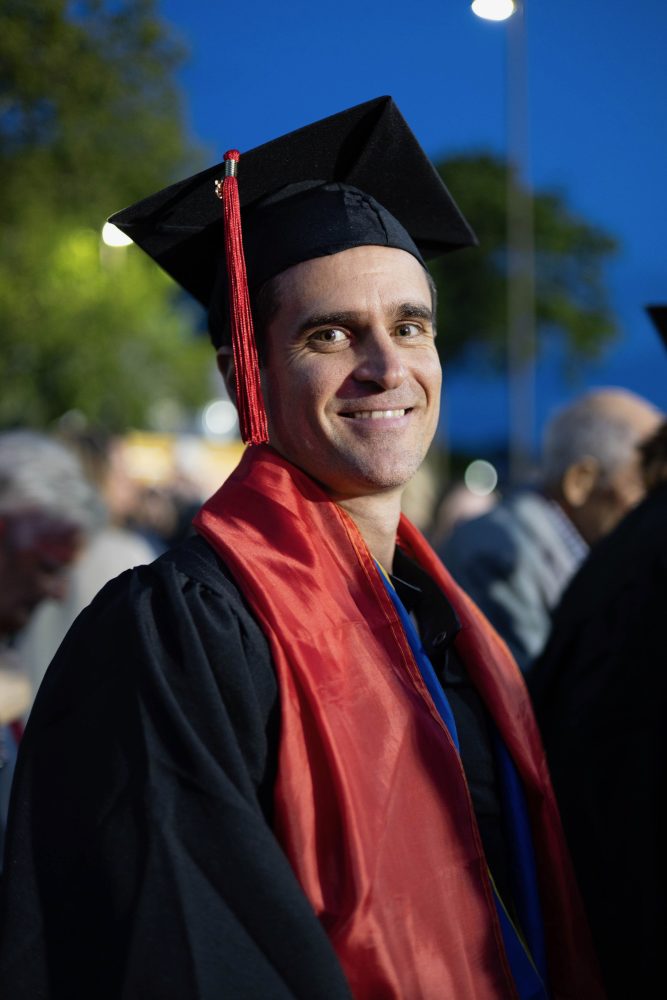
My name is Hermes Olmos. I’m from Venezuela. I live here now in Bowling Green, Kentucky. I’m going to Western Kentucky University for my bachelor’s degree in Organizational Leadership. Throughout life, I found myself a lot of times in leadership situations so I said to myself, “I’m going back to school.”
I love my country. It’s an amazing place. I have to say that first. It was wonderful growing up there. My family was great. I really like the nature of Venezuela. I actually have a bachelor’s degree there. It was in biology because I love nature so much and I wanted to learn more about it. I liked growing up there. It used to be a very wealthy country. Most people don’t know this, but Venezuela used to be one of the richest countries of Latin America, or the richest for many decades, and that made a lot of people move to Venezuela. So at some point, we were kind of an immigrant country. Most people wouldn’t imagine that was the case, but the environment that I grew up in was very international. My mom and her grandparents came from Spain. My dad’s side, they were mostly Venezuelan, but also with some European background. And so all the people that I grew up with were in the same situation with parents or grandparents from Italy, Germany, Spain, Portugal, China, even the Middle East.
It was wonderful. There was a lot of happiness in Venezuela. Our culture was very joyful and we liked to have fun a lot. We were always smiling, having fun trying to dance. We call that the “Caribbean charm.” We have all that warmth and happiness. People argue that that’s what made people so tolerant to each other and so happy. We were open to new things and to have fun in spite of differences.
When I was in university there, which is where I got a bachelor’s in biology, I was part of the student union organization which were the leaders at the university there. I was the president of the Department of Biology.
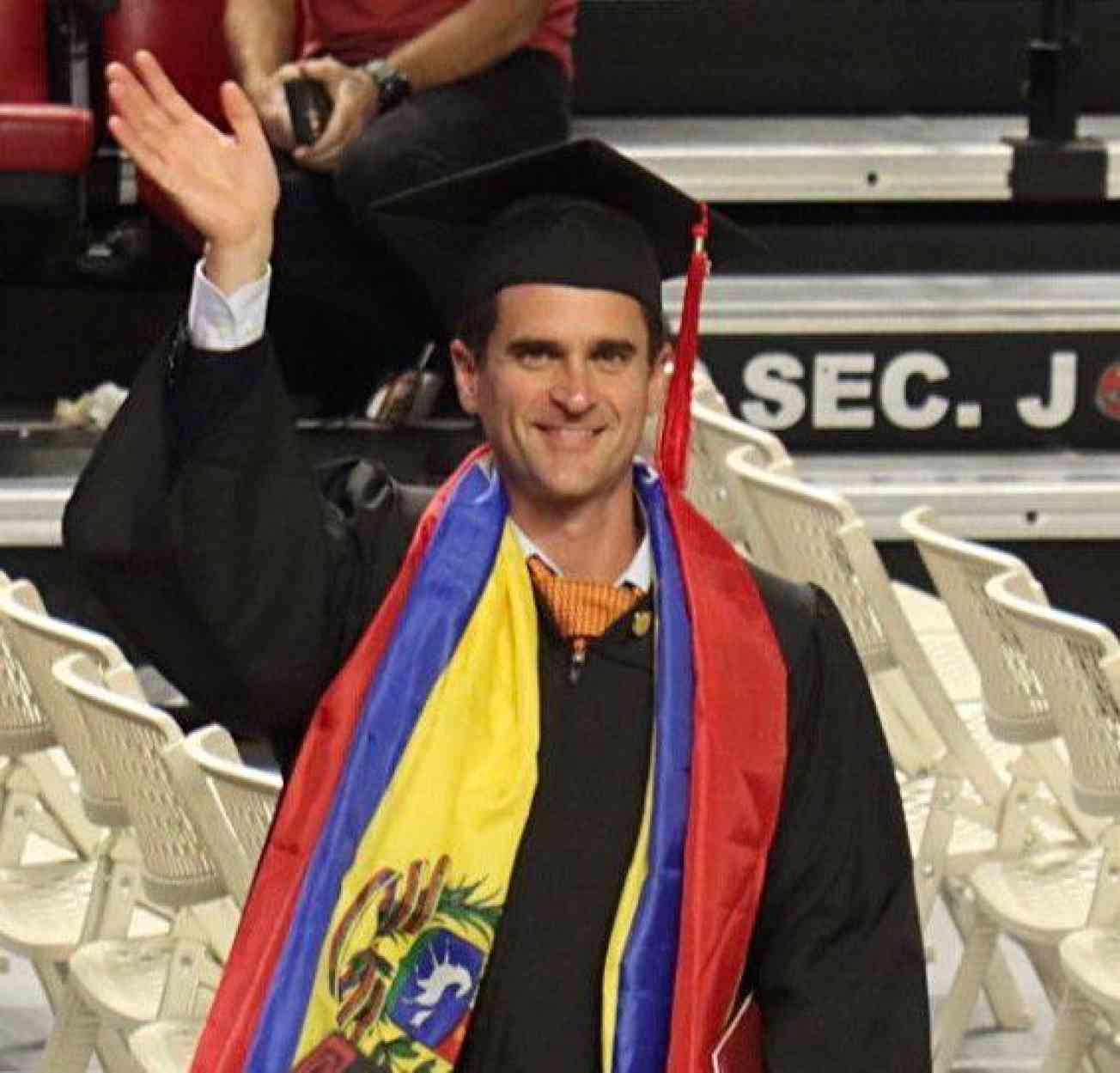
So by that time, about 2013 to 2015, the government was increasingly becoming authoritarian and so they were actively shutting down universities by starving them – not giving them the financial support that they had always been given. So what we decided to do was to go out and protest. At first, it was just some demonstrations on streets, you know, some protests, but they became increasingly violent. Mostly because the government had brought cops and the National Guard to suppress those protests with force – sometimes extreme force.
I was lucky enough not to suffer. I mean, I did. I had to fight them in many ways. I swallowed a lot of tear gas. I was in the middle of some violent protests there. I wasn’t much for that. I didn’t like it and most of the people from my university weren’t like that. But many students and people from society were very unhappy with what was going on because you could see that the country was going down.
They were just denying all kinds of support and the way they were handling the economy was terrible. So you could see people starting to have a lot of hardship, economic hardship. Some people started leaving.
So we had been trying to protest in the hopes that they would wake up; that the government would change their ways or that there would be a change because we knew, as students, that if things kept going that way, we wouldn’t have a country. And that’s exactly what happened. They killed many students during those protests. I saw all that happening and many of my friends went to jail. I almost got arrested at one of those protests. At the moment I didn’t really think much about it, but it was pretty traumatizing seeing how things were developing.
Eventually I left Venezuela. I decided when I saw how the government was mistreating the students and all the population in general, they just wouldn’t care. The government was becoming increasingly totalitarian, suppressing people, destroying the economy because they had this crazy idea that the communists have–that the government is the only one that can have the means of production. If you want to have any kind of a business you can’t. Only the government can, so they started shutting down businesses like crazy. Eventually the economy crashed, and led to a lot of people having hardships.
I went back to Venezuela in 2018 to try to settle down some affairs and businesses; many properties that we have there. I couldn’t do much of that. I saw the difference between Venezuela 2015 and Venezuela 2018.
It was horrible. It was like another country. One of the things that shocked me the most was people just going about the neighborhoods, the middle class or higher class neighborhoods. The poor people were eating food out of the trash.
That was just heartbreaking. Sixty years ago when my grandparents came from Spain to Venezuela they made so much money in Venezuela they could send money back to Spain. Now it’s the other way around. Now people come to the United States to make money to send back to Venezuela.
I had a cousin who was living in Ecuador and then decided to move to the United States. She got her Temporary Protected Status (TPS) approved and then moved to Bowling Green, KY because her childhood best friend from Venezuela lived here. I visited my cousin one summer while I was living in New York City, and I liked it. I liked nature a lot and it was quieter. So I said to myself, “I think this will be a nicer place to settle down.” That’s how I ended up here in Kentucky.
When I came to Bowling Green I was looking for a teaching job or something like that, but I found a job at the public library downtown. I also found out about a college scholarship at Western Kentucky University (WKU) that they have here called the Resilient Refugee Scholarship. I was a little hesitant to take it because I was like, “I’m too old to go back to school.” But on the other hand, I love learning so I said, “why not?” So that’s why I took it. I took the scholarship and the staff at WKU were very welcoming from the first day. Always helping, guiding me through the process of getting the scholarship and they did orientations for international students.
You wouldn’t imagine that there are so many international people, especially refugees, here in Bowling Green. The reason is that the economy’s doing fine. There are jobs, there’s opportunity. Most refugees, they just want to work and provide for their family. So that’s exactly the opportunity that you have here. And there are also all these institutions and organizations like the International Center, Refuge Bowling Green, and Community Action that help the internationals to integrate into society.
There are also churches which are very important here. They are always helping, trying to help people integrate, to make them feel at home. I really like all the people that I’ve met at church. There are some amazing people I have met there. They have been so helpful. There is always something going on and they teach about things; it’s great to be part of that community. I’m also helping out at a church in reaching the Hispanic community. I’m trying to give back a little bit and also I’m part of this campus ministry here at WKU called Cru. I’m helping them out to share the love of God for the nations.
My hope in getting an organizational leadership degree is that I would like to get a job in something related to what I have already experienced. I worked in Venezuela in construction supervision because my family was into building and preparing houses and all that. I would like to think I could get a job hopefully with some other organization.
I try to give back as much as I can to help people out because I understand. I’ve seen scarcity and need in Venezuela. I know there’s a lot of opportunities here. Especially with the church that I am with here. There are a lot of older people that come here to America. There are many coming from Venezuela and many from Latin America. Those people have suffered a lot. I know because I’ve talked to them and have helped them. You can give to meet their needs spiritually, emotionally, physically, financially. I would like to be there in those situations where I could help all the people from my community.
Our team members obtain informed consent from each individual before an interview takes place. Individuals dictate where their stories may be shared and what personal information they wish to keep private. In situations where the individual is at risk and/or wishes to remain anonymous, alias names are used and other identifying information is removed from interviews immediately after they are received by TSOS. We have also committed not to use refugee images or stories for fundraising purposes without explicit permission. Our top priority is to protect and honor the wishes of our interview subjects.