The World is Full of Good People
“I have always had great relationships with my bosses in the US Armed Forces.”
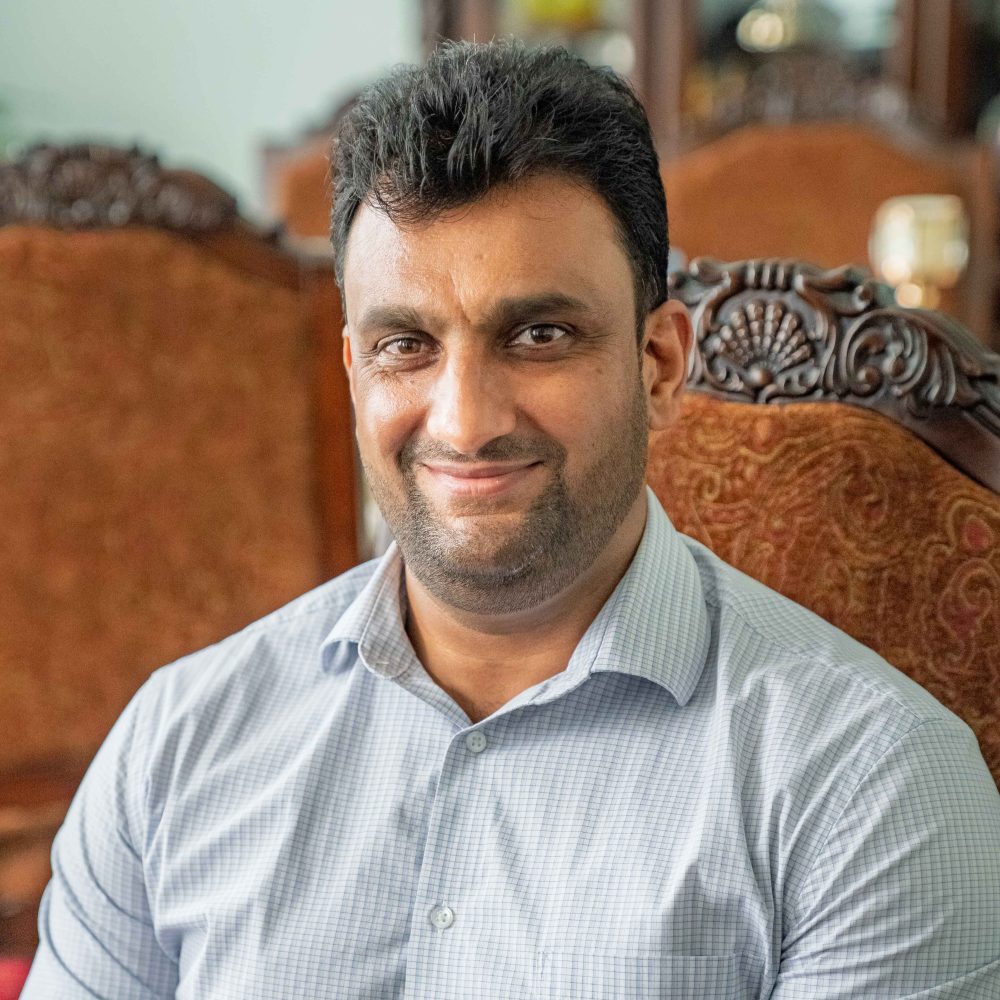
My name is Ahmadshafi Hadi. We are in beautiful historic Fredericksburg, Virginia. Home of George Washington. I am originally from Afghanistan, came to the United States in April 2009.
Some of my favorite memories of Afghanistan are family gatherings. We worked six days a week, Friday was the day off. We could accomplish a lot in one day and we would get bored at the end of Friday!
All of my children were born in the United States, except my oldest one, who’s 18. He just graduated high school. I have a brother who lives here in Fredericksburg with us. I have another brother and five sisters who still live in Afghanistan. No education for girls, no work. One of my sisters studied medicine, one studied nursing. They were both supposed to have a job and do well, but unfortunately, right now they are unable to practice (their professions). They were in the last year (of getting their degrees) before the collapse of Kabul in 2021. [“The Fall of Kabul” on August 15, 2021: The president flees the country, the Taliban regime comes into power]. We speak with them daily. It’s hard. We went backward. In 2001, there was hope for everyone. But in the last five years, you cut off 50% of the society from going to school. What kind of impact is that going to have?
I was a linguist with the United States Armed Forces, that’s how I was able to obtain a special immigrant visa (SIV) for myself, my wife, and my oldest son. That’s how we came here in 2009. It was rough because we were in the middle of recession back then, no jobs. But there was one person whose support I’ll always be grateful for. He was my boss in Afghanistan in 2007-08. He was a United States marine colonel, Phillip Smith. He encouraged me to come to Virginia. He took us under his wing, housing us, giving us transportation. His wife took us to doctor appointments. Thank God I was able to get a job with Mission Essential Personnel, go back to Afghanistan in 2010, stayed there for two and a half years and made a living out of that. I came back home in 2013 and worked for Ashley Furniture from 2013 all the way through 2026.
Now I have my own business. I am an entrepreneur. Yes. The American dream. It didn’t come easy. It was a hard battle, but I am proud of my family who supported me throughout this journey, especially my wife who took care of our five kids when I came home late, left early, worked six days, seven days a week.
I was able to get a visa for my parents. It took almost six years to get them here. Now they have green cards. They recently went back to Afghanistan for a couple of months. We have our sisters and brother out there, so they have to go back and forth to take care of them as well. For the rest of my siblings, I applied for each one of them, but it’s gonna take more than 10 years to get a visa for them.
The position that I worked when I first started my linguist job was with Kellogg Brown & Root (KBR). One day, I was in charge of a crew of six people who were cleaning the buildings where our troops were living. That day was a rainy day and there was a lot of mud outside. We barely cleaned up the hallway, then a sergeant major walked in with boots full of mud. His name was Sergeant Major Glogit. He was from Vermont. Two of our employees called out that day, so I was mopping myself. He looked at me and said, “I’m really, really sorry. I gotta get into my room and grab something.” We exchanged a few words, and he was like, “Oh, you speak great English. Why are you mopping the floor then?” And he goes, “How much do you make a month?” Back then, KBR was paying us interpreters $290 a month. He goes, “How about if I pay you $400, would you work for me?” In 2003, that was a big jump. Of course I want to work for you for $100 more! The biggest thing for me was to support my family, that was my goal. That’s how I transitioned from working for civilians to the military.
Two years later, I was transferred from the eastern part of Afghanistan to Kabul and worked for corps headquarters. Because I was really good at my job, especially simultaneous translation, they moved me to work for the colonel who was an advisor to the corps commander for the Afghan army. Most of these folks did value their interpreters. But Colonel Smith really, really valued the risk that the linguists and interpreters were taking. Linguists and interpreters were the eyes and ears of our military forces on the ground. Anytime a new team was coming to the country, he wanted me to go and brief them about whatever I know. I was lucky to work with him for over a year, and he always supported me. I have always had great relationships with most of the people I work with, especially my bosses, which I’m grateful for.
I loved to be part of the solution, part of the prosperity of Afghanistan and Afghan people and our militaries. Unfortunately, that collapsed in 2021. All the hard work, all the sacrifices, blood and sweat of the men and women of the United States Armed Forces, and the Afghans, is gone. It’s sad.
When the SIV (Special Immigrant Visa) program started, nobody knew about it. Apparently, in 2004-05, President Bush suggested this legislation to Congress. Whoever worked for the U.S. military or any other organization on behalf of the U.S. military - as long as they spent 12 months continuously supporting the U.S. Operation Enduring Freedom - they are eligible for the visa process to come to the United States. I first heard that in 2006. I didn’t believe it. I was working with a navy captain, Captain Peter Van Loon, who lives in Kentucky. He was a good friend of mine, we’re still in contact with him. He helped me to file the application. Back then we’re supposed to get a letter of recommendation from a colonel and also a recommendation letter from a one star general for our case to be processed. General Douglas Pret knew who I was. I was assigned with his team when they first deployed to Afghanistan to train the Afghan army. That’s how I obtained my letter of recommendation from General Pret. I’m always grateful for that.
There was a lot of bureaucracy in Afghanistan. It took my brother 14 months to get his passport. Getting all that paperwork, all those processes were not easy. Two of my uncles worked at the Bagram Airbase and their SIV application is still under process. They’ve been waiting since 2021. Since Trump’s administration came into power, they have been freezing the cases.
Colonel Smith is actually one of the reasons why I’m with No One Left Behind (NOLB). He was a director of NOLB. Before the collapse of Kabul, hundreds of military forces were evacuated. One day, he called me and said, “We need some people to help these families who are now residing in a couple of military bases. We need people to be interpreters.” So I was able to gather roughly 50 to 100 people to go and work for, I think, IRC (International Rescue Committee) that was handling that situation. And then he asked, “Would you like to be an ambassador for No One Left Behind?” If there’s anything that I can do to help my fellow interpreters and their families, and Colonel Smith, why not? Our bond is deep.
No One Left Behind is a great organization. It was established in 2014. We’re trying to help those individuals who served our military forces yet are not able to get out of Afghanistan. Or they’re in a third country, or they’re here. We are trying to help them with their registrations, furniture, clothing, car loans. In some cases, we even help them out with scholarship programs.
We want to make sure that those who served our troops, served our government, their work is not being unnoticed. We want them to stand up on their feet and be able to do good for their families.
And by the way, SIV holders are the most educated part of our Afghan society. They’re doctors, engineers, lawyers. Even myself, I studied law. Why are they leaving Afghanistan? Because nobody feels safe. Especially those who served our military. Their lives are in danger. Two of my friends died. Farid was in a Humvee and he was hit by a suicide bomber. He was dead on the spot. Another friend of mine was also killed in action. Just imagine, there were bounties on interpreters’ heads.
Nobody's safe in Afghanistan.
Due to those reasons, they want to come here and be part of a great society. Most of the SIV holders that I know, once they know their way around, they are hardworking people. They will contribute to our economy. They contribute to our society. This is something not every single person in the United States can do, right? To be a homeowner, to be a business owner. Most of these SIV (holders) already have their own homes. Why? Most of them work two jobs. I know at least 10 people in Fredericksburg who came in through your SIV program. They work one shift job, they leave that job at five, go home, stay for an hour with their family, go out and do either Amazon or DoorDash or Spark or something, to just have an additional income for themselves or for their family who they left in Afghanistan. They don’t just have responsibility for the family here, they have responsibilities back home as well. They are hardworking people.
If I say that I love Afghanistan more than the United States or vice versa, I'm gonna lie to you. Both nations are giving me a lot. One is giving me birth, and the other one has helped me to stand up and be who I am today.
One of my favorite things about the United States is that your talent, your hard work and dedication is not going to go unnoticed. And your kindness.
I hope my story can reach the American people who want to help. These people who they left behind, or the people who are here right now, they are struggling with the current economic situation. $1, $10, $50 can go a long way for these families to help them get on their feet. We don’t want them to depend on this kind of help all the time. But these scholarships, these loans, will take them to the next level. They will always remember that.
I’m gonna end with a quote that I resonate so much with:
“The world is full of good people. If you cannot find one, be one.”
Our team members obtain informed consent from each individual before an interview takes place. Individuals dictate where their stories may be shared and what personal information they wish to keep private. In situations where the individual is at risk and/or wishes to remain anonymous, alias names are used and other identifying information is removed from interviews immediately after they are received by TSOS. We have also committed not to use refugee images or stories for fundraising purposes without explicit permission. Our top priority is to protect and honor the wishes of our interview subjects.